Dr. Parveen Kumar
Very hard, but have to believe that world is still home to an estimated 808 million people living in extreme poverty i. e on less than $3 per day. This figure is concentrated more in Sub-Saharan Africa, conflict zones, and fragile regions. Data also revealed that about 673 million people faced hunger in 2024 which was a slight decrease from previous years, but still above pre-COVID-19 levels. Further over 2.3 billion people were moderately or severely food insecure and more than 2.6 billion could not afford a healthy diet in 2024. Projections also indicate that without significant shifts, around 512 million people could still be chronically undernourished by 2030. Various reasons can be attributed to this sorry state of affairs. Manifestations of climate change in the form of frequent and intense droughts, floods, and heat waves have severe impact on productivity of various crops especially in rainfed regions which are totally dependent upon timely rainfall. The conflicts in different parts of the globe often see deliberate blockade of food supplies and other relief material which also results in engineered famines. Sometimes the food prices driven by outbreaks like COVID 19 rise so high that it becomes very difficult for common man to afford a nutritious food. Besides, the increasing disparities between different regions across the globe also result in increase in hunger and poverty. It is not that world does not produce enough food. It produces enough food to feed the entire population; but a host of factors including those discussed above lead to food and nutritional insecurity. Addressing hunger and poverty thus requires a multi-faceted approach, including strengthening food production and distribution systems, increasing funding, and investing in social protection programs and infrastructure.
Food is recognized as third most basic human necessity after air and water as well as a basic human right under the UN’s Universal Declaration of Human Rights and two legally-binding international covenants. Food insecurity ultimately impacts the poor and vulnerable most severely, many of whom are agricultural households, reflecting widening inequalities across and within countries. Unhealthy diets are the leading cause of all forms of malnutrition viz under-nutrition, micronutrient deficiencies and obesity, which now exist in most countries, cutting across socio-economic classes. Too many people suffer from hunger and are unable to afford healthy diets. More vulnerable people are often forced to rely on staple foods or less expensive foods that can be unhealthy, while others suffer from the unavailability of fresh or varied foods, lack the information they need to choose a healthy diet, or simply opt for convenience.
The targets for achieving food security for all were manifested in the form of the ‘Millennium Development Goals (MDGs) that were to be achieved by 2015. Unfortunately the progress to achieve the targets was not uniform; even some of the countries missed them with a huge margin. The MDG’s were followed by Sustainable Development Goals (SDGs) that are to be achieved by 2030. The ‘Zero Hunger’ goal of ‘SDG 2030’ aims not simply to ‘eradicate hunger’, but to ensure access by all people to safe, nutritious and sufficient food all year round (SDG Target 2.1) and to “eradicate all forms of malnutrition” (SDG Target 2.2). It is quite encouraging that due to collective and coordinated efforts, some progress has been made, but still a lot is to be done. This also calls for new ways of thinking about hunger and food insecurity and their consequences for nutrition. We must also have to recognize that there are many people who, while not “hungry” in the sense that they suffer physical discomfort caused by severe lack of dietary energy, may still be food insecure. They have access to food to meet their energy requirements, yet are uncertain that it will last, and may be forced to reduce the quality and/or quantity of the food they eat in order to get by. This moderate level of severity of food insecurity can contribute to various forms of malnutrition and has serious consequences for health and well-being.
The World Food Day celebrated all over the world on Oct. 16 to raise various issues regarding food and nutritional security and to work together to achieve them. Long time back, an idea of a global organization to work for and to ensure food security for all was floated. However, this idea wasn’t put into practice until 1905. That is when an international conference was first held in Rome, due to the efforts of US agriculturalist David Lubin. This conference resulted in the creation of an agency known as the International Institute of Agriculture which can be called as a precursor of the present Food and Agriculture Organization. After World War II the then United States President Franklin D. Roosevelt decided that an agency needed to be formed to replace the International Institute of Agriculture. He called a meeting which was held at Qubec, Canada in 1945 to discuss and advance that idea. On October 16th, 1945, the Constitution of the Food and Agriculture Organization was drafted. When the United Nations was created to replace the ineffective League of Nations on October 24th, 1945, then the Food and Agriculture Organization was placed under its powers. Since its formation, the Food and Agricultural Organization of the United Nations has been working to raise levels of nutrition, improve agricultural productivity at all levels, enhance the lives of rural populations and contribute to the growth of the world economy. It also provides assistance to countries changing their agricultural policy, to aid regions out of famine situations, to help implement appropriate technology and facilitate a neutral environment to discuss issues around food production.
At the FAO’s 20th session in Rome, Italy, in November 1979 the conference called for the observance of World Food Day on October 16, 1981, and on the same date each year. The Hungarian Delegation, led by the former Hungarian Minister of Agriculture and Food Dr. Pál Romány, played an active role at the 20th Session of the FAO Conference and suggested the idea of celebrating the World Food Day worldwide. The UN General Assembly ratified this decision on December 5, 1980, and urged governments and international, national and local organizations to contribute to observing World Food Day. It has since been observed every year in more than 150 countries, raising awareness of the issues behind poverty and hunger. World Food Day has been held each year since 1981.
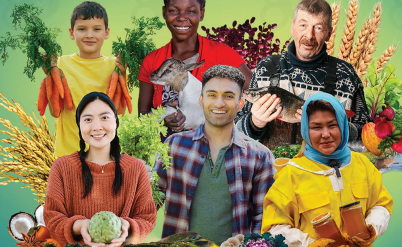
Since 1981, World Food Day has had a theme to help people focus their attention on a particular aspect of global hunger. For instance, in 1981, the theme was “Food Comes First.” This year the theme of the World Food Day is ‘Hand in Hand for Better Food and a Better Future’. This year’s theme focuses on global collaboration to create sustainable and equitable food systems for everyone, emphasizing on collective action to address current and future challenges in food systems. At the same time, the theme also calls for an urgent need for all the stakeholders including governments, collective organizations, farming community to come together and work in harmony with nature by promoting and practicing methods which are sustainable and environmentally friendly.
The author writes on agriculture and social issues; can be reached at [email protected]