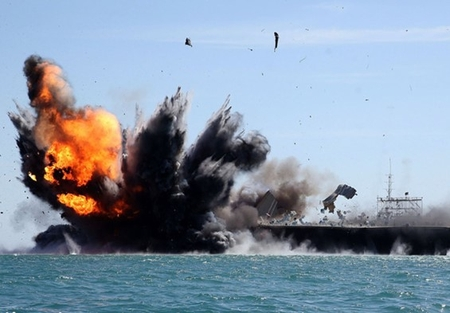
Washington/Tehran, Jun 28: The security situation in West Asia deteriorated sharply after the fragile ceasefire between the United States and Iran effectively collapsed, with both countries launching fresh military strikes that have heightened fears of a wider regional conflict.
The United States said it carried out airstrikes on ten Iranian military targets near the Strait of Hormuz after accusing Tehran of attacking a commercial oil tanker with a drone. According to the US Central Command (CENTCOM), the strikes targeted surveillance infrastructure, communication systems, air defence sites, drone storage facilities and mine-laying capabilities.
US President Donald Trump warned that any further violations by Iran could invite a much broader military response.
Iran retaliated within hours by launching missiles and drones at American military installations in Kuwait and Bahrain. The Islamic Revolutionary Guard Corps (IRGC) claimed responsibility for targeting Ali Al Salem Air Base in Kuwait and facilities associated with the US Fifth Fleet in Bahrain.
Kuwaiti authorities said their air defence systems intercepted incoming threats, while Bahrain activated air raid sirens and advised residents to move to safe locations. Initial reports indicated there were no confirmed American casualties, although officials said the situation remained fluid.
The latest exchange marks the most serious breakdown of the interim ceasefire agreed between Washington and Tehran earlier this month, with both sides accusing each other of violating the truce.
CENTCOM said Iran had been given an opportunity to uphold the ceasefire but instead launched a one-way attack drone that struck the Panama-flagged oil tanker MT Kiku in the Strait of Hormuz, prompting the US military response.
Iran’s Foreign Ministry, however, accused Washington of breaching the agreement first, saying its missile and drone strikes targeted American military assets in response to what it described as renewed US aggression.
The latest escalation follows Thursday’s attack on a commercial vessel in the Strait of Hormuz, which triggered retaliatory US strikes, followed by what Tehran termed defensive action against American military positions in the Gulf.
With both Washington and Tehran locked in a cycle of tit-for-tat military action, diplomatic efforts to restore the ceasefire have suffered a major setback, raising concerns of a prolonged regional confrontation.
Meanwhile, tensions also remain high along the Israel-Lebanon border. Israeli Prime Minister Benjamin Netanyahu defended the newly announced framework agreement with Lebanon but reiterated that Israel reserved the right to act against Hezbollah if its security was threatened.
Hezbollah has rejected key provisions of the US-brokered framework, while sporadic cross-border exchanges of fire have continued, fuelling fears that the conflict could widen further across the region. (Agencies)