Most critical is the second phase dealing with Gaza governance excluding Hamas
By Ashok Nilakantan Ayer
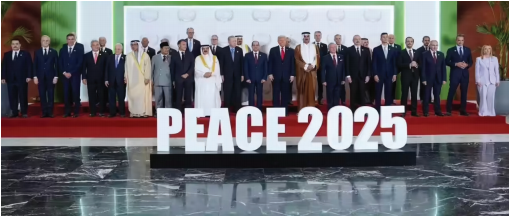
NEW YORK: On October 13, Monday, President Donald Trump stood in Sharm el-Sheikh, Egypt—a city deliberately chosen for its historical role as a venue for Middle Eastern peace negotiations—and signed what his administration has branded the “Trump Peace Agreement.”
Alongside him stood more than two dozen world leaders, representatives from Egypt, Qatar, Turkey, and dozens of other nations. Israeli hostages were simultaneously being released from Hamas captivity in Gaza. Palestinian prisoners detained by Israel for two years without charge were being freed. For a fleeting moment, the grinding machinery of conflict that has devastated the region for over two years appeared to pause.
This is, without qualification, a significant diplomatic achievement. After more than two years of warfare that killed tens of thousands of Palestinians and caused immeasurable suffering to Israelis held in captivity, a ceasefire has been negotiated and implemented.
The first phase of Trump’s 20-point plan has succeeded in securing the release of hostages, freeing Palestinian prisoners, and halting active military operations. Whether this represents the dawn of genuine, durable peace or merely a brief intermission before renewed conflict is a question that will define the next months and years.
Trump can claim substantial credit for this opening phase. His administration moved with unusual speed and purpose. His special envoys—Steve Witkoff and Jared Kushner—worked intensively with regional partners. Trump himself deployed the presidential authority to convene a global summit and put American weight behind a ceasefire framework. In a region where diplomatic efforts have often foundered on complications and competing interests, Trump’s willingness to declare success and move forward created momentum that other administrations might have lacked.
Yet even as Trump departs Cairo having achieved the first phase, the harder questions loom. Can Netanyahu hold the truce? Can Hamas honour its commitments? What happens when the negotiations turn to the genuinely intractable questions—the long-term governance of Gaza, the fate of Hamas, the path to permanent peace? And critically, how fragile is the accord that has been signed?
The first phase of Trump’s plan succeeded because it focused on the achievable: releasing living hostages, freeing Palestinian prisoners, and establishing a ceasefire framework. These objectives involved concrete transactions that could be verified and completed within defined timeframes.
By October 13, all 20 living hostages held by Hamas in Gaza had been released. Four deceased hostages were returned. More than 1,700 Palestinian detainees—held by Israel for two years without formal charges—were freed. Some 250 convicted Palestinian prisoners were released into the West Bank, Gaza, and Egypt. The images of reunions—hostages embracing their families after two years of captivity, Palestinian prisoners greeted by jubilant crowds in Gaza—provided visible confirmation that something substantive had been accomplished.
This phase succeeded because it offered asymmetric gains to both sides. Israel secured the release of hostages that had become a domestic political obsession. The government of Benjamin Netanyahu faced intense pressure from the families of hostages, from Israeli society, and from international opinion. Securing their release provided Netanyahu with a political victory after months of criticism that his government had prioritized military objectives over hostage recovery. For Netanyahu, phase one was a lifeline.
For Hamas and the Palestinian Authority, the release of detained Palestinians represented a tangible gain—evidence that the ceasefire had extracted concrete concessions from Israel. For Palestinian civilians in Gaza, the cessation of active warfare provided immediate relief from bombardment and the possibility of beginning the process of survival and recovery.
Trump’s role in this phase was real but should not be overstated. The groundwork for this ceasefire had been laid by the Biden administration’s previous negotiating efforts with Qatar, Egypt, and other mediators. Trump’s administration inherited a framework and accelerated its implementation. Trump’s personal engagement and his willingness to convene a global summit added momentum, but the underlying negotiating structure predated his involvement.
Nonetheless, Trump can reasonably claim credit for seeing this first phase through to completion. He provided the political will to conclude negotiations that might otherwise have been prolonged indefinitely.
The more difficult question is whether Benjamin Netanyahu can maintain this ceasefire and move toward genuine permanent peace. Netanyahu faces a political trap of his own making.
His far-right coalition partners—ministers like Itamar Ben-Gvir and Bezalel Smotrich—have opposed permanent ceasefire arrangements and have advocated for continued military operations to eliminate Hamas entirely. During the negotiation of this accord, Netanyahu had to manage these coalition pressures while also negotiating with international mediators and the United States. He appears to have satisfied his coalition temporarily by securing the hostage releases and agreeing that phase two negotiations would address the question of Hamas’s complete dismantling.
But here is the tension: Netanyahu has now publicly committed to a ceasefire framework that, if implemented fully, would require him to accept permanent limitations on Israeli military operations in Gaza, agree to Gaza’s reconstruction and eventual governance by non-military entities, and potentially accept international oversight. His far-right coalition partners view this as capitulation. They want Hamas destroyed, Gaza under Israeli control or dominion, and unlimited military power to prosecute Israeli security interests.
Netanyahu has attempted to thread this needle by suggesting that phase two negotiations remain open-ended, that the agreement does not preclude future military operations if Hamas violates the truce, and that Israel retains security control over Gaza. But these formulations are contradictory. A genuine, durable ceasefire and a sustainable peace architecture cannot coexist with Israeli threats of renewed military operations or de facto control over Palestinian territories.
The domestic political pressure on Netanyahu will intensify when phase two negotiations begin. His coalition will demand that he refuse permanent concessions to Palestinians, reject limits on Israeli military power, and pursue maximalist Israeli objectives. If Netanyahu succumbs to this pressure, the ceasefire will fracture.
Hamas faces a mirror-image problem. The organization has agreed to a ceasefire and committed to participating in phase two negotiations. But Hamas’s political legitimacy derives partly from its military resistance against Israeli occupation. A ceasefire that becomes permanent, combined with acceptance of international governance frameworks and demilitarization requirements, would fundamentally alter Hamas’s character and political position.
Hamas has a decades-long record of violating agreements it has signed. The organization has used ceasefires in the past as tactical pauses to rearm and regroup before renewed conflict.
International observers and Israeli security services have legitimate concerns about whether Hamas will genuinely disarm and accept demilitarization, or whether it will use the ceasefire period to reconstitute its military capacity.
Additionally, Hamas’s governance capacity is severely limited. The organization emerged from two years of warfare with its command structures partially destroyed, its military capability degraded, and its social service capacity devastated. Managing Gaza’s civilian administration, reconstruction, security forces, and international relations would require competence that Hamas has not demonstrated.
There are also factional tensions within and around Hamas. Splinter groups, rival Palestinian factions, and international terrorist designations all complicate Hamas’s ability to speak with a single voice and implement commitments. If hardline elements within or outside Hamas choose to reject the ceasefire and resume operations, the organization’s formal commitments become meaningless.
The spectacle of the Sharmel-Sheikh summit—with more than two dozen nations represented—creates an impression of broad regional consensus. Yet beneath this appearance of unity, significant skepticism and divergence exist among Arab states.
Notably absent from the summit were the heads of state of two of the region’s most powerful nations: Saudi Arabia’s Crown Prince Mohammed bin Salman and the United Arab Emirates’ Mohamed bin Zayed. Both dispatched senior officials but did not attend personally. This absence carries meaning. Both countries have grown “increasingly disenchanted” with Israeli Prime Minister Netanyahu’s approach and both have invested heavily in Palestinian statehood as a diplomatic priority.