Striking at nuclear installations is a clear possibility if war persists
By Dr Arun Mitra
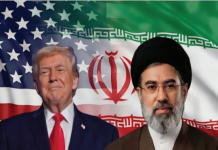
The United States of America President, Donald Trump, has now extended the deadline regarding the opening of the Strait of Hormuz. This decision appears to have been taken on the advice of his senior military leadership, as well as under pressure from European nations and countries of the Gulf Cooperation Council (GCC). These countries fear that, in retaliation for US bombing of critical infrastructure, Iran could target desalination and water treatment plants, leaving millions in the region facing severe water scarcity.
Trump has also said that good talks are ongoing with Iran. But Iran has categorically rejected Trump’s claim that negotiations are underway between the United States and Iran. This assertion may be a diversionary tactic; however, it is more likely that the US administration has begun to realize the limits of its military options against Iran. Even within the United States, there is no overwhelming support for Trump’s position. A growing section of public opinion believes that he has been influenced by Netanyahu’s strategic agenda and that this is not America’s war, but rather part of a broader Zionist vision of territorial expansion in the region.
Trump has also claimed that he could end the war within 30 minutes. Strategic experts have warned that such an outcome would only be possible through the use of nuclear weapons. This rhetoric is deeply alarming, especially coming from a leader perceived as impulsive and inconsistent—someone who frequently makes abrupt decisions, revises statements, and demonstrates a lack of coherent long-term strategy.
After nearly three weeks of conflict, both the United States and Israel appear frustrated. They had anticipated that Iran would capitulate within days, but this has not materialised. Contrary to expectations, Iran has not only resisted the US-Israeli offensive but has also retaliated by targeting US bases in the Gulf. Reports of Iran downing advanced fighter aircraft such as the F-35—operated only by the US and Israel—have added to the surprise. Furthermore, Iran’s reported launch of long-range missiles, reaching distances of up to 4,000 km into the Indian Ocean, has unsettled its adversaries. Recent strikes near sensitive sites, including the Dimona nuclear facility, have heightened Israeli concerns.
This war once again exposes the disregard of the Israeli regime for humanitarian norms and international agreements. Civilian populations, including children, have borne the brunt of attacks, while critical infrastructure has been systematically destroyed. The devastation witnessed in Gaza and the extension of hostilities into Lebanon reinforce this pattern. At the same time, Gulf nations are increasingly recognising the limitations of US security assurances.
The United States also appears to be facing growing isolation. NATO has reportedly declined involvement in securing the Strait of Hormuz, while European nations remain hesitant to engage militarily. Trump’s criticism of these countries as “cowards” has further strained relations. European leaders have responded by questioning the feasibility of their involvement, noting that if the United States—with its overwhelming naval power—cannot secure the Strait, smaller European forces would be ineffective.
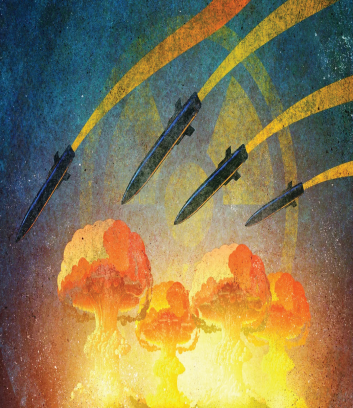
The danger lies in the possibility of further escalation. Should Iran succeed in striking critical strategic targets in Israel or US bases across the region, the resulting frustration within the US leadership could intensify. Given Trump’s impulsive disposition, there is a real concern that he may resort to extreme measures, including the use of nuclear weapons. Compounding this risk is the composition of the current US leadership, which appears to lack seasoned statesmanship and is driven more by business-oriented thinking than strategic foresight. Under Netanyahu Israel has become a rogue state. The Israeli Heritage Minister Amichay Eliyahu had threatened the use of nuclear weapons on Gaza. This reflects their mindset which is unlikely to have changed now particularly when Iran has attacked near the Dimona nuclear facility in Israel.
The economic consequences of this conflict are already being felt globally. The disruption of energy supplies is triggering a broader economic crisis. India, heavily dependent on energy imports, is particularly vulnerable. Early signs of distress are visible, with sections of the population reverting to traditional fuels such as firewood due to rising costs.
If the situation persists, it could lead to widespread industrial shutdowns, closure of small businesses, and severe disruptions in transportation systems—including rail, road, and air travel. Many countries lack sufficient reserves to withstand prolonged disruption. A shortage of fertilisers could further threaten global food security.
It is deeply concerning that, at present, no global power appears capable of effectively mediating an end to this conflict. BRICS, currently chaired by Indian Prime Minister Narendra Modi, has seen its credibility questioned in global geopolitics, particularly following his recent visit to Israel shortly before the outbreak of hostilities. This has created a perception that India is aligned with the US-Israel bloc.
Although the United Nations has been increasingly marginalized, it remains the only global institution with the legitimacy to intervene. It is imperative that the UN take urgent steps to broker a binding resolution involving the United States, Israel, and Iran, explicitly committing all parties to refrain from the use of nuclear weapons.
In this context, the Treaty on the Prohibition of Nuclear Weapons (TPNW) assumes greater relevance than ever before. The world must recognize the grave dangers posed by nuclear brinkmanship and act decisively to prevent a catastrophe of unimaginable proportions. Civil society organisations need to be more proactive in highlighting the humanitarian consequences of nuclear war. Extensive research and study material on this issue have already been prepared by the International Physicians for the Prevention of Nuclear War. (IPA Service)