
By Ravi Rohmetra
Maha Shivratri, which literally translates to the “Great Night of Shiva,” is a Hindu festival widely celebrated in India as well as in Nepal. The festival is observed on the new moon day in the month of Maagha according to the Hindu calendar. The day is celebrated to venerate Lord Shiva, an important deity in Hindu culture.
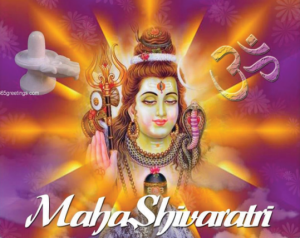
There are many mythological legends associated with this day. According to a popular legend, when a hunter could not find anything to kill for his food in a forest, he waited on the branch of a woodapple tree. In order to attract deer, he started throwing the leaves of the tree on the ground, unaware that there was a Shiva Lingam beneath the tree. Pleased with the woodapple leaves and the patience of the hunter, it is believed that Lord Shiva appeared before the hunter and blessed him with wisdom. From that day onwards, the hunter stopped eating meat.
Another legend has it that when the Earth faced imminent destruction, Goddess Parvati pleaded with Lord Shiva to save the world. Pleased with her prayers, Lord Shiva agreed to save the world on the condition that the people of Earth would worship him with dedication and devotion. From that day onwards, the night came to be known as Maha Shivratri, and people began worshipping Shiva with great enthusiasm.
Some folklore also considers this to be Shiva’s special day, as it is believed to be the answer given by Lord Shiva when asked about his favorite day by Goddess Parvati.
Maha Shivratri is a Hindu festival celebrated by followers of Hinduism across India. People often fast on the night of Shivratri and sing hymns and praises in the name of Lord Shiva. Hindu temples across the country are decorated with lights and colorful decorations, and people can be seen offering night-long prayers to the Shiva Lingam. Woodapple leaves, cold water, and milk are offered to the Shiva Lingam on this day, as they are believed to be Lord Shiva’s favorites.
It is believed that people who fast on this night and offer prayers to Lord Shiva bring good luck into their lives. The most popular Maha Shivratri celebrations take place in Ujjain, believed to be one of the principal abodes of Shiva. Large processions are carried out throughout the city, with people thronging the streets to catch a glimpse of the revered idol of Lord Shiva.
Mahashivaratri Festival, or “The Night of Shiva,” is celebrated with devotion and religious fervor in honor of Lord Shiva, one of the deities of the Hindu Trinity. Shivaratri falls on the moonless 14th night of the lunar month of Phalgun, which corresponds to February–March in the English calendar. To celebrate the festival, devotees observe day-and-night fasts and perform ritual worship of the Shiva Lingam to appease Lord Shiva.
Legends of Mahashivratri
There are various interesting legends related to the festival of Maha Shivaratri. According to one of the most popular legends, Shivaratri marks the wedding day of Lord Shiva and Parvati. Some believe that it was on the auspicious night of Shivaratri that Lord Shiva performed the Tandava, the dance of primal creation, preservation, and destruction. Another popular legend, stated in the Linga Purana, says that it was on Shivaratri that Lord Shiva manifested himself in the form of a Linga. Hence, the day is considered extremely auspicious by Shiva devotees, who celebrate it as Mahashivaratri — the Grand Night of Shiva.
Traditions and Customs of Shivaratri
Various traditions and customs related to the Shivaratri festival are dutifully followed by worshippers of Lord Shiva. Devotees observe a strict fast in honor of Shiva. While many survive on fruits and milk, some do not consume even a drop of water. Devotees strongly believe that sincere worship of Lord Shiva on the auspicious day of Shivaratri absolves a person of sins and liberates him from the cycle of birth and death. Shivaratri is considered especially auspicious for women. Married women pray for the well-being of their husbands, while unmarried women pray for a husband like Lord Shiva, who is regarded as the ideal husband.
To mark the Shivratri festival, devotees wake up early and take a ritual bath, preferably in the Ganga. After wearing fresh clothes, devotees visit the nearest Shiva temple to give a ritual bath to the Shiva Lingam with milk, honey, water, etc.
On Shivaratri, worship of Lord Shiva continues throughout the day and night. Every three hours, priests perform ritual pooja of the Shiva Lingam by bathing it with milk, yoghurt, honey, ghee, sugar, and water amidst the chanting of “Om Namah Shivaya” and the ringing of temple bells. A night-long vigil, or jaagran, is also observed in Shiva temples, where a large number of devotees spend the night singing hymns and devotional songs in praise of Lord Shiva. It is only the following morning that devotees break their fast by partaking of prasad offered to the deity.
(Ravi Rohmetra is freelance writer and a Social Worker and can be reached at [email protected]; 9419652999)