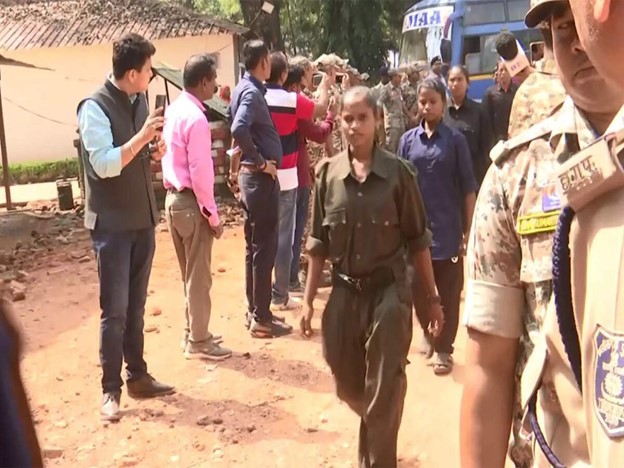
Raipur, Oct 17: In a major boost to India’s campaign against Left-Wing Extremism, 208 Naxalites, including 110 women, surrendered in Chhattisgarh on Friday, handing over 153 weapons as part of the state’s surrender and rehabilitation drive.
Officials said the surrendered cache included 19 AK-47 rifles, 17 SLRs, and 36 .303 rifles, among other firearms. The development marks a decisive shift in the fight against Naxalism, with most of the Abujhmad and North Bastar regions now cleared of Naxal presence, leaving South Bastar as the only remaining hotspot.
Calling it a “historic day for Chhattisgarh,” senior BJP leader Amit Malviya said the mass surrender reflected growing confidence in the government’s peace and rehabilitation policies.
Union Home Minister Amit Shah, who has set a March 2026 deadline to eliminate Naxalism, noted that 258 Maoists have surrendered across Chhattisgarh and Maharashtra in the past two days. “Those who renounce violence will be welcomed, but those who continue to wield guns will face decisive action,” Shah said.
Chief Minister Vishnu Deo Sai described the surrender as a “new dawn for Bastar,” crediting the success of the state’s Naxalite Surrender and Rehabilitation Policy 2025 and the Niyad Nella Naar scheme. He said the establishment of 64 new security camps in affected areas has enhanced safety and development outreach.
In the last 22 months, Chhattisgarh has witnessed 477 Naxals killed, 2,110 surrenders, and 1,785 arrests — signaling steady progress toward the goal of a Naxal-free state by March 2026.
According to police sources, 120 Naxals surrendered in Bijapur on Thursday, while 50 others turned themselves in at a BSF camp in Kanker. All 170 cadres will formally surrender before Chief Minister Sai in Jagdalpur on Friday.
Once a major Maoist stronghold spanning Narayanpur, Bijapur, Dantewada, Kanker, and parts of Maharashtra’s Gadchiroli, the dense Abujhmad forests are now witnessing a rapid decline in insurgent activity. Analysts attribute this shift to coordinated security operations and targeted government outreach initiatives. (Agencies)