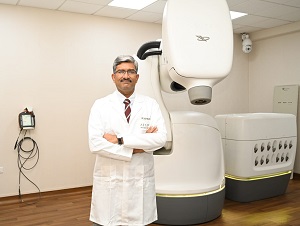
Dr. Aditya Gupta, Director – Neurosurgery and Cyberknife, Artemis Hospital, Gurugram
World Brain Day, is an important occasion dedicated to raising awareness about neurological disorders and promoting brain health across all age groups. The day serves as a reminder that the brain is the command centre of the human body, influencing everything from movement and memory to emotions and decision-making. While significant progress has been made in understanding and treating neurological diseases, conditions such as brain tumors continue to pose serious health challenges, often affecting patients physically, emotionally, and socially.
Among the many disorders that impact brain health, brain tumors remain one of the most complex conditions requiring timely diagnosis and specialized treatment. Fortunately, rapid advancements in medical technology are transforming the way these tumors are managed, making treatment safer, more precise, and less invasive than ever before.
Understanding Brain Tumors
Brain tumors are abnormal growths of cells that develop within the brain or its surrounding tissues. They may be benign (non-cancerous) or malignant (cancerous). Regardless of their nature, brain tumors can significantly affect an individual’s health depending on their size, location, and growth rate. Common symptoms include persistent headaches, seizures, memory problems, balance disturbances, vision changes, and alterations in behaviour or personality.
Because the brain controls virtually every function of the body, the presence of a tumor can have a profound impact on both physical and cognitive well-being.
The Impact of Brain Tumors
Brain tumors can affect a person’s quality of life in multiple ways. They may impair memory, concentration, speech, mobility, and other neurological functions while also causing considerable emotional and psychological distress. As a tumor grows, it can exert pressure on surrounding brain tissue, disrupting normal brain activity and potentially causing irreversible damage.
If left untreated, brain tumors may lead to severe neurological deficits and long-term disability, limiting an individual’s ability to perform everyday activities and maintain independence.
The Evolution of Brain Tumor Treatment
For decades, conventional open surgery has been the cornerstone of brain tumor treatment. These procedures involve creating an opening in the skull to access and remove the tumor. While highly effective in many situations, open surgery is associated with certain risks, including infection, bleeding, damage to healthy brain tissue, and prolonged recovery periods that may require extensive rehabilitation.
Today, remarkable advancements in medical technology have transformed the way brain tumors are diagnosed and treated. Innovations such as endoscopic neurosurgery, navigation-guided surgery, and non-invasive CyberKnife radiosurgery are helping neurosurgeons achieve better precision while reducing treatment-related complications.
Endoscopic Brain Tumor Surgery
Endoscopic brain surgery is a minimally invasive technique that enables neurosurgeons to access and treat tumors located deep within the brain, often through small openings or natural pathways such as the nasal cavity.
The procedure utilizes a thin instrument known as an endoscope, equipped with a miniature camera that provides highly detailed visualisation of the surgical field. Through one or two small incisions in the skull—or, in selected cases, through the nose—the endoscope transmits real-time images that guide the surgeon throughout the procedure.
The primary objective is to remove the tumor while preserving healthy brain tissue. The exceptional visual clarity offered by endoscopic systems has significantly enhanced the accuracy and safety of brain tumor surgery.
Endoscopic approaches are particularly useful in the management of pituitary tumors, skull-base tumors, and selected deep-seated lesions. In cases where complete tumor removal is not feasible, endoscopic surgery can be combined with robotic CyberKnife radiosurgery to treat residual disease and improve outcomes.
Navigation-Guided Neurosurgery
Navigation-guided surgery has revolutionized modern neurosurgery by bringing GPS-like precision into the operating room.
Using advanced imaging scans and specialized tracking technology, surgeons can create a highly detailed three-dimensional virtual model of the patient’s anatomy. This digital roadmap allows real-time guidance during surgery, helping neurosurgeons navigate complex structures with exceptional accuracy.
Much like GPS transformed geographic navigation, image-guided technology has fundamentally changed the practice of neurosurgery by enhancing precision, improving safety, and reducing the risk of injury to critical neurological structures.
Non-Invasive CyberKnife Radiosurgery
Among the most significant technological advances in brain tumor treatment is the CyberKnife System, a non-invasive robotic radiosurgery platform that offers an alternative to conventional open surgery for selected patients.
CyberKnife combines advanced robotics, sophisticated imaging technology, and computer-controlled radiation delivery to precisely target tumors with high-dose radiation while minimizing exposure to surrounding healthy tissue.
Advantages of CyberKnife Treatment
Non-Invasive Approach: CyberKnife treatment does not require surgical incisions or general anesthesia, significantly reducing many of the risks associated with traditional surgery.
Exceptional Precision: The system continuously tracks tumor movement through real-time imaging and automatically adjusts radiation delivery. This pinpoint accuracy helps protect healthy brain tissue and enhances treatment effectiveness.
Faster Recovery: Most patients experience minimal interruption to their daily routine and can return to normal activities within a short period, unlike the extended recovery often associated with open surgery.
Versatility: CyberKnife can be used to treat both benign and malignant brain tumors, as well as tumors located in other parts of the body, making it an important component of modern cancer care.
A Future Driven by Innovation
On World Brain Day, it is important to recognize that protecting brain health requires not only awareness and early diagnosis but also access to advanced treatment options. Brain tumors remain a significant challenge, but technological innovations are changing the outlook for patients across the world.
From endoscopic and navigation-guided neurosurgery to highly precise CyberKnife radiosurgery, modern treatment approaches are enabling doctors to treat complex brain tumors with greater accuracy and fewer complications. As we mark World Brain Day 2026, let us reaffirm our commitment to advancing brain health through innovation, education, and equitable access to care, ensuring that patients receive the best possible chance at a healthier and more fulfilling life.