
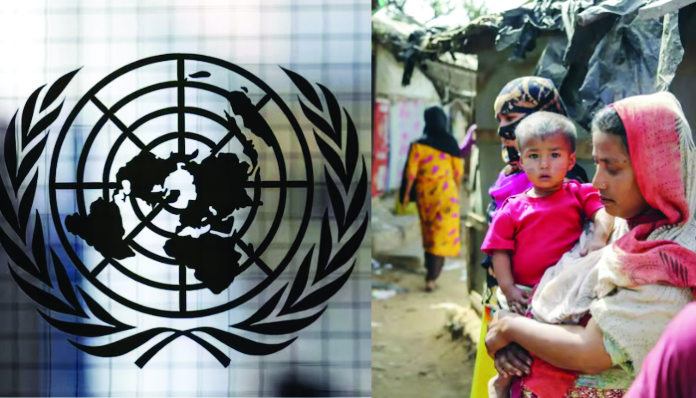
Jammu Tawi: A two-member team of the United Nations High Commissioner for Refugees (UNHCR) met Rohingya Muslims at a slum here amid a heated debate whether the illegally settled immigrants be provided water and electricity.
Senior Protection Officer Tomoko Fukumura along with Protection Associate Ragini Trakroo Zutushi on Monday met the Rohingya Muslims and some local residents in the Kiryani Talab area of Narwal, an official said on Wednesday.
He said the head of the team would return to Delhi on Wednesday evening as their attempt to meet some police officials failed.
On December 7, Jammu and Kashmir Jal Shakti Minister Javed Ahmed Rana assured that water supplies to the slums housing Rohingya immigrants would not be cut off, pending a decision from the Centre regarding their deportation. This followed claims from the Rohingya community living on three plots in Narwal that their water and power supply had recently been cut, despite being registered with the UNHCR.
Two days later, Jammu and Kashmir Chief Minister Omar Abdullah addressed the issue, calling it a humanitarian matter. “The central government should decide about them (Rohingyas). If they are to be sent back, do that. If you cannot send them back, we cannot starve them to death,” Abdullah said, urging the central government to clarify the fate of the immigrants. He also emphasized that the government could not treat the Rohingyas “like animals” and must provide basic support as long as they are in the region.
The Bharatiya Janata Party (BJP) has criticized the settlement of Rohingyas in Jammu, alleging a political conspiracy. The BJP has demanded a CBI investigation to uncover those responsible for bringing and settling the immigrants in the region. The party also accused the National Conference-led government of protecting the Rohingyas due to their “particular community.”
Government data shows that over 13,700 foreigners, mostly Rohingyas and Bangladeshis, are settled in Jammu and Kashmir. This number has increased by over 6,000 between 2008 and 2016. A police verification drive in March 2021 uncovered more than 270 Rohingyas living illegally in Jammu, including women and children, who were later detained at a holding center in Kathua sub-jail.
In response to this issue, the police registered 18 FIRs in November 2023 against landlords who rented properties to the Rohingyas without informing the authorities. The civil administration has also launched a drive to identify those who facilitated electricity and water connections to the settlements.
India, which is not a signatory to the 1951 United Nations Refugee Convention, considers Rohingyas as illegal immigrants, not refugees, and has yet to make a final decision on their fate.

