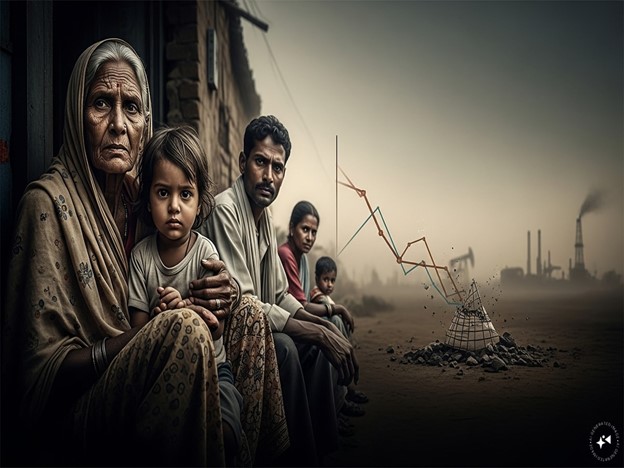
UNITED NATIONS, Apr 14: Escalating conflict in West Asia could push up to 2.5 million people in India into poverty and dent the country’s human development progress, according to a new report by the United Nations Development Programme (UNDP).
The report, titled ‘Military Escalation In The Middle East: Human Development Impacts Across Asia And The Pacific’, warns that rising fuel, freight and input costs are eroding household purchasing power, increasing food insecurity, and straining public finances across the region.
UNDP’s preliminary assessment estimates that 8.8 million people globally could fall into poverty due to the crisis, with the Asia-Pacific region facing potential economic losses of up to USD 299 billion.
In India, poverty levels could rise sharply—from about 400,000 people affected to nearly 2.5 million—while the poverty rate may increase from 23.9 per cent to 24.2 per cent, pushing over 2.46 million additional people below the poverty line.
The report noted that South Asia is likely to bear the largest burden, with poverty impacts ranging from 1.7 million to over 8 million people, reflecting high exposure to price shocks and income disruptions.
It also projected a marginal decline in India’s Human Development Index (HDI), with a loss of 0.03 to 0.12 years of progress, while countries like Nepal and Vietnam may also see setbacks. Iran could witness a sharper decline equivalent to one to one-and-a-half years of progress.
India’s heavy reliance on West Asia for energy and fertilisers makes it particularly vulnerable. The country imports over 90 per cent of its oil, with more than 40 per cent of crude and 90 per cent of LPG sourced from the region. West Asia also supplies over 45 per cent of India’s fertiliser imports.
The report highlighted disruptions in trade and supply chains, noting that West Asian markets account for 14 per cent of India’s exports and over 20 per cent of imports. Key export sectors such as basmati rice, tea, gems and jewellery, and apparel could face setbacks.
Food security risks are also expected to rise, especially with potential disruptions coinciding with the upcoming Kharif sowing season. Though urea stocks currently offer a buffer, prolonged instability could impact agricultural output.
Remittances may also be affected, with India having significant exposure to Gulf economies. As per government data, over 9 million Indians live in Gulf countries, contributing around 38–40 per cent of the country’s inward remittances.
The report further warned of employment risks, particularly in MSME sectors dependent on imported inputs or Gulf-linked trade. Informal workers, who make up about 90 per cent of India’s workforce, are likely to be the most vulnerable.
Rising input costs are already impacting sectors such as medical devices and pharmaceuticals, with raw material costs expected to increase by up to 50 per cent and medicine prices rising by 10–15 per cent.
Despite the challenges, the UNDP emphasised opportunities for countries to build long-term resilience through stronger social protection systems, diversified energy sources, and more robust regional supply chains, said Kanni Wignaraja. (Agencies)