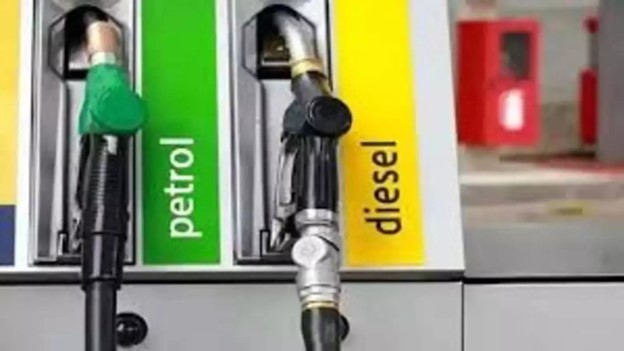
NEW DELHI, Apr 14: State-run fuel retailers are incurring losses of Rs 18 per litre on petrol and Rs 35 per litre on diesel as pump prices remain frozen despite rising global crude costs, industry sources said.
Despite deregulation, Indian Oil Corporation (IOC), Bharat Petroleum Corporation Limited (BPCL), and Hindustan Petroleum Corporation Limited (HPCL) have not revised retail fuel prices since April 2022, even as international crude prices fluctuated sharply.
Crude prices surged from over USD 100 per barrel during the Russia-Ukraine war, eased to around USD 70 earlier this year, and climbed again to nearly USD 120 last month following the US-Israel attacks on Iran that raised supply concerns.
At the peak last month, the three firms were losing around Rs 2,400 crore daily, which has since reduced to about Rs 1,600 crore after the government cut excise duty by Rs 10 per litre on petrol and diesel. However, the relief was used to offset losses rather than reduce retail prices.
A report by Macquarie Group estimated that at crude levels of USD 135–165 per barrel, oil marketing companies lose Rs 18 and Rs 35 per litre on petrol and diesel respectively. It added that every USD 10 increase in crude raises losses by about Rs 6 per litre.
The report flagged a likely increase in fuel prices after elections in states such as West Bengal and Tamil Nadu later this month.
India, which imports nearly 88 per cent of its crude oil needs, remains vulnerable to global price swings. Around 45 per cent of imports come from the Middle East, 35 per cent from Russia, and 6 per cent from the United States, though the country continues to export refined products like petrol, diesel, and aviation turbine fuel.
Even with reduced excise duties—now at Rs 11.9 per litre on petrol and Rs 7.8 on diesel—a complete rollback would not fully offset losses at current prices, the report noted. State VAT rates have largely remained unchanged.
A full excise rollback could cost the government around USD 36 billion annually based on projected FY26 consumption, potentially widening the fiscal deficit by about 80 basis points. Fuel excise contribution to revenue has already dropped to 8 per cent in FY26 from 22 per cent in FY17.
Rising crude prices are also expected to widen India’s current account deficit to about USD 20 billion in the first quarter of 2026. A sustained USD 10 increase per barrel could expand the deficit by roughly 30 basis points of GDP.
Earnings outlook for oil marketing companies remains uncertain, with every USD 1 change in crude impacting EBITDA by about 5 per cent. The sector’s break-even crude price is estimated at USD 80–85 per barrel.
Given the outlook, Macquarie said it prefers utilities over oil marketing companies in the near term. (Agencies)