
Special on His Birth Anniversary
By Omkar Dattatray
Let me commence this write-up with an important quote of the great saint, ‘Bhagwan’ Gopinath Ji: “Syazar, Pazar, Shvazar”—meaning that one should cultivate and preserve the three virtues of righteous moral conduct: straightforwardness, honesty and purity in thought, word and deed.
The birth anniversary of ‘Bhagwan’ Gopinath Ji falls on the Shukla Paksha Dwadashi of the month of Ashadha. This year, it will be observed on July 26, 2026. The occasion is celebrated with great reverence and enthusiasm by his devotees and followers at his various ashrams in Kashmir, Jammu, Delhi, Bengaluru and other places in India and abroad.
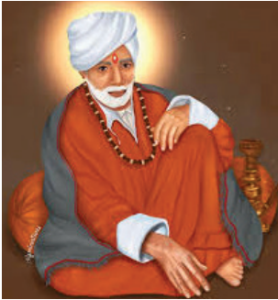
‘Bhagwan’ Gopinath Ji was born as Gopinath Bhan on Friday, July 3, 1898, in a Kashmiri Hindu family of Bhans in Bhan Mohalla, Srinagar. His birth corresponded to Ashadha Shukla Paksha Dwadashi, Ashadha 19, Vikrami 1955, according to the Hindu lunar calendar. His grandfather, Pandit Lachhman Joo Bhan, was a Wazir-i-Wazarat (Deputy Commissioner) in the Revenue Department during the Dogra rule in the erstwhile princely State of Jammu and Kashmir. His father was Pandit Narayan Joo Bhan and his mother was Haar Maal.
‘Bhagwan’ Gopinath Ji was a mystic saint of early twentieth-century Kashmir. He has been described as a Jivanmukta—a liberated soul—and his spiritual state as Shambhavi Avastha, the state of Shiva. Contemporary saints of his time also referred to him as an Aghoreshwar. Sometime between 1946 and 1956, he came to be known as ‘Bhagwan’ among his devotees and followers.
It is not known who his spiritual Guru was. However, he is known to have remarked that one should consider the Bhagavad Gita one’s spiritual master. In his teachings, he regarded the practice of self-enquiry (Atma Vichara) as highly effective in helping a seeker attain self-realisation. He considered ego an impediment to spiritual development and extolled the virtues of honesty and truthfulness.
‘Bhagwan’ Ji made no distinction between Hindus and Muslims and regarded them as one and the same. He spent considerable time meditating at various shrines in Kashmir, considering such practices spiritually beneficial, and would recommend them to spiritual seekers.
Although his family tried to persuade him to marry and lead a worldly life, he chose celibacy and devoted himself to spiritual practices while living in different localities of Srinagar. An introvert and a man of few words, he had a straightforward demeanour and always shunned publicity, preferring to remain anonymous.
Consequently, religious commentators and devotees have found it difficult to classify his spiritual journey within any particular school of Indian philosophical thought. Nevertheless, it is widely held that ‘Bhagwan’ Ji followed the tenets of the Trika doctrine of Advaita Kashmir Shaivism.
‘Bhagwan’ Gopinath Ji never taught in a formal manner. However, from time to time, he would make statements either in response to questions from devotees or spontaneously while sitting among them. His teachings continue to inspire spiritual seekers.
‘Bhagwan’ Ji is also known as Gop Bab and Tathi Bab among his devotees and followers. His birth anniversary is celebrated with great devotion and zeal in various cities across the country and at some places abroad. Havan, puja, aarti and other religious programmes are organised at his ashrams. Cultural programmes, debates and competitions are also held, and prizes are distributed among the winners.
On this auspicious occasion, the teachings of the great saint are recalled so that people may become aware of his spiritual message. At the Jammu ashram, a large number of devotees, followers and members of the general public participate in the celebrations. People remember the saint, offer prayers and seek his blessings.
After the Purnahuti of the Havan, Prasad is distributed among the devotees. Book exhibitions are also organised, displaying books on the life and teachings of the great saint. In his ashrams, devotees offer Thar, a preparation of yellow rice traditionally associated with Kashmir.
Devotees have immense faith in ‘Bhagwan’ Ji. They believe that visiting his ashram, remembering him, offering prayers and seeking his blessings bring spiritual strength and fulfilment in life. Many also have faith in the spiritual significance of the sacred ash and dhoop associated with his ashrams.
The great saint attained Nirvana and became one with the Divine on May 28, 1968, at the age of 69, on Jyeshtha Shukla Paksha Dwitiya, at Chandapora in Srinagar. His passing plunged his devotees and admirers into grief.
Let me conclude this write-up by paying glowing tributes to the great saint. It is believed by his devotees that ‘Bhagwan’ Gopinath Ji performed many miracles during his lifetime. One such widely narrated belief relates to the Kargil conflict, when officers and personnel of the Indian Army who had never even heard of him are said to have seen ‘Bhagwan’ Gopinath Ji at the front, guiding them during operations. Such is the greatness attributed to this saint by his devotees.
May the great saint remove all obstacles to peace and tranquillity and bless Jammu and Kashmir with prosperity and normalcy. May his grace bring peace and happiness to humanity.
We pray for peace and happiness on the birth anniversary of Saint Gopinath Ji. May he illumine our lives with his grace and blessings.
Many salutations to this great saint. Let us continue to celebrate the birth anniversary of Saint Gopinath Ji with devotion and dedication in the years to come.
(The author is a columnist, social activist, KP activist and freelancer)