Dr. Vinod Chandrashekhar Dixit
Harish Rana, a 32-year-old man from Ghaziabad, bid a tearful goodbye to the world on March 14, 2026, after a 13-year-long battle for life. His family, surrounded by loved ones and spiritual leaders, spent his final moments with him, seeking forgiveness and peace for his soul. Rana’s story has sparked a national conversation about the right to die with dignity and the complexities of euthanasia. His family’s courage and selflessness have inspired many, and their decision to donate his organs has given hope to those waiting for transplants.
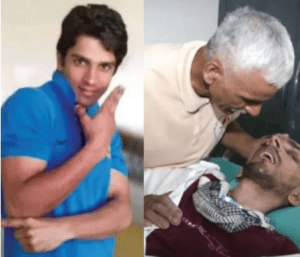
Rana’s life changed forever in 2013 when he fell from the fourth floor of his paying guest accommodation, suffering severe brain injuries that left him in a vegetative state. For over a decade, his parents devoted themselves to caring for him, despite the emotional and financial toll. Rana’s journey has touched the hearts of many, and his legacy will live on as a symbol of love, compassion, and the human spirit. The Supreme Court’s landmark decision on March 11, 2026, allowed Rana’s family to opt for passive euthanasia, marking India’s first court-ordered case of its kind. The court acknowledged that Rana’s condition was irreversible and that life support was only prolonging his suffering.
The concept of dignity of life is fundamental to human existence, emphasizing the inherent value and worth of every individual. However, the debate around mercy killing, also known as euthanasia, raises questions about the limits of this dignity. Mercy killing refers to the act of ending a person’s life to relieve suffering, usually due to a terminal illness or incurable condition. It’s a deliberate intervention to terminate life, often at the person’s request.
The debate on euthanasia in India has evolved through landmark Supreme Court cases. Initially, in Gian Kaur v. State of Punjab (1996), the court ruled that the right to life doesn’t include the right to die. However, in Aruna Shanbaug v. Union of India (2011), the court recognised passive euthanasia under strict safeguards. The law further evolved in Common Cause v. Union of India (2018), where the court ruled that the right to die with dignity is part of Article 21 and allowed living wills. Key developments include recognising the right to die with dignity, procedures for withdrawing life-sustaining treatment, and allowing advance directives or living wills.
The debate around euthanasia, or mercy killing, revolves around individual autonomy versus the sanctity of life. Advocates argue that individuals have the right to die with dignity, controlling their own life and death to end suffering. Euthanasia can reduce immense physical and emotional pain, allowing peaceful death. However, opponents believe life is sacred and should be preserved, citing risks of abuse and the availability of alternative options like palliative care. Laws vary globally, with some countries permitting euthanasia under strict conditions, while others, like India, restrict it, though passive euthanasia may be allowed in certain cases.
Harish Rana’s case marks a significant milestone in India’s journey towards recognizing the right to die with dignity. As the legal landscape continues to evolve, it’s crucial to balance individual autonomy with safeguards against abuse. The Supreme Court’s recognition of living wills and passive euthanasia underscores the need for compassionate end-of-life care. As India navigates this complex issue, Rana’s story serves as a poignant reminder of the importance of dignity, autonomy, and compassion in our laws and society.
(The author is a Free-Lance Journalist, Writer & Cartoonist Limca Book of Record Holder and can be reached at [email protected])