By Ashraf Hussain Katoch
“Quality education will become a reality the day a Collector’s child and a farmer’s child share the same bench.”
In 1950, the Constitution of India promised equality of status and opportunity. In 2026, the reality in Jammu and Kashmir challenges us to close the gap between promise and practice.
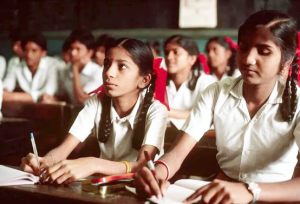
Quality education will remain a slogan until we create classrooms where every child, regardless of his or her family background, learns together with dignity and joy. When we achieve that, NEP 2020 and Viksit Bharat 2047 will stop being documents and start becoming living experiences.
Equality Is a Shared Journey
Article 14 guarantees equality before the law. Article 39(f) directs the State to ensure that children develop in conditions of freedom and dignity. Article 21A makes free and compulsory education a fundamental right.
The spirit is clear: the State must build one strong education system for all. When public servants and elected representatives walk through the gates of government schools with their children, they bring trust, attention, and hope. They become partners, not just policymakers. That partnership is the first step towards minimizing inequalities, as envisioned in Article 38.
Public service is about trusteeship. A policymaker who designs the mid-day meal scheme should feel proud if his own child enjoys that meal in school. A teacher who trains others should feel proud when his own child learns from those teachers. That pride is the moral force of nation-building.
Leadership Through Ownership
Yatha Raja, Tatha Praja—as the leadership, so the society.
During the freedom struggle, leaders like Mahatma Gandhi, Maulana Azad, and Dr. Zakir Hussain admitted their children to nationalist schools. Their personal choices gave credibility to their public message. It said: “This institution is good enough for our nation.”
When leadership demonstrates ownership of government schools, it sends the most powerful message to every parent in the Chenab Valley, Pir Panjal, and Kashmir: “This is your child’s school too.” That message rebuilds trust faster than any circular.
The Practical Truth: Quality Follows Stake
There is an administrative truth that India has already proven: institutions become excellent when the people who shape them also use them.
Example 1: Kendriya Vidyalayas
Kendriya Vidyalayas (KVs) are government schools, yet their results rival those of the best private schools. Why? Because the children of Army officers, scientists, and Central Government employees study there. When parents with influence ask for better laboratories or facilities, solutions arrive quickly. Stakeholder involvement protects quality, and quality attracts more stakeholders.
Example 2: AIIMS Delhi
AIIMS Delhi remains a world-class institution because the entire nation uses it. When leadership aligns itself with public institutions, resources, monitoring, and pride follow naturally.
Apply the same logic to Jammu and Kashmir’s government schools. The day a senior officer admits his or her child to a government school, four things happen almost overnight:
Infrastructure gets priority. The broken chair is replaced before the PTM because every child deserves it.
Teacher accountability rises. Attendance and engagement improve when leadership is directly involved.
Academic focus sharpens. DIETs and SCERT send their best mentors when they know outcomes matter to everyone.
Social equity grows. The contractor’s son and the farmer’s daughter learn teamwork, empathy, and mutual respect from Class I onwards.
This is not theory. In 2019, an SDM in Uttar Pradesh admitted his daughter to a government primary school. Within months, the community upgraded the school boundary wall, toilets, and drinking water facilities. Villagers remarked, “Pehle koi nahi aata tha. SDM sahab ki bitiya aayi to sab theek ho gaya.” One admission became a movement.
From Personal Choice to Collective Responsibility
The Constitution gives every citizen freedom of choice. For public trustees, however, that freedom is enriched by responsibility. A minister has the freedom to eat anywhere, but his greatest credibility comes when he eats what he serves to the poorest child.
Public servants and legislators use taxpayers’ money, Children’s Education Allowance, and government systems to frame syllabi and train teachers. When they place faith in the final product, they complete the circle of accountability.
The Supreme Court, in the T.M.A. Pai Foundation case, observed that education is not a business but a charitable activity. Let us treat government schools as the noblest form of charity for all children.
Global Evidence: Shared Schools, Strong Nations
Finland: Finland consistently tops global education rankings with a predominantly public-school system. Children of ministers and ordinary citizens study in the same schools. The result is equal funding and equal respect.
Cuba: Cuba has achieved near-universal literacy because leaders use the same schools and hospitals as ordinary citizens.
Japan: Japan’s post-war economic miracle was built upon strong public schools where leaders and citizens shared the same educational institutions. Moral pressure helped create national quality.
India cannot simply copy these models, but the principle is universal: when power aligns with public service, quality follows.
From the 1980s to Today: Rebuilding the Bridge
Until the 1980s, Jammu and Kashmir’s government higher secondary schools produced doctors, engineers, and KAS officers. The Patwari’s son and the Tehsildar’s son studied together. Teachers commanded respect because they taught everyone.
After 1990, conflict, liberalization, and changing aspirations created distance. As elite families moved to private schools, the sense of “our school” weakened.
Today, we have three groups: the poor, who have no choice; the middle class, which sacrifices heavily for private education; and the elite, which designs policy for a system it does not use.
To deliver the vision of NEP 2020, we must reunite these groups into one circle of stakeholders. That reunion begins with trust.
The Roadmap: From Appeal to Architecture
Moral appeal must be backed by positive and practical measures.
Leadership Code for Public Servants
The J&K Government can introduce a voluntary Leadership Code for IAS, JKAS, and other public servants, stating: “I will prefer a government school for my children, subject to availability.” Not a mandate, but a badge of honour similar to the spirit of the All India Services Conduct Rules.
Incentivize the Choice
Give 5 percent weightage in Annual Performance Reports to officers whose children study in government schools.
Reserve 10 percent seats in Model Schools, Kendriya Vidyalayas, and Sainik Schools for children of state employees who choose government schools.
Publicly felicitate MLAs, MPs, DCs, SPs, and other officials whose children pass Class X from government schools.
Make it aspirational.
Create One Leadership School Per District
Convert one higher secondary school in each district into a Leadership School with KV-level laboratories, libraries, and sports facilities. Appoint the best principals through a transparent process. Encourage DCs, SPs, MLAs, MPs, and other leaders to admit their children there.
Once influential families experience quality education, demand for replication will emerge naturally.
Universal School Shiksha Sabha
In every Panchayat, let parents of both government and private school students sit together for social audits. When an officer’s wife and an MGNREGA worker’s wife discuss the same textbook, accountability becomes collective.
Officers involved in education policy from the rank of Under Secretary and above should voluntarily disclose where their children study. We already disclose assets; education is an even greater asset.
Government schools may currently lack quality, but quality rises when stakeholders return. The broken laboratory, the absent teacher, and the poor teaching-learning material all receive attention when the school belongs to everyone again.
We already have Kendriya Vidyalayas and Navodaya Vidyalayas. These institutions excel because selected students receive opportunities to study there.
J&K can create Officers’ Ward Schools in Jammu, Srinagar, and district headquarters with inter-district transfer facilities. The real problem is trust, not transfer.
We are not asking for a ban on private schools. We are asking for ethical leadership. The Constitution also enshrines fraternity. Fraternity means sharing institutions, not separating them.
The notion that teachers send their children to private schools exists because teachers often follow leadership. When a Deputy Commissioner’s or MLA’s child joins a government school, the teacher’s child may follow the very next day. Change flows from the top down.
If we continue on separate paths, 2047 may witness two Indias: one in air-conditioned classrooms preparing for competitive examinations, and the other on broken mats, dropping out after Class VIII. Those two Indias cannot build a Viksit Bharat together.
NEP 2020 states that education must create an enlightened, socially conscious, knowledgeable, and skilled nation. Enlightenment cannot flourish when the enlightened class refuses to share the classroom.
Patriotism is not only about hoisting the national flag on 15 August. Patriotism is also about admitting your child to the same school where your driver’s child studies.
We do not need only new buildings; we need renewed commitment. The day an Education Department press conference is held on a government school campus in Ramban or Kupwara, every parent will believe: “Sarkari School Badal Sakta Hai.”
Until that day, every speech on quality remains incomplete, and every blanket criticism of the government school teacher remains unfair.
The Constitution gave us equal rights; the classroom must give us equal dignity.
Quality will not come through circulars. It will come when the Collector’s car stops at the same gate where the labourer’s bicycle is parked.
Let the revolution begin with an admission form, not with an advertisement.
(The writer is a Govt. School Teacher in Mohalnal, Distt Ramban)