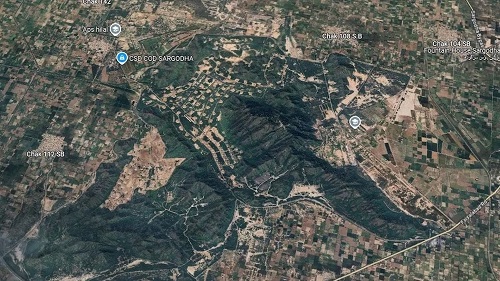
New Delhi, Jul 20 – Newly analyzed satellite imagery suggests that India did, in fact, strike Pakistan’s sensitive Kirana Hills nuclear-linked facility during Operation Sindoor, contradicting India’s official denial made in May.
Geo-intelligence expert Damien Symon posted findings on social platform X, using Google Earth images from June 2025, that show visible missile impact in the Kirana Hills region of Pakistan’s Sargodha district. The visuals also revealed damage and rapid repair activity at the nearby Sargodha (Mushaf) airbase, indicating it may have been targeted as well.
India reportedly launched Operation Sindoor on the night of May 9–10 in retaliation for the Pahalgam terror attack in which several Indian tourists were killed by Pakistan-backed militants. During the operation, India is believed to have fired 15 BrahMos missiles and multiple precision-guided munitions, damaging 11 out of Pakistan’s 13 major airbases and crippling sections of its air defence infrastructure.
Kirana Hills is considered a strategic military site, allegedly housing underground nuclear storage and military radar installations, and was reportedly used for subcritical nuclear tests in the 1980s. Its proximity to the Sargodha airbase, Pakistan’s main air defence hub, adds to its sensitivity.
At a press conference on May 12, Air Marshal A.K. Bharti’s sarcastic denial of any strike on Kirana Hills — delivered with a knowing smile — only fueled online speculation. His viral response, “Thank you for telling us that Kirana Hills houses some nuclear installations. We did not know about it,” has since taken on new meaning in light of Symon’s satellite analysis.
The apparent scale of the damage suggests that Pakistan’s military was caught off-guard, prompting an urgent call for DGMO-level ceasefire talks to prevent further escalation.
If confirmed, the strike would mark one of India’s most audacious cross-border military operations, signaling a major shift in both intent and capability in response to state-backed terrorism.