Questions EC’s ‘Delay’ in filling vacant J&K Rajya Sabha, Assembly Seats
Says Statehood is our right; rules out ‘Hybrid System’
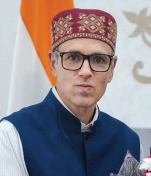
SRINAGAR, Jul 20: Jammu and Kashmir Chief Minister Omar Abdullah has unequivocally stated that Pakistan’s “inimical intentions” remain the most formidable challenge to achieving a terror-free Jammu and Kashmir, cautioning Islamabad that India now views any terror attack as an act of war.
In an interview with news agency, Abdullah dismissed the narrative that the abrogation of Article 370 was the solution to terrorism in the region, asserting that the recent Pahalgam attack, which claimed 26 lives, had starkly proven this false.
“No matter what we do, if Pakistan’s intent is inimical, then we will never fully achieve a terror-free Jammu and Kashmir. And I think Pahalgam has proven that,” Abdullah said.
“The BJP tried very hard to sell this narrative that terror in Jammu and Kashmir was the result of Article 370. We know that’s not true. Terror in Jammu and Kashmir is the result of Pakistan’s intentions. And therefore, that’s why the removal of Article 370 did not stop terror in Jammu and Kashmir,” he said.
The chief minister emphasised that the onus is now on Pakistan to reassess its strategy and highlighted a critical shift in New Delhi’s posture, warning that the Indian government has set a “very low bar” for what constitutes an act of aggression.
“The biggest challenge will be to convince Pakistan that its support for these sorts of activities is bad for us, but it’s bad for Pakistan,” Abdullah stressed.
“And given now the sort of very low bar that the Government of India has set, that any attack will be seen as an act of war, Pakistan needs to seriously think about whether it wants to plunge the neighbourhood into a war.” On the Pahalgam terror attack that killed 26 people, mainly tourists, Abdullah acknowledged Lt Governor Manoj Sinha’s admission of a “security and intelligence failure” and termed it as a positive first step.
However, he asserted that it was “not good enough.” He said, “26 people died. 26 innocent people were brutally murdered. Where were the lapses? This Pahalgam incident brought two nations, two nuclear powers to war.” “As a first step, it is appreciable that the Lt Governor (Manoj Sinha) has said that he is responsible. But down the chain of command, accountability has to be fixed, since we know now that it was a security and intelligence lapse. The next step would be to fix responsibility. And then heads must roll,” he said.
Post Pahalgam, the chief minister expressed optimism to a question whether his government could balance the fragile peace with the vital need to revive tourism saying, “We have to trust our forces to do what is right and to ensure that any gaps that have been identified as a result of Pahalgam are plugged.” He stressed about his government’s push to restart tourism, saying “tourism is an important part of JK’s economy” and said a vast number of jobs and its appeal as a destination people genuinely want to visit.
Meanwhile, Chief Minister Omar Abdullah has voiced concern over the “undue delay” in filling Rajya Sabha seats and conducting bye-elections to two assembly seats in the Union territory.
Abdullah called on the Election Commission (EC) to clarify the reasons for the delay, stating, “We don’t understand… I don’t understand why these elections are being put on the back burner.” He was replying to questions about by-elections to two assembly seats — Nagrota in Jammu and Budgam in Kashmir — as well as the four vacant seats of Rajya Sabha.
The chief minister said that the Jammu and Kashmir assembly has had two sessions since the last election, and yet, no polls have been conducted for the Rajya Sabha seats. “Why has there been no Rajya Sabha election? It takes one day,” he added.
Meanwhile, Chief Minister Omar Abdullah also made a forceful plea for restoration of statehood to Jammu and Kashmir without further delay, and indicated that all avenues, including legal options, were being explored by the ruling National Conference in this regard.
Nearly ten months after the National Conference swept to power in the Union territory, Abdullah asserted that statehood was a fundamental right of the people.
“The Centre had promised it in Parliament and before the Supreme Court,” he said.
Abdullah dismissed talk of a “hybrid system” of government under which law and order would continue to be with the Centre even after statehood is restored and said such talk was emanating from those who had cast doubts about the holding of last year’s Assembly elections in which over 64 per cent of voters participated.
“Well, obviously, it’s not an ideal situation. In spite of repeated promises, commitments in Parliament, commitments to the Supreme Court, the matter has still not sort of been resolved. And we’re not asking for something that is not our due. Statehood is the right, it was promised to the people.
“So, we’re not asking for it. It’s not something that is out of the ordinary or was not part of the public discourse. But, for reasons best known to the powers that be in the Union government, it hasn’t happened so far. But, we’re pushing,” Abdullah told a national news agency in an interview.