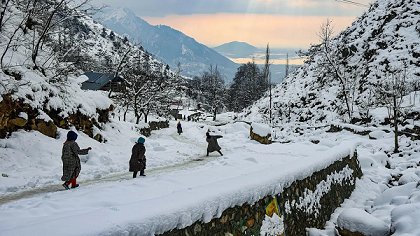
Srinagar, Dec 10: A wave of intense cold swept through the Kashmir Valley, with Srinagar recording the season’s lowest minimum temperature of minus 5.4°C on Tuesday, according to the Meteorological (MeT) Department. The freezing temperatures have brought a harsh chill to the region, impacting daily life and prompting people to take extra precautions.
Gulmarg, a popular tourist destination, saw temperatures drop to minus 9°C, while Pahalgam recorded minus 8.6°C. As a result, water taps froze in Srinagar and other towns, forcing residents to light small fires around them in an effort to de-freeze them. The freezing conditions also led to slippery roads, making it difficult for pedestrians and motorists to navigate the streets, with fewer vehicles visible on the roads in the early morning hours.
Elsewhere in Jammu and Kashmir, temperatures were similarly low. Jammu city recorded a minimum temperature of 5.4°C, Katra 5.6°C, Batote 1°C, Banihal minus 2.2°C, and Bhaderwah minus 3.4°C.
This cold spell precedes the onset of the annual 40-day harsh winter period known as “Chillai Kalan,” which officially begins on December 21 and ends on January 30. During this time, the temperature difference between the day and night narrows, exacerbating the cold.
As the region braces for this bone-chilling period, Kashmiris are preparing by relying on traditional methods to stay warm. The “Kangri,” a fire pot woven from willow wicker, remains an essential source of warmth, especially during the Chillai Kalan. The Kangri is typically kept under the long woolen overcoat called the “Pheran,” offering a unique combination of warmth not matched by modern heating systems, which are often unreliable in the electricity-deficient region.
In addition to relying on the Kangri, Kashmiris also prepare for the harsh winter months by drying vegetables, including tomatoes, brinjals, and pumpkins, to ensure food availability when fresh produce becomes scarce.