New Delhi is advantageously placed in export to take on Vietnam
By Subrata Majumder
Notwithstanding COVID 19 pandemic escalating geo-economic turmoil, India continued to float on high growth. It pitched 9.2 percent growth in 2023-24 and 6.5 percent growth in 2024-25 (over and above high growth in the preceding year), which raised several eyebrows in the world. This compares well with the global downswing growth of 3.3 percent in 2023 and 3.2 percent in 2024, according to IMF.
Inflation (by CPI) downed from 5.6 percent in 2023-24to 4.6 percent in 2024-25. Exports inched up in growth by 0.14 percent in 2024-25 percent amidst the global market turbulence. Industry revived with a growth by 10.9 percent in 2023-24 and sustained the tempo by 5.9 percent in 2024-25.
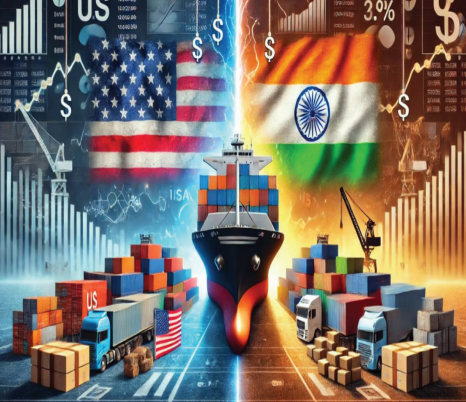
Given the sustainability of economic growth amidst global pandemic of COVID 19, India ensures a strong base for macro-economic parameters, unleashing a determination to belittle the threat of Trump’s tariff war.
In India, export of merchandise goods is not the principal contributor to its GDP growth. Growth in India depends substantially on domestic issues, led by domestic demand and investment.
According to IMF, India’s exports of merchandise goods and services accounted for 21.8 percent of GDP in 2021-22. Of these, the stake of merchandise goods (which would face Trump’s tariff woes)was 13 percent. It is lower than ASEAN majors, like in Thailand, it is 70.1 percent, in Malaysia it is 71.4 percent and in EU, it is 40.3 percent, according to World Bank report.
According to PIB, India’s exports of merchandise goods and services was US $ 778.2 billion in 2023-24. Merchandise goods was worth US$ 437.0 billion and service exports worth US$ 341.1 billion. In other words, stake of merchandise goods in total export was 56.2 percent.
USA is the biggest destination for India’s export. USA has always been the engine for India’s export surge. It accounted for one fifth of India’s total export. In 2024-25, India’s export to USA was US $ 86.6 billion, which accounted for 19.8 percent of India’s total exports. In contrast, its import from USA was US$ 45.3 billion, leveraging a favourable trade balance to India of US $ 41.3 billion.
Given the ratio of exports of merchandise goods to GDP (13 percent), vis-a-vis, export to USA, India’s dependency on USA for its GDP growth is insignificant. It was 2.5 percent of GDP in 2024-25. Eventually, India’s dependence on exports to USA, though higher than other nations, is unlikely to arrest its momentum of growth in the economy due to Trump’s high tariff.
The major export items to USA constitute 4 groups, viz, electronic components, textiles including garments, gems and jewellery including diamonds and drugs and pharmaceutical intermediates. Together, they accounted for 58.5 percent of total export to USA in 2024-25.
Excepting electronics and drugs and pharmaceuticals, the major items in the export basket of USA are labour intensive industries, viz textiles including garments and gems and jewelry. This composition of export basket will unleash rather a fresh life to Indian exporters over Vietnam and China – the strong competitors to India.
According to Trump’s announcement on July 2, 2025, Vietnam will attract20 percent tariff on several goods and 40 percent on goods deemed to be transshipped from third countries. Transshipping involves transferring cargo from one vessel to another while in transit to the destination country. It is often done to disguise a product’s country-of-origin in order to illegally skirt import levies.
Experts believe that around 16 percent of Vietnam exports to USA is transshipped and much of these are from China to evade higher tariff by USA. Textiles, including garments and electronics are the cases in point.
At present, Vietnam is a major exporter of electronic and textile, including garments, to USA. In 2023, exports of textiles, including garments and electronics to USA were US $ 11 billion and 35.9billion respectively. They are 60 percent and 300 percent more than India’ export.
Nevertheless, despite lower tariff of 20 percent on Vietnam (against 26 percent on India), India has an edge. This is because more than one sixth of these items from Vietnam transshipped to USA and China plays significant role. Now, as they will attract higher tariff of 40 percent, India vies for a challenge to edge Vietnam.
As Trump’s tariff announced on April 2, 2025, China will attract higher tariff of 34 percent, against India with 26 percent. China is the biggest exporter of drugs and pharmaceutical intermediates to USA, followed by India at the 3rd rank in the export.
Besides tariff differences between the two nations, which will give an edge to India in exports, significance of India lies with different category of exports of drugs and pharmaceutical intermediates to USA. While India dominates in generic drugs exports to USA, China dominates in APIs (Active Pharmaceutical Intermediates) and finished drugs.
In conclusion, Trump’s threat of high tariff is unlikely to be a major headwind to India’s growth. It is in a better position to address the tariff woes and navigate its growth, articulating its policy changes and accelerating relations with USA. (IPA Service)