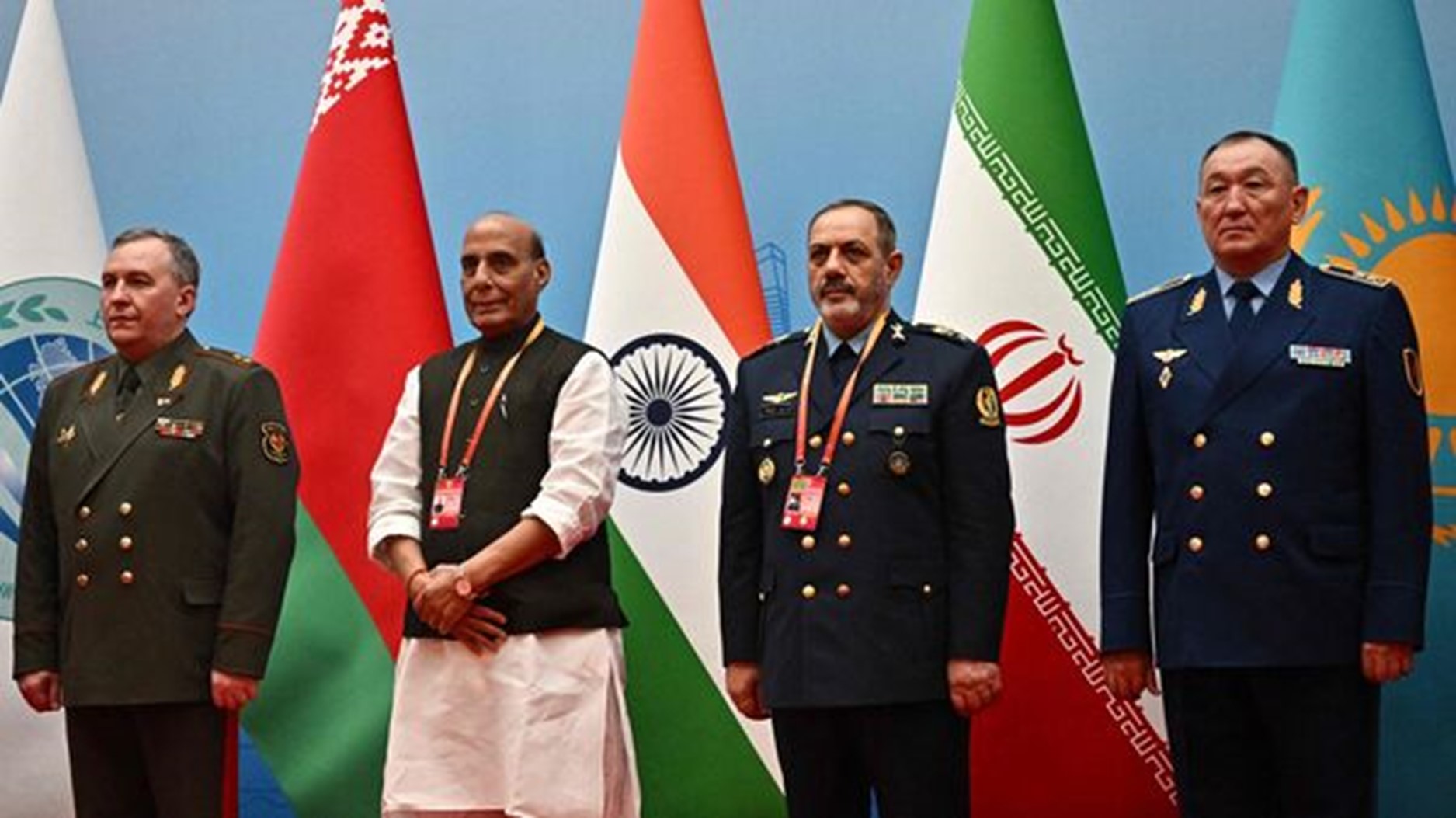
Shanghai/Qingdao, June 25: In a strong diplomatic move, Defence Minister Rajnath Singh refused to sign a joint statement at the Shanghai Cooperation Organisation (SCO) Defence Ministers’ meeting after it omitted mention of the recent Pahalgam terror attack that killed 26 civilians and instead included a veiled accusation against India over Balochistan.
Singh, attending the summit in Qingdao, China, expressed India’s deep displeasure over the document, which allegedly excluded the Pahalgam attack at Pakistan’s behest. China, a close ally of Pakistan, currently holds the SCO chair.
Calling out the “double standards” of member states, Singh stressed that peace and prosperity cannot coexist with terrorism and the spread of weapons of mass destruction to terror groups. “Some countries use cross-border terrorism as an instrument of policy. SCO should not hesitate to criticise such nations,” he said, in a clear reference to Pakistan.
The Defence Minister also cited India’s Operation Sindoor, launched in response to the Pahalgam massacre, where tourists were targeted after being profiled by religion. The attack was claimed by The Resistance Front, a Lashkar-e-Taiba proxy.
Singh reaffirmed India’s zero-tolerance policy towards terrorism and called for holding sponsors, organisers, and financiers accountable. “Terrorism is criminal and unjustifiable, regardless of the motivation,” he stated, urging SCO members to unequivocally condemn all acts of terror.
India has consistently rejected Pakistan’s allegations of interference in Balochistan, instead urging Islamabad to curb its support for terrorism. The Defence Minister’s stance aligns with New Delhi’s wider diplomatic campaign post-Operation Sindoor, which included sending delegations abroad to convey India’s counter-terror strategy.
The SCO, comprising 10 member states including India, China, Pakistan, and Russia, aims to promote regional security and stability.