
By T N Ashok
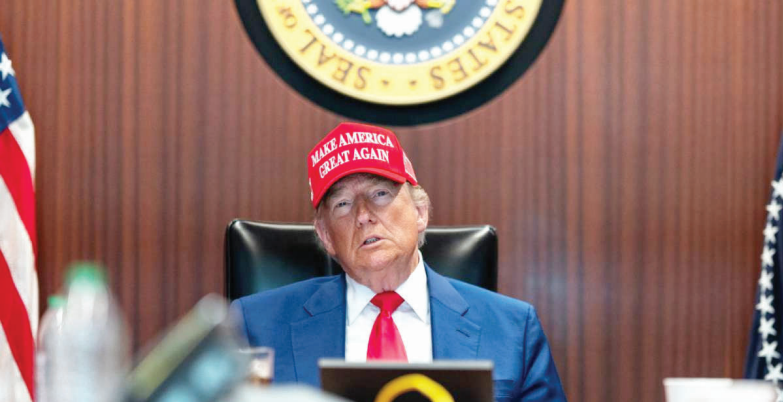
NEW YORK: United States officials are showing their frustration at the Indian Prime Minister not conceding to the U.S. terms at the trade talks, but at the same time they do not rule out New Delhi’s bend down after some days. In the last three days since July 30 announcement of Trump imposing 25 per cent tariff on Indian exports, the US officials in various interactions made the observation that Trump did not expect such behaviour from his friend Narendra Modi.
Trump called India a “friend,” but bluntly criticized it for having “among the highest tariffs in the world” and for being a major buyer of Russian energy and armaments, undermining U.S. efforts to isolate Moscow during the Ukraine war.
Treasury Secretary Scott Bessent echoed the administration’s frustration, calling India “not a great global actor” and accusing it of slow-walking trade talks while continuing to process and resell discounted Russian oil. U.S. Secretary of State Marco Rubio described India’s energy purchases from Russia as “most certainly a point of irritation” in U.S.–India relations—even while acknowledging India as a strategic partner.
Despite mounting international pressure, Indian policymakers stressed that energy security is paramount. Foreign Secretary Vikram Misri stated, “It is the highest priority of the government of India to provide energy security… we will do what we need to do”.
However, by late July, state refiners began to pause imports of Russian crude, responding to narrowing discounts and U.S. pressure—though private firms like Reliance Industries continued limited purchases under existing contracts.
ICRA’s Aditi Nayar already downgraded India’s GDP forecast from 6.5% to 6.2% following indications of higher-than-expected tariffs and penalties. Nomura estimated that the combined tariff and penalty could shave off a further 0.2 percentage points from India’s growth—marking the move as “growth negative”.
Shipping, dairy, manufacturing, and pharma are among India’s major export sectors to the U.S. and potentially most exposed. Experts at EY India flagged that marine products, pharmaceuticals, textiles, leather, and automobiles could see significant disruption due to higher U.S. duties. Pharma is perhaps most at risk, given its reliance on U.S. demand and price-sensitive margin constraints.
India’s relatively diversified trade relationships provide some buffer: Exports to Europe, Southeast Asia, Africa, and the Middle East have expanded steadily, reducing U.S. dependence. Domestic consumption also cushions the economy. As Nomura observed, “the implied shift in supply chains from China or Vietnam to India may now become less attractive” if India’s export costs rise too steeply.
FIEO Director General Dr. Ajay Sahai described the 25% tariff as “disappointing,” expressing concern over the lack of clarity on the additional penalty and emphasizing the urgent need for negotiations.
Commerce Minister Piyush Goyal rejected Trump’s description of India as a “dead economy” and reaffirmed India’s resolve: “India refuses to play ‘dead economy’… we will protect our interests and sovereignty”. India also insisted that agriculture, dairy, and GM food remain off-limits in the negotiations—reflecting long-standing red lines for its trade diplomacy.
The tariff move aligns with pending U.S. legislation and foreign policy objectives: U.S. Senator Lindsey Graham has proposed a bill to impose up to 500% tariffs on countries that continue to import Russian energy—a measure clearly referencing India and China. The Sanctioning Russia Act of 2025, introduced by Senators Lindsey Graham and Brian Fitzpatrick, empowers the President to enforce sweeping sanctions—including massive import duties—against countries trading with Russia if it does not cease its war. These legislative moves signal increasing U.S. resolve to penalize not just Moscow but its trade enablers—a political strategy aimed at reinforcing the global isolation of Russia.
India’s long standing defense and energy ties with Russia are historical and indispensable—but now present a geopolitical friction point with the U.S. Despite this, New Delhi reinforced its commitment to the India–Russia partnership through a statement reaffirming “a steady and time-tested partnership,” even as it pledged to evaluate strategic options in light of the U.S. tariffs.
At the same time, India continues trade talks with the U.S., with both sides expecting a delegation from Washington in India later in August to resume negotiations on a bilateral trade agreement—though divisions remain, especially over agriculture and high tariff sectors.
India reacted swiftly to the tariff news:The rupee slumped, markets opened in the red, and sentiment soured as investors absorbed the diplomatic setback—and its potential hit to exports and growth. Equally, the broader emerging markets showed caution, particularly as U.S. tariffs added inflationary pressure on consumers and businesses globally
India is likely to double down on trade autonomy, holding strong on sensitive sectors like agriculture, dairy, and GM food. The upcoming U.S. delegation visit may be make-or-break: India will press for fair terms; U.S. officials may demand curbs on Russia ties.
Opposition sectors may exploit the tariff fallout to paint the government’s foreign policy as transactional and costly.BJP MPs and government spokespersons will need to navigate backlash and justify strategic decisions amid economic headwinds.
Trump’s tariff move represents the first time a key U.S. trading partner has been penalized for third-party energy and defense alignment. It’s both a strategic warning and an economic lever—designed to pressure India into aligning more fully with U.S. geopolitical aims. Whether that backfires or succeeds will depend on India’s resilience—via export diversification, diplomatic balancing, and policy adaptability.
Commerce Minister Piyush Goyal put it succinctly: India is not about to be coerced into a position of diplomatic or economic weakness. India’s challenge—and opportunity—lies in demonstrating its ability to manage external pressure without compromising its strategic autonomy or undermining growth that lifts hundreds of millions. (IPA Service)


