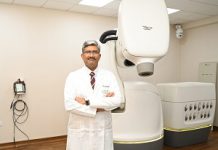
Dr Vikas Singla, Senior Director & Head, Gastroenterology, Institute of Gastrointestinal and Liver sciences, Max Super Speciality Hospital, Saket, Delhi
Achalasia Cardia is a rare disorder of the esophagus or food pipe, characterized by difficulty in swallowing the food. In normal conditions, swallowed food passes through food pipe into the stomach. This requires coordinated action of esophagus known as peristalsis and relaxation of lower esophageal sphincter known as lower esophageal sphincter (LES). In patients with achalasia cardia, both the contraction of esophagus muscle and relaxation of LES are defective, leading to difficulty in swallowing food. Patient usually complaint of choking sensation after swallowing of food or liquids. Cause of achalasia cardia is unknown, however various virus infections has been implicated in causing achalasia cardia.
Symptoms of Achalasia Cardia
- Difficulty in swallowing food, both for solids and liquids. Many times patient modify their diet, take more water to assist swallowing or perform various activities such as raising shoulders to assist swallowing. Many times patients take longer time to finish food. In social gatherings, patients are not able to take adequate food, leading to dissatisfaction. Many patients, tend to avoid social meeting to avoid such circumstances.
- Regurgitation of food, liquid food coming back from mouth or nose specially during night. Food and liquids swallowed during day are not able to move down in stomach and get accumulated in food pipe. When patient lies down, the liquid food may come back through mouth or nose and will cause awakening from sleep.
- Recurrent chest infection: Food from esophagus may move upward and pass in food pipe and lungs. This condition may lead to recurrent episodes of chest infections.
- Weight loss due to poor oral intake: If condition is untreated, due to poor oral intake, patient may suffer from weight loss.
Diagnosis of achalasia cardia: Because of less awareness in medical community, there is often delay in diagnosis of achalasia cardia.
Upper GI endoscopy GI endoscopy shows slight resistance at lower part of esophagus known as lower esophageal sphincter (LES), without any evidence of cancer, tumor, ulcer or stricture. Many patients may have fear of pain during endoscopy. It’s always good to perform endoscopy after 8 hours of fasting with proper sedation.
Esophageal manometry: If achalasia cardia is suspected during endoscopy, next test should be esophageal manometry. Esophageal manometry should be performed in conscious state as patient has to swallow water during manometry. During manometry, catheter is passed through the nose in esophagus. Initially baseline pressures are recorded, after that patient take multiple swallows of water. After swallow, pressures in food pipe and lower esophagus sphincter are measured. Based on Chicago 4 classification, diagnosis of achalasia cardia is confirmed. Achalasia cardia has three types, which can be easily diagnosed on manometry.
Barium Swallow: During barium swallow, patient swallow small amount of barium and movement of barium is tracked in lower esophagus. Barium may reveal dilated esophagus and resistance of passage to barium in lower esophagus across LES.
Treatment options:
Medicines: Medical management has limited efficacy for patients with achalasia cardia. Medicines has to be swallowed before meals, which may relax lower esophageal sphincter. Medicines has limited efficacy for treatment of achalasia cardia.
Endoscopic treatment: Following endoscopic options are available.
Per Oral Endoscopic Myotomy (POEM):
POEM is a minimally invasive endoscopic procedure designed to address the motility issues associated with Achalasia Cardia. Unlike traditional surgical interventions, POEM does not require external incisions. Instead, it is performed entirely through the mouth, using an endoscope to access and treat the affected areas.
Procedure:
- Once diagnosis is confirmed, patient is admitted for 48-72 hours for performing this procedure: Patient is first evaluated for fitness of procedure by anaesthesia time. After fitness for the procedure, POEM is performed under general anaesthesia, no pain occurs while performing the procedure.
- Endoscope Insertion: The endoscope is carefully introduced through the patient’s mouth and guided down into the esophagus. Using the endoscope, a small incision and tunnel is created in esophageal wall, followed by cutting the muscles of tight esophageal sphincter. Last step is closure of the initial incision with the help of clips. Clips don’t cause any pain or difficulty in swallowing and may fall off spontaneously in most of patients in next 3-6 months.
- POEM is safe procedures and thousands of procedures have been performed across the globe safely.
Post-Operative Care:
- Patients are usually kept in the hospital for 24-48 hours after the procedures for monitoring.
- X-ray along with ingestion of contrast is performed next week, following which a liquid or soft diet is recommended initially, gradually transitioning to regular foods.
- Follow-up appointments and tests are scheduled as per requirement
Efficacy of POEM: After POEM, 90-95% of patients can overcome the difficulty in swallowing food and problem of regurgitation of food.
Gastroesophageal reflux symptoms after POEM: 5-10 % of patients may feel reflux symptoms of heartburn and regurgitation. Recent studies have shown that long term clinical symptoms of GERD are equal after POEM or surgery.
Pneumatic balloon dilatation: During pneumatic balloon dilation, balloon is placed across the lower esophageal sphincter. Balloon is inflated with air, forceful dilation with balloon lead to rupture of muscles in lower esophageal sphincter leading to reduction in pressure. Repeated balloon dilatation may be required. Recent evidence has shown that POEM is more effective than balloon dilatation. Balloon dilatation may lead to excessive rupture of muscle and can lead to perforation which can be grave complications.
Surgical option: Muscle cutting of tight lower esophageal sphincter can also be performed with laparoscopic surgery. During laparoscopic surgery, small incision is made in skin, and cutting of tight sphincter muscle is performed. Recent study published in medical journal has shown equal efficacy and clinical reflux problem after POEM and laparoscopic surgery.
Take home points
- Achalasia cardia causes difficulty in swallowing
- Less awareness in society and medical community
- Endoscopy, manometry, and barium swallow can diagnose the condition
- With proper treatment, 80-90% percent of patients can overcome the problems in swallowing food.