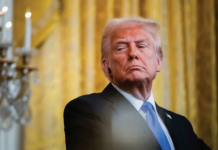
Has the U.S. President taken some lessons from new experience?
By T N Ashok
NEW YORK: On February 3, 2026, President Donald Trump renewed a controversial call to “nationalize” U.S. elections — an idea that would shift significant electoral authority away from the fifty states to a centralized federal body. Trump’s remarks, given in the context of ongoing disputes over election integrity and his repeated unsubstantiated claims that the 2020 election was stolen, have revived fierce debate over the constitutional architecture of American democracy.
At the heart of Trump’s argument lies a comparison to countries like India: big, populous democracies that rely on centralized administrative structures to manage elections. In speeches and executive actions Trump has pointed to practices abroad — including biometric voter ID systems and standardized electoral oversight — suggesting that the decentralized, state-by-state model in the United States is outdated and vulnerable.
But closer scrutiny reveals that the Indian model, far from a monolithic standard of electoral governance, is itself deeply contested within India’s own politics — and the very critiques levelled against India’s Election Commission highlight the perils and limits of centralizing electoral authority.
India’s Election Commission: Constitutional Authority and Controversy: In India, the Election Commission of India (ECI) is a constitutionally established, autonomous body mandated to supervise and conduct elections to the national parliament and state legislatures. It is empowered under Article 324 of the Constitution to prepare voter rolls, set election dates, oversee nomination and campaigning rules, and count and announce results for all parliamentary and assembly polls across the country.
The ambition behind India’s centralized electoral agency is clear: in the world’s largest democracy, with more than 970 million eligible voters and elections spanning states of starkly divergent size and capacity, a unified electoral body is intended to ensure uniform standards, prevent localized manipulation, and provide political parties and candidates with a predictable, standardized process.
But in practice — as the political ferment around India’s recent elections shows — the ECI’s role has become deeply politicized. Opposition figures, most notably Rahul Gandhi, have levied dramatic accusations against the Commission, claiming it has become an agent of the ruling Bharatiya Janata Party (BJP) rather than an impartial umpire. Gandhi’s “vote chori” (“vote theft”) campaign alleges that irregularities in voter rolls and the Commission’s oversight have skewed outcomes in crucial states and parliamentary constituencies.
In relentless public presentations, Gandhi has tied Special Intensive Revision (SIR) exercises — aimed at updating and purging electoral rolls — to accusations of institutionalized fraud, arguing that millions of voters, particularly among poorer or marginalized communities, have been systematically removed or disenfranchised.
The allegations have ignited a ferocious political battle in India. Supporters of Gandhi’s position argue that the Commission’s resistance to providing machine-readable voter lists or retaining CCTV recordings long enough for independent audit fosters suspicion and undermines confidence in elections. Critics of Gandhi, including retired judges, bureaucrats, and even members of civil society, have denounced the “vote chori” narrative as baseless and perilously undermining faith in democratic institutions. The ECI has countered robustly, calling such accusations “deplorable” and demanding that evidence be formally presented rather than broadcast in press conferences.
Trump’s Proposal: Central Control vs. Federal Rights: Against this backdrop, Trump’s invocation of an Indian-style centralized system takes on a complex meaning. In the U.S. constitutional order, elections are largely administered at the state and local level: states determine voter registration procedures, set ballot access rules, operate polling places, and certify results. The federal government plays a limited role — primarily enforcing civil rights protections and setting standards where Congress has legislated (e.g., the Voting Rights Act) — but the fundamental “time, place, and manner” of elections are state prerogatives.
Trump’s critics argue that his push to federalize elections reflects an attempt to reset this balance in his favour. A centralized system, they say, could paralyze state-level autonomy — especially in Democratic-leaning states — under the guise of uniform standards, while enabling the administration or its political allies to exert disproportionate control over how electoral rolls are maintained, how ballots are counted, and which ballots count at all.
Such centralization, in this view, echoes global examples where leaders have used national electoral mechanisms not to ensure fairness but to entrench power. Indeed, scholars of democratic backsliding have pointed to patterns in countries like Hungary, Turkey, and — increasingly noted — India, where constitutional mechanisms ostensibly designed to uphold democratic norms have been pressed into service to sustain incumbent advantage.
Lessons and Ironies from India’s Experience: The Indian case provides both inspiration and cautionary lessons. On the positive side, India’s Election Commission remains, in most institutional respects, stronger and more autonomous than many electoral bodies worldwide. Its logistical achievement in organizing simultaneous elections across vast geographies is unmatched, and for decades it was widely regarded as a guardian of electoral fairness.
But the recent controversies underscore the fragility of public trust — even in well-established institutions. Opposition parties’ claims that the Commission has become politicized, and that its rollout of SIR exercises has disenfranchised voters, show how centralization of authority can be reframed as centralization of control. If electoral administration is seen as serving the interests of the government of the day rather than the democratic polity at large, that perception — regardless of factual merit — deeply erodes legitimacy.
In the United States, opponents of Trump’s proposal warn that similar dynamics could unfold. A federal authority empowered to dictate election procedures across states — particularly if wielded by a single party — might not merely streamline operations but could also invite accusations of manipulation precisely because it overrides state autonomy and differential political cultures.
The Paradox of Centralization and Democracy : Ironically, both debates — in India and the United States — reveal the paradox at the heart of modern democratic governance: centralization can standardize fairness, but it can also concentrate opportunity for abuse.
In India, a centralized Commission was intended to take politics out of election administration. Yet in the current partisan maelstrom, its autonomy is under fire and its processes are painted by critics as instruments of power.
In the United States, a decentralized system underwrites the country’s federalist identity, but to Trump and his allies, it is portrayed as chaotic, inconsistent, and ripe for manipulation because it produced outcomes they disliked.
For democracies everywhere, the challenge is not merely the institutional design — central versus federal authority — but the norms that govern how electoral institutions are trusted, used, and respected by political actors.
Whether Trump’s proposal ultimately gains traction in the U.S. — and whether similar debates about electoral legitimacy intensify in India — the broader lesson is unavoidable: the health of a democracy rests less on the locus of electoral authority than on the collective commitment to fairness, accountability, and shared norms that transcend partisan gain.
This analysis juxtaposes Trump’s federalization push with India’s electoral controversies to illuminate why central control of elections can both appeal to reformers and alarm defenders of democratic decentralization. (IPA Service)