Muslim Clerics term mandatory recital “Un-Islamic”
Northlines Newsdesk
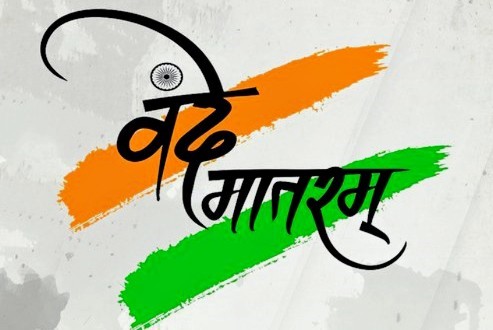
Jammu Tawi: A fresh controversy has erupted in Jammu Kashmir after the Doda district administration issued a circular mandating the recital of the national song “Vande Mataram” during Monday morning assemblies in all schools. The directive—part of a nationwide initiative marking the 150th anniversary of the song—aims to instil patriotism and national pride among students, but it has sparked fierce opposition from Muslim clerics and community leaders who call it “un-Islamic” and an “imposition of ideological agenda.”
According to officials, the week-long celebration (November 7–14) seeks to honor Vande Mataram’s legacy as a rallying cry during India’s freedom struggle. However, what was intended as a cultural and patriotic initiative has quickly turned into a political and religious flashpoint.
Religious clerics call it a violation of faith
Grand Mufti of Jammu & Kashmir, Naseer-ul-Islam, strongly condemned the order, describing it as “an assault on Islamic faith” and “an attempt to impose the RSS-driven Hindutva ideology.” He appealed to the authorities to withdraw the directive immediately to preserve peace and respect the region’s religious diversity.
“Muslims live according to their faith. Government instructions are acceptable as long as they don’t interfere with religious beliefs. Such orders spread hatred and create inequality,” the Grand Mufti said.
Joining the protest, Mirwaiz Umar Farooq, chairman of the Hurriyat Conference and head of the Mutahida Majlis-e-Ulema (MMU), also criticized the move. The MMU, an amalgam of top Muslim religious bodies in Jammu and Kashmir, issued a statement expressing deep concern over the directive from the Department of Culture that instructed schools to celebrate the 150th anniversary of Vande Mataram with musical and cultural programs ensuring participation from all students and staff.
Debate Over Nationalism and Religious Freedom
In its official statement, the MMU asserted that reciting or listening to Vande Mataram is “un-Islamic” because it includes expressions of devotion that contradict the core Islamic belief. “Islam does not permit acts that involve worship or reverence of any being or object other than the Creator,” the statement said.
The organization clarified that while Muslims are encouraged to love and serve their motherland, such devotion should be expressed through service, compassion, and contribution to society—not through practices that conflict with faith. “Forcing Muslim students or institutions to participate in activities contrary to their beliefs is unjust and unacceptable,” the MMU said, urging the administration to withdraw the directive immediately.
Some political and religious leaders have accused the administration of pushing a “Hindutva cultural narrative” under the guise of patriotism. They warn that such measures could disturb communal harmony in the sensitive region.
“This is not about disrespecting the nation,” said a local religious scholar. “It is about respecting constitutional freedom of religion. Love for one’s country cannot be forced through rituals that contradict one’s faith.”
Administration Yet to Respond
While the district authorities maintain that the order was issued purely to promote unity and patriotism, no official clarification has yet been issued in response to the growing backlash.
Community leaders have urged Lieutenant Governor Manoj Sinha and the Chief Minister to intervene and revoke the order to prevent social unrest.
As tensions simmer, the Vande Mataram directive has once again highlighted the delicate balance between cultural nationalism and religious pluralism in Jammu and Kashmir—a region where identity, faith, and politics remain deeply intertwined.