
After suing WSJ, the U.S. President now targets New York Times
By T N Ashok
NEW YORK: Donald Trump’s announcement of a $15 billion defamation lawsuit against The New York Times represents the latest salvo in what has become the most systematic assault on press freedom by an American president in modern history.
The staggering sum—exceeding the newspaper’s entire market capitalization—is not merely hyperbolic posturing but a calculated escalation in a legal campaign that has already netted Trump tens of millions in settlements and fundamentally altered the media landscape.
The mathematics of Trump’s media litigation strategy are revealing. ABC News’ parent company, The Walt Disney Co., paid $15 million toward Trump’s future presidential library, plus another $1 million in legal costs, to settle Trump’s defamation suit over inaccurate remarks about him by anchor George Stephanopoulos.
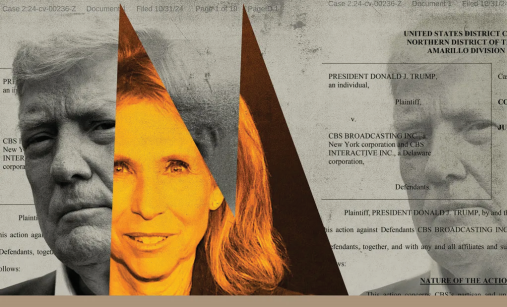
CBS’s parent company agreed to pay $16 million to the future Donald Trump Library – the $16 million included Trump’s legal fees – in exchange for ending the lawsuit. These victories have emboldened Trump to pursue ever-larger targets with increasingly audacious financial demands.
The pattern is unmistakable: file sweeping lawsuits demanding astronomical damages, drag media organizations through costly legal proceedings, and either extract settlements or exhaust their resources. Trump is already suing The Wall Street Journal for $10 billion for its article linking him to a “bawdy” letter to Epstein.
The Des Moines Register of Iowa, Warner Bors’s CNN, and numerous other outlets have found themselves in Trump’s legal crosshairs, creating what First Amendment experts describe as a “chilling effect” on investigative journalism.
Trump’s animosity toward the American media predates his presidency but has metastasized into something unprecedented in American political history. In 2020, his campaign separately sued The Washington Post and the New York Times for libel over opinion pieces that linked the campaign to Russian electoral interference. (The suit against the Times was dismissed, while the legal challenge against The Post is still pending.) What began as reactive litigation has evolved into proactive warfare.
The strategy reflects a fundamental misunderstanding—or deliberate misrepresentation—of journalism’s constitutional role. By framing news coverage as partisan activity, Trump has consistently argued that critical reporting constitutes illegal campaign contributions to his opponents.
This novel legal theory, while unlikely to succeed in court, serves a dual purpose: it delegitimizes unfavourable coverage while positioning Trump as the victim of media conspiracy.
Yet Trump’s relationship with media has never been entirely adversarial. Throughout his career, he has courted press attention, understanding intuitively that controversy generates coverage and coverage builds brand value. His transformation from media-savvy celebrity to media antagonist reflects not philosophical evolution but tactical adaptation. As his legal troubles multiplied and his political rhetoric intensified, the press became a convenient scapegoat for his failures and a useful enemy for rallying supporters.
The business model underlying these lawsuits is particularly cynical. Trump’s lawsuits against the media have drawn publicity but typically run up against laws that make it difficult for public figures to win judgments.
Under the “actual malice” standard established in New York Times Co. v. Sullivan, public figures must prove that defendants acted with knowledge of falsity or reckless disregard for the truth—an extraordinarily high bar. Trump’s legal team understands this, making their real objective clear: not courtroom victory but financial attrition.
The settlements with ABC and CBS have validated this approach, demonstrating that even well-resourced media companies will pay substantial sums to avoid prolonged litigation. This precedent has profound implications for smaller outlets lacking Disney or Paramount’s legal resources.
The threat of a multi-billion-dollar lawsuit from the President of the United States creates an existential risk that few news organizations can afford to ignore.
Trump’s media litigation strategy also serves psychological and political purposes beyond financial extraction. By casting himself as the aggrieved party fighting corrupt institutions, he transforms legitimate oversight into persecution narrative. This victim complex resonates with supporters who view mainstream media as fundamentally dishonest, creating a feedback loop where litigation validates grievance and grievance justifies litigation.
The international implications are equally troubling. Trump’s success in extracting settlements from American media companies provides a playbook for authoritarian leaders worldwide.
If the President of the United States can financially intimidate news organizations into silence, what precedent does this set for press freedom globally? The question is particularly relevant given Trump’s expressed admiration for leaders like Vladimir Putin and Xi Jinping, both of whom have systematically dismantled independent media in their respective countries.
What makes Trump’s media war particularly dangerous is its intersection with technology and changing media economics. Traditional news organizations already face declining revenues and increased competition from social media platforms. Adding the threat of presidential litigation to existing financial pressures creates a perfect storm for self-censorship. Editors and publishers, already cautious about legal exposure, may choose to avoid stories that could trigger Trump’s litigious response.
The $15 billion New York Times lawsuit represents an escalation that should alarm anyone who values democratic institutions. The astronomical sum suggests Trump views his second presidency as an opportunity to settle scores with media outlets that covered him critically. Combined with his threats to weaponize broadcast licensing and antitrust enforcement against unfriendly outlets, the litigation campaign forms part of a comprehensive strategy to subordinate American journalism to presidential preference.
History offers few parallels for this systematic assault on press freedom by a sitting president. While previous administrations have had contentious relationships with media, none has deployed litigation as a weapon of political warfare with Trump’s consistency and success. The settlements with ABC and CBS have provided both financial reward and strategic validation, encouraging escalation rather than restraint.
The ultimate stakes extend far beyond individual news organizations or even the media industry as a whole. A free press serves as democracy’s early warning system, exposing corruption and holding power accountable. When presidents can silence criticism through legal intimidation, the entire system of democratic accountability breaks down. Trump’s litigation strategy represents not merely a business dispute but a constitutional crisis in slow motion.
The question facing American journalism is whether it will resist this pressure or capitulate to it. The settlements with major networks suggest that financial considerations may ultimately trump editorial independence. If so, Trump will have achieved through litigation what more traditional authoritarians accomplish through state control: a press corps that self-censors out of fear rather than pursuing truth regardless of consequences.
The $15 billion New York Times lawsuit is thus more than another Trump legal filing—it is a test of whether American democracy can survive a president who views free press as an existential enemy rather than a constitutional necessity. (IPA Service)


