Jammu Tawi, July 26:
The first direct unlocking system has been installed at Dinanagar railway station in Northern Railway’s Jammu division, a step that is expected to improve efficiency and safety in railway operations, a senior official said.
Divisional Railway Manager, Jammu, Vivek Kumar said the system, installed on Saturday, directly controls the railway signalling and point machinery, thereby reducing the risk of human error.
Kumar added that Indian Railways plans to expand the implementation of this system across other stations as part of its modernization efforts. “This is a critical milestone in our journey to make Indian Railways more modern, safe, and passenger-friendly,” he said.
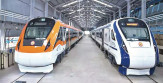
Meanwhile, a railway spokesperson highlighted rapid infrastructure upgrades in Jammu and Kashmir following the flagging off of two Vande Bharat Express trains between Katra and Srinagar by Prime Minister Narendra Modi on June 6. This event marked a historic moment by integrating Kashmir with the national railway network.
“Besides the new train services, the operational line has drastically improved our ability to maintain rail infrastructure in the Valley,” the spokesperson said, noting that modern track maintenance machinery can now be transported directly into Kashmir.
He said a tamping machine—deployed since early June—has so far tamped nearly 88 km of track. The machine ensures proper track alignment by compacting stone ballast under the rails, significantly improving ride quality and safety.
Additionally, two ballast cleaning machines (BCMs) have deep-screened around 11.5 km of track, enhancing the cleanliness and drainage of ballast layers. Two more BCMs, sent in July, have screened another 2.5 km of track.
To support these efforts, 17 ballast rakes carrying stone chips were dispatched from depots in Kathua, Qazigund, Madhopur, and Jind. In total, around 19,000 cubic meters of ballast were laid to strengthen the track structure.
Track quality is also being continuously assessed using a Track Recording Car (TRC) and Oscillation Monitoring System (OMS), with evaluations conducted in June and July to identify areas needing further attention.
Simultaneously, there has been a paradigm shift in the maintenance and upgradation of passenger coaches in the Valley. Earlier, DEMU/MEMU rakes operating in Kashmir were transported by road to Lucknow for periodic overhauling—a time-consuming and inefficient process.
“For the first time, these rakes are now being sent directly to Lucknow by rail for proper maintenance,” the spokesperson said. He confirmed that all passenger coaches at Budgam are being overhauled and upgraded, with the entire process expected to conclude by the end of August.
Indian Railways, often called the “lifeline of the nation,” is now extending that lifeline to Jammu and Kashmir through improved connectivity and modern infrastructure.