

By Omkar Dattatray
The 359th Prakash Utsav of the tenth Sikh Guru, Guru Gobind Singh Ji, was celebrated on January 5, 2026 (Monday) with great pomp, devotion and enthusiasm by the Sikh community and people from all walks of life.
Guru Gobind Singh Jayanti marks the auspicious birth anniversary of Guru Gobind Singh Ji, the tenth Guru of the Sikhs. It is a sacred religious celebration in which prayers for peace, prosperity and universal welfare are offered. The day is observed as a public holiday, and educational institutions and most businesses remain closed. The festival generally falls in December or January according to the lunar calendar.
Guru Gobind Singh Ji holds immense historical and spiritual significance. He is best known for his fearless resistance against the Mughal rulers and for protecting the rights and dignity of the people. A saint, warrior, poet and philosopher, he preached justice, equality and spiritual freedom. His writings and teachings continue to inspire millions across the world.
Guru Gobind Singh Ji firmly rejected caste discrimination and superstition and taught belief in One Supreme God. He established the Five K’s for the Khalsa:
Kesh (uncut hair), Kangha (comb), Kacchera (undergarment), Kara (steel bracelet) and Kirpan (sword).
Before his departure from this world in 1708, he declared the Guru Granth Sahib as the eternal Guru of the Sikhs.
Birth and Early Life
According to the Hindu calendar, Guru Gobind Singh Ji was born on Saptami Tithi of Shukla Paksha in the month of Pausha, Samvat 1723. According to the Julian calendar, he was born on December 22, 1666 in Patna, Bihar, where today stands the revered Takhat Shri Harmandir Ji Patna Sahib.
His father, Guru Tegh Bahadur Ji, the ninth Sikh Guru, was executed by Mughal emperor Aurangzeb in 1675 for refusing to convert to Islam. In 1676, Guru Gobind Singh Ji became the tenth Guru at the tender age of nine.
The family later moved to Anandpur Sahib (formerly Chak Nanaki) in the Shivalik Hills, where Guru Gobind Singh Ji received education in Persian, Sanskrit and martial arts, preparing him to become a spiritual leader and fearless warrior.
Founding of the Khalsa
In 1699, Guru Gobind Singh Ji founded the Khalsa Panth, establishing a disciplined and spiritually empowered Sikh warrior community. The Khalsa stood courageously against Mughal oppression and became the guardian of Sikh values and freedom.
He was also a prolific poet and writer, credited with composing much of the Dasam Granth, whose hymns form a sacred part of Sikh prayers and Khalsa rituals.
Celebrations
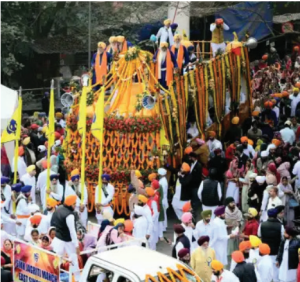
Guru Gobind Singh Jayanti is celebrated with great reverence across the world wherever Sikhs reside. Devotees visit Gurudwaras, which are beautifully decorated with lights, candles and diyas. Kirtans, readings of Gurbani and recitations of Guru Gobind Singh Ji’s poetry are held. Processions are organized, langar is served to all, and acts of seva (selfless service) are performed in the true spirit of Sikhism.
The day, also known as the Prakash Parv, is observed in honour of a great warrior, poet, philosopher and spiritual master. Devotees renew their pledge to follow his teachings and righteous path.
Conclusion
Millions across the globe continue to draw inspiration from the life, courage and teachings of Guru Gobind Singh Ji. His birth anniversary remains a powerful symbol of faith, sacrifice and humanity, celebrated with devotion and joy wherever the Sikh community lives.
(The author is a columnist, social activist, KP activist)


