

By Girdhari Lal Raina
The Union Budget 2026–27, presented by Finance Minister Nirmala Sitharaman, marks a decisive shift from incrementalism to long-term nation-building. Rooted in the vision of Viksit Bharat, the Budget is unmistakably Yuva Shakti–driven, capacity-focused, and technology-led. It recognises that India’s greatest strategic asset over the next quarter century is not merely capital or infrastructure, but human capability empowered by reform and innovation.
For Jammu & Kashmir, this Budget represents more than an economic statement—it offers a historic opportunity to reset its development narrative.
The Budget outlines interventions across six growth engines: scaling manufacturing in strategic sectors, revitalising legacy industries, building globally competitive MSMEs, accelerating infrastructure, ensuring energy security, and developing city economic regions. Together, these reforms signal the Modi Government’s commitment to action over rhetoric and productivity over populism, while maintaining fiscal discipline and sustained public investment.
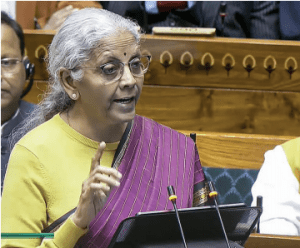
Crucially, the Budget is anchored in three Kartavyas: accelerating economic growth, fulfilling aspirations through capacity building, and deploying cutting-edge technologies such as Artificial Intelligence as force multipliers for governance and service delivery. This framework aligns economic ambition with social responsibility, ensuring that growth reaches every region and every citizen.
One of the most forward-looking announcements is Biopharma SHAKTI, with an outlay of ₹10,000 crore over five years, aimed at making India a global hub for biologics and biosimilars. As India’s disease burden shifts towards non-communicable diseases, the emphasis on domestic production, clinical research, and regulatory capacity is both timely and strategic. Alongside thrust areas such as semiconductors and electronics manufacturing, this signals a clear intent to place India at the heart of global value chains.
Equally significant is the renewed focus on the services sector, backed by a High-Powered Education-to-Employment and Enterprise Committee. By aligning skills, emerging technologies, and job creation, the government has set an ambitious target of achieving a 10 per cent global share in services by 2047. For a youthful nation, this is a roadmap for aspiration with accountability.
This is where Jammu & Kashmir must act with clarity and confidence. For decades, J&K’s economic discourse has been constrained by conflict management and short-term relief. Union Budget 2026–27 provides the policy space to move decisively towards human capital–led growth. With the right institutional choices, J&K can emerge as a modern talent hub in artificial intelligence, medical and life sciences, climate studies, creative industries, digital services, and high-end tourism-linked entrepreneurship.
The first requirement is the creation of world-class, safe, and inclusive professional education ecosystems within the Union Territory. Instead of fragmented, region-based approaches, J&K needs integrated campus hubs dedicated to AI and machine learning, biotechnology, data science, climate resilience, and design. These can be developed through public-private partnerships, with the government providing land, incentives, and security assurance.
At the same time, existing institutions—Universities of Jammu and Kashmir, SKUAST, IUST, and NIT Srinagar—must be upgraded to global standards through greater autonomy, research funding, and international collaboration. District-level “future skills” academies focusing on coding, robotics, fintech, and digital marketing can ensure that opportunity is not limited to urban centres. National skilling programmes must be re-engineered to reflect J&K’s unique geography and demographic profile.
Biopharma SHAKTI offers another strategic opening. With its climatic advantages and growing medical education base, J&K can position itself as a niche centre for biopharmaceutical research, clinical trials, and specialised manufacturing—integrating local talent into global health supply chains.
Union Budget 2026–27 sends a clear message: development will now be driven by capability, competitiveness, and confidence in India’s youth. For Jammu & Kashmir, the choice is stark but promising. It can either remain anchored to legacy constraints or seize this moment to build a future defined by skill, innovation, and opportunity.
If the latter path is chosen, this Budget could well be remembered as the turning point when Jammu & Kashmir began its transition from a conflict-defined past to a competence-driven future—fully aligned with India’s journey towards Viksit Bharat.
(The writer is a former Member of the Legislative Council of erstwhile Jammu Kashmir and spokesperson of BJP JK-UT)


