Riverfront Project under debate; 1988, 2014 and 2025 Floods Show Changing Flow Patterns
Ashu Kumar
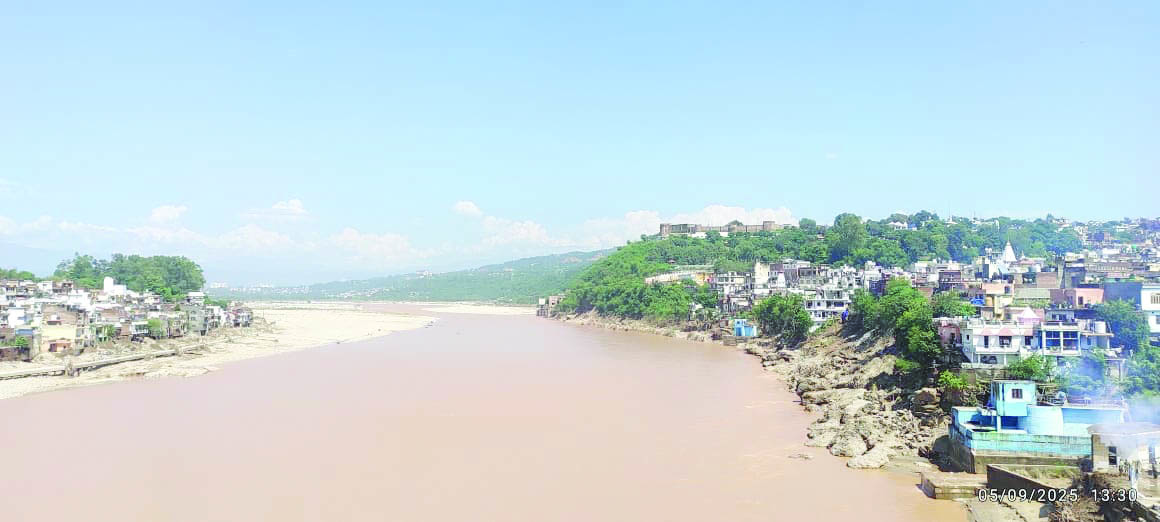
Jammu Tawi, Sept 05: The Tawi River, the lifeline of Jammu, has once again unleashed its fury, submerging neighborhoods and leaving widespread destruction in its wake. Areas including Gorkha Nagar, Pir Kho, Panjthirthi, Siddhra, and Belicharana, lower Gujjar Nagar and Samshan Ghat were flooded, dozens of homes were washed away, several families rendered homeless, and lives lost. For many residents, the scars of the 2014 floods reopened as 2025 brought a new wave of devastation.
Different Floods, Different Scenarios
Elder residents recall the 1988 floods as significantly different. At that time, the Tawi flowed along its natural course without any major constructions interfering. Water levels were high, but the river had room to carry its flow, limiting widespread damage.
The floods of 2014 and 2025, however, reveal a changing pattern. Initially following its natural path, this year the Tawi’s flow reportedly diverted through Gujjar Nagar and Siddhra via Pir Kho toward Bahu Fort, Gorkha Nagar, and eventually Belicharana. Locals fear that the altered flow, combined with heavy rainfall, has left areas once considered safe but now vulnerable to inundation.
Land Changes and Construction Issues
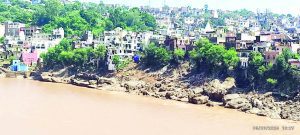
Gujjar Nagar and Siddhra areas along the Tawi have seen continuous construction on river-adjacent lands, while Gorkha Nagar and Bahu Fort zones have suffered erosion under the river’s pressure. Soil from Bajalta and Pir Kho is washing into the river, raising questions about whether this is natural or deliberate. Locals claim that some neighborhoods appear to be exposed to flooding while others remain protected, fueling concerns over possible diversion.
Riverfront Project Under Scrutiny
The Tawi Riverfront Development Project, spanning 2.7 km of embankments and promenades, with roughly 23 hectares of land reclaimed from the river, has faced criticism. Environmentalists argue that concreting in the name of development have narrowed the river-banks and disrupted Tawi’s natural flow. Anmol Ohri, founder of Climate Front India, said:
“We repeatedly warned that construction along the riverbanks would destabilize the Tawi. The river now has less room to carry floodwaters, and the consequences are evident as the city faces inundation.”
Government and BJP Response
Speaking to Northlines, Rajeev Charak, Sr leader and Vice President of BJP, clarified that the 2025 floods were caused by multiple cloudbursts and record-breaking rainfall of 99 years in just 24 hours. He dismissed claims of deliberate diversion, saying:
“No one could have redirected the river. The floods were natural and unprecedented. JDA and Housing Department lands in areas like Gujjar Nagar and Siddhra should not have illegal constructions. Encroachments along riverbeds invite damage and compensation claims.”
On the Tawi Riverfront Project, Charak added that it is being developed in Belicharana, and the flood damage occurred in areas downstream of the project. He emphasized that the project did not exacerbate the flooding, as the primary cause was heavy rainfall.
Citizens’ Plight
Residents lament their losses. A Gorkha Nagar woman whose home was destroyed said tearfully:
“Even in 2014, we suffered. This time it is worse. If the Tawi had been left open, damage could have been less severe.”
A shopkeeper in Belicharana added:
“Every year, rainfall brings fear. We wonder if the river will claim our homes again. Who can we ask for answers?”
Critical Questions
While the 1988 floods caused damage, the scale was limited. Today, neighborhoods like Gujjar Nagar, Siddhra, Pir Kho, Gorkha Nagar, and Belicharana face altered river paths. Citizens continue to ask
* Was the river course deliberately changed?
* Are urban development projects responsible for worsening floods?
* Why do certain neighborhoods repeatedly bear the brunt of Tawi floods?
The Tawi River, once Jammu’s lifeline, is now a symbol of destruction. While development continues, experts and citizens alike call for stricter land-use policies and removal of illegal constructions along riverbeds to mitigate future disasters.
The debate continues: Are we shaping the city’s future or building our own destruction along Tawi?