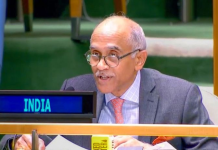
New Delhi, Jul 22: Private sector investment has been improving after Covid-19 and it is expected to further pick up in the coming months, Chief Economic Advisor V Anantha Nageswaran said on Monday.
After tabling of the Economic Survey in Parliament, Nageswaran said private sector investment has been improving over the years after Covid-19.
“There was a small slump during the Covid times, however, there is a possibility that they can invest more in machinery and equipment and also in intellectual property products. Those investments have also began to rise in the last two years, but there is scope to do more because those are the ones that create quality jobs,” he said.
The private sector investment is not restricted to only cement and steel in fact data suggest there are many sectors witnessing private sector capital formation, he said.
Gross Fixed Capital Formation (GFCF) continues to emerge as an important driver of growth, as indicated in its rising share of nominal GDP, he said, adding that India is in the midst of a private capex upcycle that has been aided by government capital expenditure.
Post-Covid, the government’s thrust on capex has been a critical driver of economic growth amidst an uncertain and challenging global environment.
The focus of capex has been broad-based. Spending in sectors such as road transport and highways, railways, defence services, and telecommunications delivers higher and longer impetuses to growth by addressing logistical bottlenecks and expanding productive capacities.
Government capex has also begun to crowd in private investment, he added.
The government’s pre-Budget Economic Survey set a conservative growth forecast of 6.5-7 per cent for the current fiscal as it flagged the need for creating more jobs in the economy and backed more Chinese direct investments to boost exports.
The report, authored by the chief economic adviser’s office, favoured considering targeting inflation that excludes food, the prices of which are influenced more by supply than demand.
The projection in the Economic Survey is a tad lower than the Reserve Bank’s growth estimates of 7.2 per cent. However, major global agencies, including the IMF and ADB, have projected the growth at 7 per cent.
The key economic document also suggested that the Reserve Bank of India (RBI) should stop looking at food inflation in deciding interest rates and the government should explore giving coupons or direct cash transfer to poor to deal with higher food prices.