By Girdhari Lal Raina

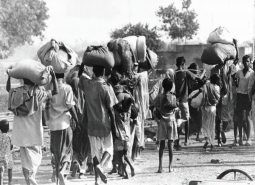
The Partition of India in 1947 was not merely a political rearrangement of territory. It was one of the most cataclysmic man-made tragedies in recorded history — a rupture that uprooted between 10 and 20 million people, claimed an estimated 200,000 to 2 million lives, and subjected nearly 75,000 women to abduction, rape, and murder. It marked the violent birth of two nations, accompanied by a colossal human cost whose aftershocks still shape the subcontinent.
In August 2021, Prime Minister Narendra Modi declared 14 August as Vibhajan Vibhishika Smriti Diwas — Partition Horrors Remembrance Day. The commemoration is not about rehearsing grievances, but about confronting the deeper pathologies that made Partition inevitable: the poisoning of inter-communal trust, the exploitation of identity for political gain, and the calculated fanning of division by those who stood to profit from it.
As the Prime Minister observed:
“Partition’s pains can never be forgotten. Millions of our sisters and brothers were displaced and many lost their lives due to mindless hate and violence… May the Partition Horrors Remembrance Day keep reminding us of the need to remove the poison of social divisions, disharmony, and further strengthen the spirit of oneness, social harmony, and human empowerment.”
The Roots of Division
The Partition cannot be explained by a single cause, but certain fundamentals are beyond dispute. British India consisted of two broad components — provinces under direct British rule and over 500 princely states with varying degrees of autonomy.
The ideological fracture was sharpened by the Two-Nation Theory, articulated by the All India Muslim League: the belief that Hindus and Muslims were distinct nations incapable of coexisting within one state. Over decades, this narrative gained traction through a potent mix of British “divide-and-rule” tactics, competitive communal politics, and the inability of nationalist leaders to forge a durable power-sharing formula.
After World War I, Britain’s imperial grip weakened and nationalist movements surged across India. To counter this, colonial masters increasingly institutionalised communal separatism — from the 1909 Morley-Minto reforms to the Communal Award of 1932. Moves like the Lucknow Pact, the Poona Pact, and others were political gambits on a crowded chessboard where unity was often sacrificed for short-term advantage.
The end of World War II accelerated the unraveling. The Indian Independence Act of 1947 formalised the creation of India and Pakistan. Yet what was signed on paper was experienced in Punjab, Bengal, Sindh, and elsewhere as a collapse of civilisation: neighbours turning on neighbours, law collapsing overnight, and centuries of shared life erased in weeks.
Kashmir’s Overlooked Partition Horror
A persistent myth holds that Jammu & Kashmir escaped Partition’s violence. The record says otherwise. Barely two months after independence, on the night of 21–22 October 1947, Pakistan launched Operation Gulmarg — an attack disguised as tribal invasion designed to seize the state by force before its accession to India could be formalised.
By morning, Muzaffarabad had fallen. For three days, according to Pakistani journalist Zahid Chaudhry in Pakistan ki Siyasi Tarikh, the invaders looted, burned, and killed with impunity. Between 4,500 and 5,000 Hindus and Sikhs were massacred, and over 1,600 women abducted.
Civilians particularly the Non-Muslims organized resistance to attacks at different places in Jammu region-Mirpur, Bhimber, Poonch, Rajouri, Deva Batala,etc. Muzaffarabad too witnessed civilian resistance at some places. But active involvement of Pak army made the outcome of civilian resistance difficult.
In Kashmir there was not much resistance in the manner it was in the Jammu region. Still atrocities committed were not less in any measure.
Baramulla witnessed atrocities so shocking that even neutral institutions like St. Joseph’s Missionary School and Convent were attacked. Father Shanks, principal of St. Joseph’s College, recorded patients shot in their beds, nuns murdered as they shielded others, and civilians executed without mercy.
On 5 February 1948, Sheikh Mohammad Abdullah told the UN Security Council:
“The raiders came to our land, massacred thousands… abducted thousands of girls, Hindus, Sikhs and Muslims alike… and almost reached the gates of our summer capital, Srinagar.”
Independent researchers estimate that 35,000–40,000 residents of J&K perished in this brief but devastating campaign. Massacres were reported in Baramulla, Darayee, Tikkar, Handwara, Ashnaji, Shalakot, Wampora, Chogul, Yaarbug, Dengiwacha, Ninghal, and Budgam.
Dr. Kashi Nath Pandita documented over 200 Hindus killed in Kashmir Valley alone during this period. Sikhs, particularly in Hamal and Uri, faced targeted slaughter: over 300 massacred at Bulgam on 30 October, 45 more at Chandoosa, alongside widespread arson. Dr. Ramesh Taimiri notes that organised civilian resistance in the Valley occurred mainly in Sikh-majority villages such as Chhoor-Bulgam, Ichhama, and Atna — acts of defiance paid for in blood.
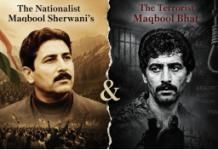
The roll of martyrs also includes Muslims like Mohd. Maqbool Sherwani, executed in Baramulla in a barbaric and gruesome manner for misleading the raiders and buying time for Srinagar’s defence.
Why Remembering Matters
Partition Horrors Remembrance Day is not about nurturing grievance but about preserving civilisational memory. Forgetting such events is not a mark of maturity; it is an invitation to repeat the mistakes. Sanitising history dulls society’s ability to recognise the early signs of fracture.
The lessons are stark:
Communal division, once weaponised, devours even centuries-old bonds.
Political opportunism can eclipse moral responsibility in moments demanding unity.
A society that cannot protect its weakest — women, children, minorities — forfeits its moral claim to civilisation.
Partition was not only the geopolitical sundering of India and Pakistan; it was a wound within the subcontinent’s own civilisational body.
Each 14 August should be more than a memorial to the dead. It must be a reaffirmation that national unity, social harmony, and moral courage are not lofty abstractions — they are the very difference between civilisation and chaos.
(Girdhari Lal Raina is former member of Legislative Council of erstwhile Jammu and Kashmir state and spokesperson of BJP JK_UT)