Islamabad has to pay a heavy price this time at the hands of TTP Jehadis
By T N Ashok
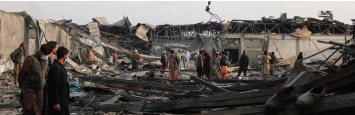
The protracted war between Pakistan and Afghanistan entered a critical phase on Monday following the death of about 400 persons in a Kabul Hospital due to air strikes by Pakistan. Kabul immediately talked of severe retaliatory action. India also strongly condemned the barbaric attacks by Islamabad on a hospital.
There is a phrase in Pakistani strategic circles, used quietly and never in press briefings: “good Taliban, bad Taliban.” For decades, Islamabad cultivated militant groups as instruments of foreign policy — pointed eastward at India in Kashmir, and westward to shape Afghanistan. The logic seemed clean, almost surgical. You build the monster; you control the monster.
That logic has now collapsed spectacularly on two fronts simultaneously. The same ecosystem that produced Lashkar-e-Taiba (LeT) and Jaish-e-Mohammad (JeM) — terrorist organizations groomed by Pakistan’s Inter-Services Intelligence (ISI) to bleed India — has now metastasized into the Tehreek-e-Taliban Pakistan (TTP), a franchise of fury directed squarely at the Pakistani state itself. Two neighbours, India and Pakistan, are both targets of cross-border militant violence. But their responses could not be more different — and that contrast now defines the emerging security architecture of South Asia.
The story begins not in the mountains of Kashmir but in the mountains of Afghanistan, in the 1980s. When the Soviet Union invaded Afghanistan in 1979, the CIA and the ISI jointly bankrolled and armed a generation of mujahideen fighters. Billions of dollars flowed through Pakistani intelligence into a network of madrassas and training camps strung across the Pakistan-Afghanistan borderlands. The Soviets were defeated by 1989. The warriors, however, remained.
Pakistan redirected the same tactics and indoctrination that produced the Afghan mujahideen toward Kashmir, sending Afghan fighters alongside Pakistani volunteers supplied by Islamist groups to convert an indigenous political movement into a religious war. The ISI had found a template — and saw no reason to discard it.
Lashkar-e-Taiba was founded in Pakistan in the late 1980s as a militant wing of Markaz-ud-Dawa-wal-Irshad, an Islamist organization influenced by the Ahl-e-Hadith school of Sunni Islam, ultimately seeking to establish Muslim rule over the entire Indian subcontinent.
In the early 1990s, a partnership formed between LeT and Pakistan’s ISI, providing the group significant financial and military training assistance that enabled it to serve as an important proxy for Pakistan.
Jaish-e-Mohammad arrived later, but with even more direct state engineering. JeM was founded in Pakistan in 2000 by Masood Azhar, primarily known for its armed insurgency against Indian troops in Kashmir. Indian authorities have claimed the group maintains close links with the Pakistani military and the ISI, and it reportedly received early funding from al-Qaeda and Osama bin Laden.
Azhar himself had been sprung from an Indian prison in 1999 through a spectacular hijacking of an Indian Airlines aircraft — and was then lionized in Pakistan and promoted by the ISI as the leader of his new organization.
The key attacks these groups executed against India tell the arc of an undeclared war:
| Year | Attack | Group | Casualties |
| 1993 | Bombay bombings | ISI-backed D-Company | 257 killed |
| 2001 | Indian Parliament assault | LeT + JeM | 9 killed |
| 2006 | Mumbai train bombings | LeT | 209 killed |
| 2008 | Mumbai 26/11 siege | LeT | 166 killed |
| 2016 | Uri army camp attack | JeM | 18 soldiers killed |
| 2019 | Pulwama convoy bombing | JeM | 40 CRPF personnel killed |
From 1989 to 2025, India faced numerous terrorist attacks linked to Pakistan-based groups like LeT, JeM, and Harkat-ul-Mujahideen, often orchestrated with support from Pakistan’s ISI, who facilitated cross-border infiltration, training camps, and funding via narcotics, donations, and direct support.
India’s strategic response evolved slowly — but decisively. For decades, New Delhi absorbed attack after attack with relative restraint, fearing nuclear escalation with a neighbour that openly brandished its arsenal. That calculus began shifting after Uri in 2016.
India announced “surgical strikes” on militant launch pads across the Line of Control — a limited, targeted operation designed to destroy infrastructure without triggering full-scale war. When the Pulwama attack killed 40 paramilitary soldiers in February 2019, India moved beyond the LoC entirely, sending jets deep into Pakistani territory to strike what it identified as a JeM training camp in Balakot.
The pattern is deliberate and consistent: identify the node, hit the node, communicate the message, stop. No hospitals. No rehabilitation centres. No civilian residential blocks. The self-imposed constraint is not just humanitarian — it is strategic. India understands that in the theatre of international opinion, the narrative of proportionality is itself a weapon.
Operation Sindoor, reportedly conducted in early 2026 against LeT and JeM facilities, follows the same template: India has framed its operations as surgical strikes targeting militant infrastructure rather than civilian areas, with official claims of no civilian casualties in Uri, Balakot, and subsequent operations.
India’s doctrine rests on three pillars: precision targeting, immediate public communication, and international diplomatic follow-through. After Pulwama, New Delhi successfully pushed the United Nations Security Council to designate JeM’s founder Masood Azhar as a global terrorist — a diplomatic victory that had been blocked by China for a decade.
Pakistan’s strategists did not anticipate what geopolitical scientists call “blowback.” While the ISI ran LeT and JeM as Kashmir franchises, a different species of militancy was gestating in the tribal borderlands — one that would eventually aim its guns at Pakistan itself.
Tehrik-e-Taliban Pakistan is an alliance of militant networks formed in 2007 to unify opposition against the Pakistani military, with stated objectives including the expulsion of Islamabad’s influence in the tribal areas and the implementation of strict sharia throughout Pakistan.
The TTP drew its recruits from the same madrassas, the same tribal networks, and many of the same training ecosystems that Pakistan had nurtured for decades. The difference: this time, the ideology pointed inward.
After the withdrawal of U.S. troops from Afghanistan in 2021 and the Afghan Taliban’s return to power, TTP activity in Pakistan surged sharply, with the number of attacks reportedly increasing from fewer than 200 in 2021 to more than 600 in 2024.
The TTP is the largest terrorist group in Afghanistan and is supported by the Taliban government to carry out cross-border attacks in Pakistan, according to a 2024 UN report, with total TTP fighters in Afghanistan estimated at between 6,000 and 6,500, and the groups using NATO weapons left behind during the U.S. withdrawal.
The numbers of TTP’s own claimed assault record are staggering in their escalation: 282 attacks in 2021, rising to 881 in 2023, and an extraordinary 1,758 claimed attacks in 2024. Pakistan lost more than 80,000 people to terrorism between 2005 and 2013 during an earlier TTP peak — and the cycle is now repeating at higher intensity.
Faced with this existential threat, Pakistan has responded — but without the surgical discipline India has demonstrated. The Kabul raid of March 2026, which killed nearly 400 people with hospitals and rehabilitation centers allegedly among the sites struck, is the latest in a series of Pakistani military actions across the Afghan border that have drawn international condemnation rather than strategic gain.
Cross-border operations and airstrikes inside Afghan provinces such as Paktika, Khost, Nangarhar, and Kunar have taken place in both 2024 and 2025 as Pakistan has repeatedly claimed that it targeted anti-Pakistani militant hideouts. Yet each strike has deepened anti-Pakistan sentiment in Afghanistan, empowered the Taliban’s propaganda apparatus, and driven ordinary Afghans — many of whom have no love for the TTP — toward sympathy for Kabul’s government.
Pakistan’s military has attempted to shift blame for TTP attacks toward India, referring to the group as “Fitna al Khwarij” and describing it as an “Indian proxy” — likely an effort to deflect from the fact that Pakistan’s jihadist woes are in many ways a direct result of its own historical support for jihadist groups. There is no credible evidence for the India proxy claim. It is the narrative of a state that cannot reconcile the origins of its own crisis.
What we are witnessing across South Asia is, at its core, a reckoning with decades of manufactured militancy. Pakistan spent thirty years building a jihad economy — training camps, financing pipelines, ideological indoctrination networks — aimed primarily at India. The infrastructure it built did not disappear when convenient; it replicated, mutated, and turned.
India, for all its own failures in Kashmir — the alienation of a generation, the political suppression, the civilian costs of counter-insurgency — has nonetheless maintained a doctrine of targeted response that preserves a measure of international legitimacy. Pakistan, facing the more existential threat of the TTP, has responded with a bluntness that is generating more enemies than it eliminates.
The lesson of this dangerous new geometry is one that students of history have noted before: the weapons you forge for others do not ask your permission before choosing a new target. Pakistan’s jihadist factories have been running for forty years. The product, it turns out, was always going to come home.
For the civilians of Kabul, caught between a Pakistani military that bombs first and questions later, and a Taliban government unable or unwilling to rein in the TTP, these strategic doctrines offer precisely nothing. They are, as they have always been, the ones who pay the price of decisions made in distant capitals by men who will never hear the explosions. (IPA Service)