A Tribute to the First Dogri Poetess and Cultural Icon of Duggar
(17 April 1940 – 4 August 2021)
On the occasion of her 86th Birth Anniversary (17 April 2026)
By Ravi Rohmetra
The Jammu region, widely known as the City of Temples, has produced many illustrious personalities who have brought fame and pride to the Duggar land. Eminent figures such as Pt. Shiv Kumar Sharma (Santoor maestro), Ustad Alla Rakha (Tabla legend), Ved Rahi, Om Prakash Sunder, Gopal Sehgal, K.L. Sehgal, Mulkh Raj Saraf, Prof. Ram Nath Shastri, Dinu Bhai Pant, Krishna Smail Puri, Brigadier Rajinder Singh, and General N.C. Vij have enriched the cultural and intellectual landscape of the region.
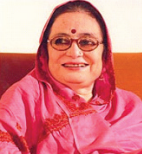
Among these luminaries stands Padma Shri Padma Sachdev—a shining star and the first modern woman poet of Dogri—who gave a unique identity to Dogri literature on the global stage. She was rightly regarded as the cultural ambassador of Dogri and the “Golden Daughter” of Jammu.
Padma Sachdev was a lively, charming, and warm personality, full of energy and spontaneity. She possessed a rare combination of literary brilliance and homely grace. An excellent cook, a gracious host, and an engaging conversationalist, she was admired for her simplicity and warmth.
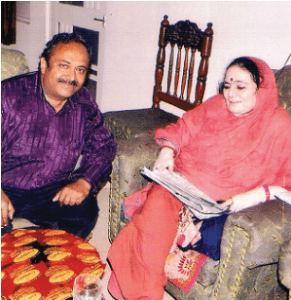
A prolific writer, she wrote extensively in both Dogri and Hindi. She authored six collections of Dogri poetry and eight books of Hindi prose, including novels, short stories, an autobiography, and a travelogue, along with several translations. Her writings earned her a wide readership and critical acclaim.
Her association with the legendary singer Lata Mangeshkar brought Dogri songs to national prominence. Songs like “Tu Mala Tu,” “Log Panan Thikrian Badam Panne Tu,” and “Odni Rangi De Lalaria” became immensely popular. It was through Padma Sachdev’s persuasion that Lata Ji sang Dogri songs, and the two shared a deep bond, with Lata Ji affectionately addressing her as “Bhabhi.”
Born on 17 April 1940, Padma Sachdev was the eldest child of Prof. Jai Dev Badu, a noted Sanskrit scholar who was affected by the upheavals of Partition in 1947. She spent her early years in Purmandal, a historic town on the banks of the sacred Devika stream. From a young age, she showed a deep inclination towards literature, memorizing Sanskrit shlokas and composing verses inspired by Dogri folk traditions.
While still in college, she emerged as the first prominent Dogri poetess, captivating audiences at a Kavi Sammelan in Jammu. Her literary works such as “Chitt-Chete,” “Ab Na Banegi Dehri,” and “Nausheen” reflect her courage, sensitivity, and deep understanding of social and cultural realities.
Padma Sachdev married renowned classical singer Surinder Singh and later moved to Mumbai. She continued to contribute immensely to literature, journalism, and cultural promotion.
Her achievements were widely recognized. She received the Sahitya Akademi Award (1971), Padma Shri (2002), Kabir Samman, Soviet Land Nehru Award, and many other prestigious honours. Through her relentless efforts, she elevated Dogri literature to national and international recognition.
Despite facing health challenges in her later years, she continued writing. Her later works, including “Uttarbaihni” and “Tainthiyan,” reflect her enduring literary spirit.
Her passing on 4 August 2021 at her Mumbai residence marked the end of an era. The loss was deeply felt across the nation, especially among Dogri-speaking communities and literary circles. Her contribution to literature remains unparalleled, and her works continue to inspire generations.
Padma Sachdev will always be remembered as a pioneering poetess, a literary icon, and a cultural torchbearer. Her legacy lives on in her words, her vision, and her immense contribution to Dogri literature.
It is a matter of pride that Government PG College for Women, Gandhi Nagar, Jammu, has been renamed as Padma Shri Padma Sachdev Government PG College for Women, in her honour.
Padma Sachdev remains immortal in the hearts of millions. Her life and work stand as a beacon for future generations, especially women writers, to pursue creativity with courage and conviction.
(Ravi Rohmetra is a social worker and freelance writer.)