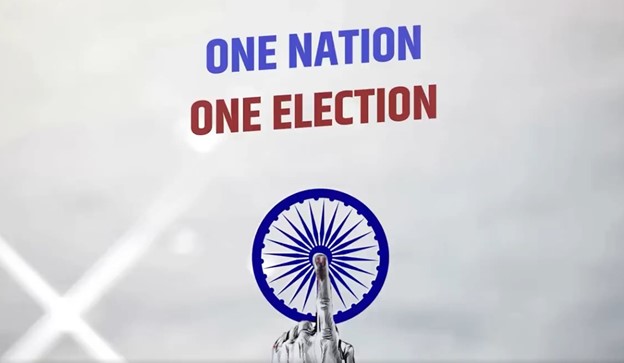
Panaji, July 10: The Joint Parliamentary Committee examining the proposed legislation on simultaneous elections is working to put in place a mechanism that could make the ‘One Nation, One Election’ reform operational by the 2029 Lok Sabha elections, committee chairman P.P. Chaudhary said on Friday.
Addressing reporters on the sidelines of the panel’s two-day meeting in Goa, Chaudhary said the committee is evolving a framework that balances the concerns of all stakeholders while ensuring broad political consensus. He claimed that nearly 99 per cent of civil society stakeholders consulted so far have supported the proposal.
The committee held discussions with Goa Chief Minister Pramod Sawant and his Cabinet on the Constitution (129th Amendment) Bill, 2024, seeking views on the challenges of implementing simultaneous elections and possible solutions.
According to Chaudhary, the panel has so far consulted constitutional experts, civil society organisations, educationists and other stakeholders across Gujarat, Karnataka, Maharashtra, Himachal Pradesh, Uttarakhand, Punjab, Haryana, Delhi and Goa.
He said the committee is also exploring the possibility of aligning the electoral cycles of some states before 2029 if political parties and state governments voluntarily agree to synchronise their elections.
Highlighting the economic benefits of simultaneous polls, Chaudhary cited a study submitted to the high-level committee headed by former President Ram Nath Kovind, which estimated that frequent elections result in an economic loss of nearly ₹7 lakh crore, while synchronised elections could generate equivalent gains for the national economy.
He argued that repeated elections disrupt governance, affect economic activity across states and hamper education as government school teachers are frequently assigned election duties, impacting classroom teaching.
Describing simultaneous elections as a major electoral reform envisioned by Prime Minister Narendra Modi, Chaudhary said the committee’s objective is to build a practical and widely acceptable mechanism that could contribute to India’s goal of becoming a developed nation by 2047. (Agencies)