How a Young Monk Escaped the Red Empire: The Daring Flight of the Dalai Lama in 1959?
Northlines Desk
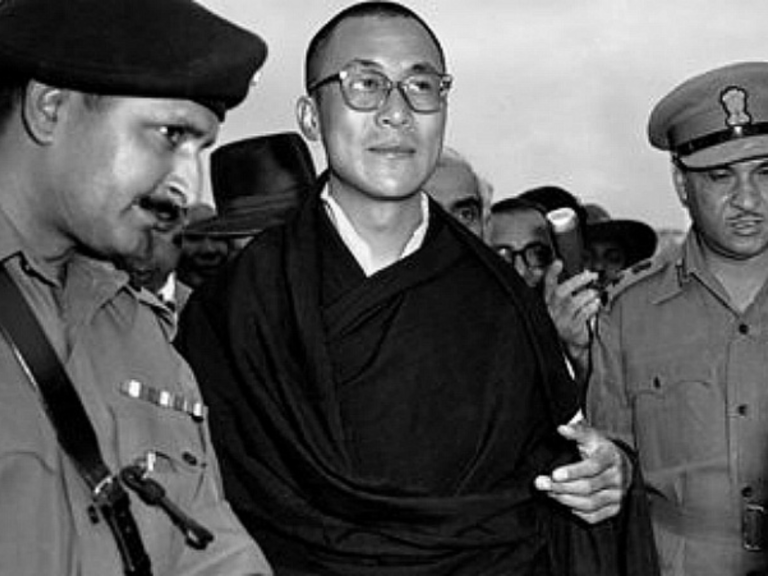
In 1959, a 23-year-old monk dressed in a soldier’s uniform walked out of his summer residence under cover of darkness. He wasn’t just any monk—he was the 14th Dalai Lama, spiritual leader of Tibet, fleeing from an increasingly oppressive Chinese occupation. What unfolded was a high-stakes escape that would change the destiny of Tibet forever.
A Deadly Invitation
Tensions in Tibet had been simmering since China’s military entered the region in 1950. The Seventeen Point Agreement, supposedly assuring autonomy, proved toothless. The 13th Dalai Lama had once warned of threats from within and beyond. By March 1959, those fears had become a violent reality.
Then came an ominous “invitation.” Chinese General Zhang Chenwu summoned the Dalai Lama to a cultural performance at military headquarters—with one unusual condition: he must attend alone, without guards. Tibetans instantly sensed danger. Fearing an abduction, tens of thousands encircled Norbulingka Palace on March 10 to protect their leader. The Chinese army responded with force.
The Dalai Lama consulted the State Oracle—three times. The answer remained the same: flee immediately.
Disguised Flight Through the Mountains
On the night of March 17, just before 10 p.m., the Dalai Lama slipped out of Norbulingka dressed as a junior soldier. Alongside him were close family members, ministers, and guards. They crossed the Kyichu River and began a treacherous journey through the Himalayas—traveling by night, hiding by day, with no maps and only local guidance. Some say the monks’ prayers conjured mists that cloaked them from Chinese patrols.
The Plea to India
After days of perilous travel, the Dalai Lama reached Lhuntse Dzong near the Indian border. On March 26, he wrote to Prime Minister Jawaharlal Nehru, explaining the grave situation: “Ever since Tibet went under the control of Red China… the Chinese Government has been gradually subduing the Tibetan Government.” He formally requested asylum.
Nehru’s Dilemma
In Delhi, Nehru faced pressure from within his cabinet. Granting asylum to the Dalai Lama could provoke Beijing. Yet Nehru stood firm. He told Parliament the young leader had endured a long, painful journey and deserved refuge to recover and regroup.
On March 31, 1959, the Dalai Lama crossed into India at Khenzimane Pass in today’s Arunachal Pradesh. Havildar Naren Chandra Das of the Assam Rifles was the first to greet him. Many years later, in a touching reunion, the Dalai Lama thanked him: “Looking at your face, I now realise I must be very old too… Thank you very much.”
A New Chapter in Exile
From the border, he was escorted to Tawang, then to Tezpur, where he publicly addressed the world for the first time on Indian soil. He thanked India and condemned Chinese aggression, clarifying that his departure was voluntary, not forced.
China erupted in protest, demanding his return. Nehru refused. By 1960, the Dalai Lama had made Dharamshala his new home. From there, he re-established Tibet’s government-in-exile, along with monasteries, schools, and cultural institutions. His peaceful resistance earned him the Nobel Peace Prize in 1989.
Now 90 years old, the Dalai Lama still resides in Dharamshala, championing compassion and dialogue. Though China’s grip on Tibet has only grown stronger, so has the resilience of Tibetan identity in exile.
It all began with a dubious invitation and a daring escape through snow-covered mountains—an unforgettable act of spiritual defiance that still echoes across history.