By Ravi Rohmetra
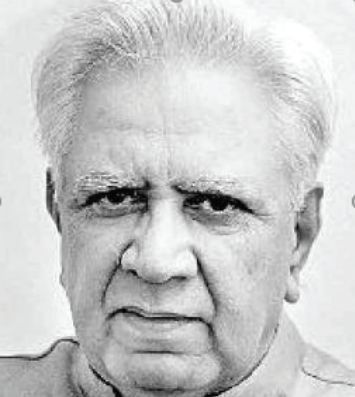
The land of Duggar has given birth to many distinguished sons and daughters—visionaries, patriots, academicians, social reformers, and artists. Among them, Justice R.P. Sethi shines as a towering legal luminary and a compassionate humanitarian who devoted his life to justice, service, and upliftment of the downtrodden.
Born on July 7, 1937, in Mirpur Chamak, a city in undivided Jammu and Kashmir (now in Pakistan), R.P. Sethi came from a modest but principled family. His father, Shri Mangal Sen Sethi, passed away when he was only five, leaving his upbringing to his courageous mother, Smt. Durga Devi. His grandfather, Shri Devi Dayal Sethi, was a court inspector, and the family also owned some land in Chak Da Bagh village in Poonch.
In 1946, the family shifted to Poonch due to political disturbances, where Sethi’s elder brother, Comrade Krishan Dev Sethi, was already a known revolutionary, imprisoned for anti-colonial activities. During the Partition violence, R.P. Sethi, then nine years old, along with his mother and younger brother, was airlifted to Jammu. The family stayed in a refugee camp in Nagrota. A Peepal tree under which young Sethi used to study still stands there—a silent witness to his early struggles.
Early Education and Political Activism
Settling in Jammu, he continued his education at Central Basic School and completed his matriculation from H.S. High School. He graduated from Government Gandhi Memorial Science College and then pursued law at the prestigious Aligarh Muslim University, earning his LL.B. in 1961.
From his student days, R.P. Sethi was deeply involved in youth and political activism. He served as President of his college student union, Secretary of the Debating Society, General Secretary of the Jammu and Kashmir Students Federation of India, and Secretary of the J&K Democratic Youth League. His leadership was not limited to the podium—he actively participated in debates, edited his college magazine, and was a vocal proponent of students’ rights.
Legal Career and Rise Through Judiciary
Enrolled as a pleader in 1961, vakil in 1962, and advocate in 1967, Justice Sethi practiced law for over 25 years. He was associated with several high-profile cases and held numerous important legal positions. He began his practice under the mentorship of renowned advocate Shri Devi Dass Thakur. Upon Shri Thakur’s elevation to the bench, Sethi inherited the responsibility of managing his office and cases—a testament to the trust placed in his legal acumen.
He served as the Special Public Prosecutor for cases under the Jammu and Kashmir Enemy Agents Ordinance, was appointed Additional Advocate General of the State in 1975 (a position he resigned from on principle after nine months), and worked as the Central Government Standing Counsel in J&K for over five years. He also represented institutions like the University of Jammu and the J&K Financial Corporation.
One of the high points of his career as an advocate was representing the State of J&K in the Supreme Court in the landmark Kesavananda Bharati case. His arguments helped secure rights and financial benefits for orphans, resulting in the distribution of ₹1 crore among orphaned children—a rare instance of legal advocacy directly benefitting the vulnerable.
A Distinguished Judicial Journey
Justice R.P. Sethi was appointed as a Judge of the Jammu and Kashmir High Court on May 30, 1986. In October 1993, he was transferred to the Punjab and Haryana High Court, where he served as Acting Chief Justice from March 1996. He was then appointed Chief Justice of the Karnataka High Court in June 1996.
His tenure as Chief Justice in Karnataka was marked not only by his commitment to law and order but also by his emotional connect with the country’s history. He visited the historic Andaman Cellular Jail (Kala Pani), where freedom fighters had been imprisoned. Moved by the neglected memory of Comrade Dhanwantri from Jammu, he arranged for a proper portrait of the martyr to be installed in her cell, preserving the pride of Jammu’s revolutionary heritage.
On January 8, 1999, he was elevated to the Supreme Court of India, where he served with distinction until his retirement on July 7, 2002. Known for his sharp legal mind, unflinching integrity, and balanced judgments, Justice Sethi left an indelible mark on Indian jurisprudence.
Author, Editor, Scholar
Justice Sethi was not only a judge and a lawyer but also a prolific writer and editor. He authored several authoritative legal texts, including:
Commentary on the Hindu Marriage Act
Code of Civil Procedure
Supreme Court on Words and Phrases
Revised Supreme Court on Criminal Law (Six Volumes)
He also edited Urdu Weekly Shagaf and over a dozen law journals published across the country. His contributions to legal literature enriched legal education and practice alike.
A Life of Service After the Bench
Retirement did not mark the end of Justice Sethi’s public life. Returning to Jammu, he immersed himself in social service. In memory of his parents, he established the Durga Mangal Charitable Trust, with his son Sunil Sethi as its trustee. The trust focused on aiding the elderly, the ill, and the poor—reflecting the compassion that had been central to his life.
Justice Sethi’s wife, Smt. Raj Dulari Sethi, was his steadfast partner in life, supporting him in every endeavor. Her encouragement and strength, he often acknowledged, were pivotal to his success.
In 2004, the Government of Jammu and Kashmir appointed him as the Chairman of the Accountability Commission to tackle growing corruption in the state. He took the post only on the condition of complete autonomy and worked without remuneration. True to his principles, he initiated actions against corrupt ministers and bureaucrats, gaining widespread public support.
However, political interference and administrative resistance mounted. Rather than compromise his values, Justice Sethi resigned on May 4, 2006, a decision that once again reflected his uncompromising moral clarity.
Final Days and Lasting Legacy
Justice R.P. Sethi fell ill on January 15, 2007, and was flown to Chandigarh for treatment, but he passed away on January 17, 2007. His passing marked the end of a luminous chapter in the legal and social history of Jammu and Kashmir.
Yet, his life continues to inspire. He is remembered not only as a jurist of the highest caliber but also as a compassionate human being—a friend to the needy, a defender of justice, and a servant of society.
On his death anniversary, those who knew him and benefited from his wisdom and kindness—like social worker and writer Ravi Rohmetra—recall him with reverence. Justice Sethi was not just a man of law; he was a man of the people.
His legacy lives on in his writings, his judgments, the institutions he strengthened, and in the grateful hearts of those he served.
(Writer is a social activist and a regular contributor to this publication and can be reached at Mob. 9419652999 ) The views expressed are Author’s personal