By Ravi Rohmetra
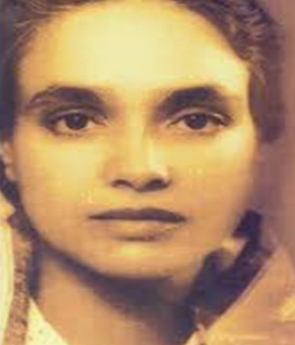
Kishtwar is a small town in the Jammu province, nestled in the thick Himalayan woods beside the Chenab River, which rushes impatiently toward the plains. Quiet and peaceful, yet full of life, it was in this scenic town that Krishna Mehta was born on June 4, 1913, into the illustrious Mehta family.
Perhaps the tranquil rise and rush of the Chenab mirrored, in some secret way, the unfolding of Krishna Mehta’s destiny. She grew up cherished and adored by all who knew her, a girl full of sweet charm and playful innocence. Her divine namesake, Krishna, seemed to live in her spirit. Peering out of her window, she would often gaze into the neighbor’s yard, watching the one she had already chosen to be her life partner. Her doting maid may have worried, but Krishna was determined. She had already made her choice.
She married Duni Chand Mehta, a man from another distinguished family of the state. Their union was not just a personal bond but a marriage of rich traditions. On one side, Krishna came from a lineage whose ancestors had served in Maharaja Ranjit Singh’s army and had played a key role in the annexation of Ladakh to Jammu and Kashmir. On the other side, Duni Chand descended from a family of renowned “Vaidas” (Ayurvedic physicians) who had served in the royal court. Duni Chand himself rose to the rank of Wazir Wazarat in Muzaffarabad, now in Pakistan-occupied Kashmir.
Then came the turning point—1947, the year of India’s independence and partition. As the country celebrated freedom, tragedy struck Krishna Mehta’s life. Duni Chand was killed while on duty, and Krishna, along with her young children, was forced to flee to a refugee camp.
Yet Krishna was undaunted. Refusing to give in to despair or self-pity, she rose to the occasion. In the refugee camps of Kurukshetra, she began working tirelessly to rehabilitate displaced women and children. It was there that she met Jawaharlal Nehru, the then Prime Minister of India. Nehru, deeply impressed by Krishna’s strength, dedication, and sincerity, invited her to Delhi and affectionately began referring to her as his “sister.” This bond proved pivotal, helping Krishna advance a broader purpose for her life.
With Nehru’s support, she founded two key institutions to empower women and promote economic self-reliance in Jammu and Kashmir: Gandhi Seva Sadan and Khadi Gram Udyog Sangh. Of these, Gandhi Seva Sadan was dearest to her heart. She nurtured it like her own child, not out of mere philanthropy, but with a deeper, personal commitment born from her own experiences of loss and suffering.
Krishna Mehta was more than a social worker. She was a visionary. She believed that true service meant offering the underprivileged a sustainable way to become self-reliant. She promoted cooperative models and practical training—not handouts. Her work was apolitical, despite her proximity to national leaders.
Her vision eventually led her into politics—not for power, but for impact. Realizing that sustainable development required political will, Krishna Mehta accepted a nomination to the Lok Sabha, becoming the first woman Member of Parliament from Jammu and Kashmir. This role enabled her to bring the then Prime Minister, Indira Gandhi, to Kishtwar and show her firsthand the challenges of the region. Even today, Kishtwar bears the imprint of Krishna Mehta’s tireless work.
Beyond her social and political contributions, Krishna Mehta was deeply spiritual. She authored several articles, particularly about Nehru, and even wrote a book on the Kashmir crisis. A seeker at heart, she met her spiritual mentor, Magan Baba, a Gujarati saint who had renounced worldly success for a life of renunciation. From 1972, she lived in his ashram for over a decade, embracing austerity with grace and devotion.
Her life was rich with experiences and compassion. Whether traveling in India or abroad, Krishna brought back fresh insights that enriched her work. She was a thinker, a writer, and a tireless servant of humanity.
Krishna Mehta passed away peacefully on October 20, 1993, at the age of 80. There was no pain—only the quiet glow of fulfillment. As she had wished, her ashes were immersed in the Chandrabhaga River. Her spirit still lives in Kishtwar—in its heartbeat, in its growth, and in the lives she touched. For indeed, can love ever cease to be?
The seed she planted in 1949 in the form of Gandhi Seva Sadan, with minimal resources but immense care, has grown into a flourishing tree. Today, it has over 60 branches across Jammu and Kashmir, and two in Delhi. Thousands of underprivileged families have found dignity and self-sufficiency through its programs.
Her life stands as proof that even in the most difficult of circumstances, the path of service is always open. Krishna Mehta, widow of a public servant martyred during partition, dedicated her life entirely to the service of humanity. From 1948 to 1993, she held numerous important positions, but always remained, at heart, a social reformer.
During her time at the Kurukshetra refugee camp, she worked day and night for the welfare of women and children. Pandit Nehru, upon visiting the camp, was so moved by her dedication that he informally adopted her as a sister, a relationship he honored for the rest of his life. She even served as a guardian to Indira Gandhi and worked alongside Lady Mountbatten in the United Council for Relief.
Krishna Mehta was a devout Gandhian in the truest sense. Her association with Gandhian philosophy was not symbolic—it was essential. In Jammu and Kashmir, she was second to none in promoting Gandhian ideals. Her leadership in institutions like Gandhi Samarak Nidhi and Gandhi Seva Sadan remains a beacon of her commitment.
Krishna Mehta lived a life of quiet greatness—never loud, never seeking glory, but always purposeful. Her legacy is etched not just in stone or records, but in the lives she transformed.