NL Correspondent
Jammu Tawi, Aug 26:
Unusually heavy rainfall lashed the Jammu division on Sunday, breaking nearly a century-old record. According to officials from the Meteorological Department, Jammu city recorded 190.4 mm of rain in just 24 hours — the highest precipitation for August in the last 99 years and the second-highest single-day rainfall in almost a century .
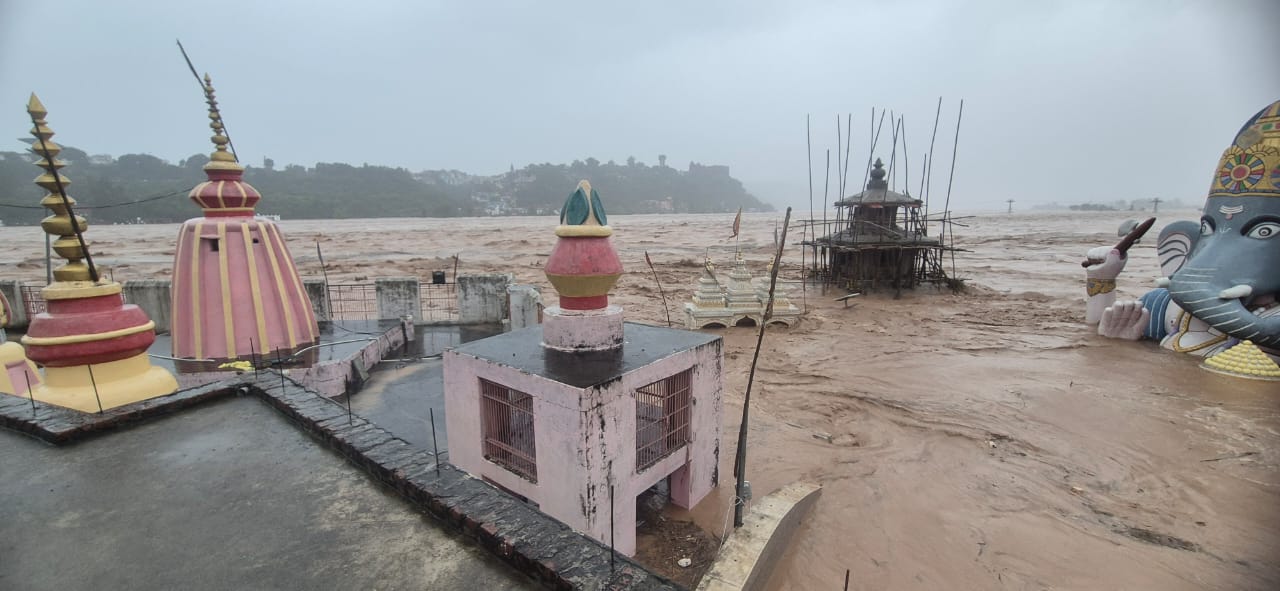
The torrential downpour on Tuesday triggered devastating flash floods across the region, leaving the city grappling with one of the worst natural calamities in living memory. Residential colonies, markets, and heritage sites were submerged under muddy waters, causing widespread panic and destruction.
Har Ki Pauri Temple Bears the Brunt
Among the worst-hit areas was the revered Har Ki Pauri temple at Bahu Fort , where the swollen Tawi River unleashed its full fury. The temple premises were completely submerged, and as the waters receded, thick layers of sand, silt, and flood debris covered the entire complex.
Eyewitnesses described the scene as “terrifying,” with the gushing Tawi waters sweeping through the sacred temple, damaging its infrastructure and altering its very appearance. “The temple looks completely changed after the floods. It no longer feels the same,”* a local devotee lamented.
Shockingly, the government has not issued any official statement on the extent of damage suffered by the temple or the relief measures planned for its restoration. This silence has fueled anger among residents and devotees alike.
Youth Committee Steps In
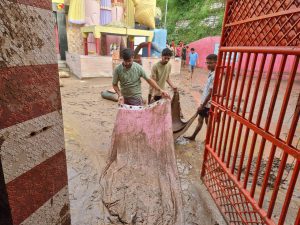
With no government action in sight, the Gorkha Nagar Jagran Youth Committee stepped forward to take responsibility for cleaning and restoring the flood-hit temple. On Wednesday, as the waters receded, members of the committee along with their workers launched a massive cleanup drive inside the temple premises.
Armed with shovels, brooms, and unwavering determination, the volunteers began removing sludge, garbage, and sand deposits. Committee members estimated that the process could take 8–10 days before the temple is fully cleaned and ready for devotees again.
One of the volunteers said, *“Whenever we get a chance to serve, we come together as one. This temple is not just a place of worship, it is our shared heritage. We feel it is our duty to restore it.”*
Anger and Appreciation
While residents expressed disappointment at the government’s inaction, they hailed the efforts of the Jagran Youth Committee. Locals praised the volunteers for stepping into the vacuum left by official agencies. *“This is the real spirit of Jammu — when authorities fail, people unite to protect their faith and culture,”* said a shopkeeper near Bahu Fort.
The committee also appealed to the administration to support their drive with sanitation equipment, waste trucks, and disinfectants. However, so far the work remains entirely voluntary.
A City in Shock
The August 26 floods have left Jammu shaken. Roads were damaged, houses inundated, and livelihoods disrupted. Experts warned that while heavy monsoon rains triggered the disaster, poor drainage and lack of disaster preparedness worsened the crisis.
For now, as Jammu mourns the loss and counts the damage, the sight of youth volunteers cleaning the Har Ki Pauri temple has become a symbol of resilience and hope. Amid destruction, the spirit of community service has shone through, reminding everyone that unity and dedication can achieve what official machinery often fails to deliver.