By Ravi Rohmetra
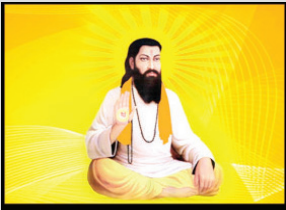
Shri Guru Ravidas was a revered Indian mystic, poet-saint, philosopher and social reformer of the Bhakti movement, active between the 15th and 16th centuries. He is remembered for his profound spiritual vision, his rejection of caste and gender discrimination, and his emphasis on inner devotion as the true path to liberation.
Ravidas, also known as Raidas, was venerated as a guru (spiritual teacher) across large parts of the Indian subcontinent, including present-day Uttar Pradesh, Bihar, Rajasthan, Gujarat, Maharashtra, Madhya Pradesh, Punjab and Haryana. His teachings promoted unity, equality and personal spiritual freedom, cutting across rigid social hierarchies.
The details of his life remain uncertain and are a subject of scholarly debate. Some scholars place his birth around 1433 CE, while others suggest earlier dates ranging from the late 13th to the late 14th century. It is generally believed that he lived and taught in and around Banaras (Varanasi).
Guru Ravidas was born in Sir Gobardhanpur village near Varanasi, now known as Shri Guru Ravidass Janam Asthan. His parents, Santokh Dass and Mata Kalsi, belonged to the leather-working Chamar community, which was considered an “untouchable” caste at the time. Although trained in leather work, Ravidas increasingly devoted himself to spiritual pursuits, spending long hours in meditation and discourse along the banks of the Ganges and in the company of sadhus, ascetics and Sufi saints.
Married at a young age to Lona Devi, he had a son named Vijay Dass. Medieval Bhakti texts such as the Bhaktamal and Parcais of Anantadas associate Ravidas with the Bhakti poet Ramananda and place him among the younger contemporaries of Kabir. Over time, his spiritual authority grew to such an extent that even Brahmins were said to bow before him.
Ravidas travelled extensively across India, visiting major pilgrimage centres in the north, west and south. He rejected ritualism and image-based worship (saguna bhakti), emphasising instead devotion to the formless, attributeless divine (nirguna bhakti). His simple yet powerful verses in regional languages inspired people from all sections of society to seek a life of compassion, equality and devotion.
Guru Ravidas occupies a unique place in Sikh tradition. Forty-one of his hymns are included in the Guru Granth Sahib, making him one of its prominent contributors. His verses also appear in the Panch Vani of the Dadupanthi tradition within Hinduism. He is the central spiritual figure of the Ravidassia religious movement as well.
Ravidas Jayanti, marking his birth anniversary, is celebrated with devotion and reverence, particularly at the Ravidas Temple in Varanasi. His legacy endures as a powerful voice of social justice, spiritual humanism and unwavering faith in a just and egalitarian society.
(Ravi Rohmetra is a social worker and freelance writer and can be reached at Mobile 9419652999, Email- [email protected])