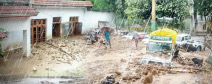
Two cloudbursts in Doda, flash floods in Anantnag
Jammu Tawi, July 1: The southwest monsoon became active across Jammu and Kashmir on Wednesday, bringing widespread rainfall that triggered flash floods, cloudbursts and rising water levels in several districts, while the Meteorological Department warned of more intense showers, flash floods, landslides and mudslides over the next few days.
A flash flood hit Guridraman village in the Larnoo area of Anantnag district following heavy rainfall. Several students trapped inside a local school were safely rescued by villagers before police, SDRF and civil administration teams reached the spot. No casualties were reported, and damage assessment was underway.
In Doda district’s Bhalessa region, two cloudbursts were reported in Kalalgisar village after intense rain. Authorities were closely monitoring the situation amid unstable weather conditions.
Heavy overnight rainfall also caused a sharp rise in water levels in rivers and seasonal streams across Rajouri district, prompting the administration to keep vulnerable areas under surveillance and advise residents near rivers and low-lying areas to remain alert.
The rainfall brought much-needed relief from the prolonged heatwave in Kashmir, with Pahalgam, Ashmuqam and several other areas witnessing a noticeable drop in temperatures.
The monsoon covered the entire Jammu and Kashmir-Ladakh meteorological subdivision on July 1, a day later than its normal onset. Samba recorded the highest rainfall at 62.5 mm during the past 24 hours, followed by Jammu (35.8 mm), Kathua (23.8 mm) and Rajouri (19.6 mm).
The IMD has forecast generally cloudy weather with light to moderate rain across the region from July 2 to July 4, with heavy rainfall, thunderstorms and gusty winds expected at isolated places, particularly in the Jammu division, Pir Panjal range, Chenab Valley and parts of south Kashmir.
Meanwhile, following an IMD warning of heavy to very heavy rainfall in Poonch district, the Health Department placed all government health institutions on high alert. All staff leave, except maternity leave, has been cancelled, while hospitals have been directed to ensure adequate stocks of medicines, oxygen, ambulances and emergency equipment, maintain full staff attendance, establish control rooms and coordinate closely with disaster management authorities to handle any weather-related emergencies.