Democrats are sulking and bracing for another battle next January
By Ashok Nilakantan Ayers
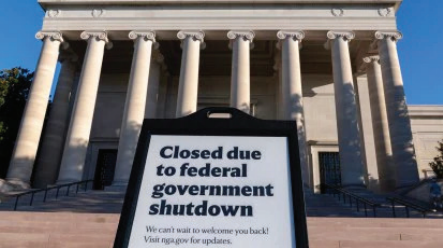
NEW YORK: The federal government reopened on Thursday s after a grueling 42-day shutdown, sending nearly 900,000 furloughed workers back to their jobs and averting what economists warned could have been a devastating blow to the holiday economy.
But the bipartisan agreement that ended the standoff left critical questions unanswered — most urgently, the fate of enhanced Affordable Care Act subsidies set to expire at year’s end, and whether Congress can avoid yet another fiscal showdown when lawmakers reconvene in January.
The deal, brokered by Senate Majority Leader John Thune, Republican of South Dakota, and Minority Leader Chuck Schumer, Democrat of New York, represented a narrow escape from economic turmoil. President Trump signed the measure within hours, declaring it a victory for fiscal discipline. Yet for millions of Americans navigating the health insurance marketplace and federal employees still reeling from weeks without paychecks, the resolution feels more like a temporary reprieve than a lasting solution.
For federal employees, the shutdown’s end brought immediate, if bittersweet, relief. Back pay will be distributed over the next two weeks, according to the Office of Management and Budget. Agencies from the Federal Aviation Administration to the National Park Service worked quickly to restore operations, though officials warned that the disruption’s effects — stalled projects, demoralized staff and chronic understaffing — would persist well into next year.
“People are relieved, but trust in Congress’s ability to govern is badly eroded,” said a senior official at the American Federation of Government Employees. “Each shutdown chisels away at morale.”
The human toll extended beyond paychecks. Federal workers described the strain of stretching emergency savings, missing mortgage payments and explaining to children why family plans had to be cancelled. Union leaders said the psychological impact of repeated shutdowns has driven some career civil servants to leave government service altogether.
Economists noted that the shutdown’s ripple effects touched the broader economy as well. Household spending among furloughed workers declined noticeably during the impasse, and even brief disruptions can shave tenths of a percentage point off quarterly gross domestic product.
The White House, eager to project stability, framed the deal as evidence of bipartisan cooperation. But Democrats privately acknowledged they had surrendered their most powerful bargaining chip: securing an extension of the health care subsidies before the clock ran out.
The enhanced A.C.A. subsidies, first expanded in 2021 as part of pandemic relief legislation, have become a cornerstone of affordable health coverage for millions of Americans. By capping premiums as a percentage of income, the tax credits pushed enrollment to historic highs and made insurance accessible to middle-income families previously shut out of government assistance.
But with the subsidies expiring Dec. 31, insurers have already priced 2026 plans assuming they will disappear. The result: premiums in states using HealthCare.gov are rising an average of 30 percent, with some consumers facing increases of more than 100 percent, according to estimates by KFF, a health policy research organization.
“In some respects, the damage is already done,” said John A. Graves, a health policy professor at Vanderbilt University. “Insurers filed rates months ago expecting the subsidies to expire, and Congress didn’t act in time to influence the 2026 pricing cycle.”
Mr. Thune has pledged to hold a Senate vote during the second week of December, offering Democrats a narrow window to salvage the subsidies. But passage would require at least 13 Republicans to break ranks in the Senate, and even then, the measure would face an uncertain fate in the House, where Speaker Mike Johnson, Republican of Louisiana, has refused to commit to a vote.
Republican lawmakers open to compromise have proposed tightening eligibility requirements and eliminating zero-premium plans, which they argue distort the insurance market. Any such concessions, however, would still raise costs for many enrollees — a politically treacherous outcome in an election year.
The Congressional Budget Office has projected that if the subsidies expire, an average of 3.8 million people would lose coverage annually over the next eight years. Middle-income families, who became newly eligible for aid under the enhanced program, face the steepest premium increases.
Even if Congress acts, timing presents its own obstacles. Consumers must enroll by Dec. 15 and pay their first premium to secure coverage starting Jan. 1. A legislative fix passed in mid-December would likely come too late for insurers to adjust rates for January.
“If Congress passed something on December 12, it’s unlikely insurers could adjust in time,” said Cynthia Cox, a vice president at KFF. Consumers would be forced to pay inflated premiums for January and wait until they filed their 2026 taxes — in early 2027 — to reclaim the difference through a tax credit.
The confusion could also suppress enrolment, policy experts warned. Consumers uncertain about congressional action may simply forgo coverage, assuming they cannot afford it.
Larry Levitt, executive vice president of KFF, said the uncertainty was taking a psychological toll. “People don’t know whether to trust that help is coming,” he said. “That kind of chaos undermines the whole system.”
Compounding the anxiety is the spectre of yet another government shutdown. The deal that reopened federal agencies funds the government only through mid-January, setting up another potential crisis just weeks into the new year.
Congressional aides on both sides said the tight deadline was intentional — a way to force lawmakers back to the negotiating table. But the strategy has left federal workers and their families bracing for a possible repeat of the chaos they just endured.
“We’re grateful to be back at work, but it feels like we’re living shutdown to shutdown,” said one Department of Agriculture employee who spoke on the condition of anonymity for fear of retaliation. “How do you plan a life like this?”
Republicans have signalled they will use the January deadline to demand deeper spending cuts, while Democrats insist they will not negotiate without protections for the A.C.A. subsidies and other social programs. The battle lines, in other words, remain drawn.
For now, the government is open, and federal workers are back on the job. But the fragile peace brokered this week has done little to resolve the underlying disputes that plunged Washington into crisis in the first place.
Millions of Americans enrolled in A.C.A. plans face the prospect of sharply higher premiums or losing coverage altogether. Federal employees, still recovering from the longest shutdown in recent memory, are steeling themselves for the possibility of another furlough in just weeks. And lawmakers, having barely averted one disaster, are hurtling toward the next. The government may have reopened. But the sense of crisis has not lifted. (IPA Service)