NEW DELHI, May 27: The demographic changes due to illegal migration are not limited just to border areas, but their impact has extended, “affecting urban centres, industrial corridors, tribal regions, and other socially and economically sensitive areas,” said a government notification.
The notification issued by the Union Ministry of Home Affairs on the constitution of a High-Level Committee on Demographic Changes (HLCDC) under Justice Prakash Prabhakar Naolekar, a retired Supreme Court judge, said “extensive challenges” have arisen from demographic changes due to illegal immigration.
Union Home Minister Amit Shah had announced the formation of the committee to assess demographic changes across India due to “illegal immigration and other unnatural causes”.
Headquartered in New Delhi, the committee will also include the Census Commissioner, along with retired IAS officer Durga Shankar Mishra, ex-IPS officer Balaji Srivastava and Dr Shamika Ravi as members and will submit its report in a year.
“The joint secretary (foreigners-l), Ministry of Home Affairs, will serve as the member secretary of this committee,” Shah had said on Tuesday.
The notification said demographic changes have been observed in certain regions of the country, which are “not attributable to normal fertility or mortality trends” but are instead emerging due to external abnormal factors such as “illegal immigration, irregular population mobility, and administrative laxity”. “Although these changes are most visibly concentrated in the border districts, their impact has extended beyond those areas, now affecting urban centres, industrial corridors, tribal regions, and other socially and economically sensitive areas, thereby severely impacting public service delivery, local governance, resource distribution, and social cohesion,” it said.
The existing institutional framework has not been adequately equipped to undertake coordinated, evidence-based, and time-bound evaluation and response to such demographic shifts, the notification said.
“…therefore, the Government of India resolves to constitute a High-Level Committee on Demographic Changes (HLCDC) under the Ministry of Home Affairs to undertake scientific study of the nature, causes and consequences of such demographic changes occurring across the country and to recommend appropriate policy, administrative and legal measures,” it said.
The committee is tasked to submit its report within a year after undertaking an extensive consideration of the challenges arising from demographic changes, including illegal immigration.
The panel will study the possible causes of such demographic changes, such as variations in fertility, cross-border movement (including illegal immigration), economic opportunities, and other socio-environmental factors and underlying factors behind changes, including illegal immigration, abnormal settlement patterns, and planned migration.
It will analyse the structural population changes at the level of religious or social communities, especially those diverging from uniform trends and recommend a well-organised and permanent operational system for the “legal, fair and time-bound identification, detention, and deportation of illegal immigrants already residing in the country.” The panel will also recommend an institutional mechanism to strengthen border management, population stabilisation, and identification systems for sustained monitoring of such trends, besides proposing a comprehensive policy framework to enhance coordination between the Centre and state governments in such matters, it said.
Demolish all illegal structures within 15 Km of Border: HM
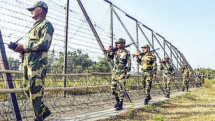
NEW DELHI, May 27: Union Home Minister Amit Shah has directed the authorities to strictly enforce a ‘zero tolerance’ policy against illegal constructions within 15 km of the country’s borders and demolish all such structures that have come up over the years.
The Ministry of Home Affairs has assigned enhanced responsibility to the district magistrates to ensure legal and financial compliance of banking transactions in the border areas by all banks, verify big business establishments, examine their funding sources, track mule accounts and false companies, identify fake Aadhaar cards and control cross-border smuggling, officials said.
Chairing a security review meeting in Bikaner on Tuesday, Shah assessed security related issues concerning the border districts of Rajasthan along the India-Pakistan border.
Rajasthan Chief Minister Bhajanlal Sharma, senior state officials, and the district magistrates and superintendents of police of five border districts – Bikaner, Jaisalmer, Barmer, Sri Ganganagar and Phalodi – were present at the meeting.
In a statement, the home ministry said the border districts have been directed to carry out an in-depth study of the sources, patterns and networks behind crimes and the drug menace, and to develop lasting solutions so that these problems do not resurface.
Shah stressed formulating a 360-degree security cover for every border district involving citizens, state machinery and security agencies.
The home minister called for strict enforcement of the zero tolerance policy against illegal constructions, particularly within 0 to 15 km of the internal borders, and to demolish all such structures, officials said.
He underscored the importance of a coordinated approach to border management involving the BSF, CBDT, NCB and the state machinery to address issues of infiltration, narcotics smuggling, encroachment, terror financing and other trans-border crimes.
“Emphasis was laid on the successful implementation of the Vibrant Villages Programme (VVP)-II for strengthening last mile governance, curbing economic crimes, fulfilling infrastructural gaps and supporting border population,” the ministry statement said.
At the meeting, Shah also directed to ensure 100 per cent saturation of all government schemes in the border villages, and called for the effective use of the ‘1930’ call centre to tackle cybercrimes.
“A review and feedback on these issues will be undertaken again after two months; therefore, the districts will have to ensure result-oriented action,” the statement said.