Traits of Pahadi Society and Language Mosaic)
By Ashraf Katoch
The Chenab Sub-Region, comprising the mountainous districts of Doda, Ramban, and Kishtwar in Jammu & Kashmir, is home to a people whose identity is carved by the Himalayan terrain itself. Locally, they are distinct from both Kashmiris of the Valley and Dogras of the plains of Jammu. Living between 3,000 to 14,000 feet above sea level, in a landscape of steep slopes, dense deodar forests, roaring rivers, and long winters, these communities have developed a unique social fabric, temperament, and value system.
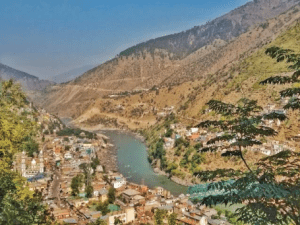
To call someone “Pahadi” in Doda, Ramban, or Kishtwar is not just a geographic label; it is a description of character shaped by the mountains.
The first trait a visitor notices is physical and mental toughness. A typical Pahadi household in Bhaderwah, Marwah, Dachhan, Padar, Bhalessa, Pogal-Paristan, Khari, Neel, Rajgarh, Ind, or Banihal is made of stone, wood, and mud. People awake before sunrise. Women walk miles carrying gagars (silver pots) of water on their heads across uneven paths. Men carry 40–50 kg loads of firewood, grain, or timber on their backs, often barefoot, in rubber shoes, or in pula (grass shoes). Children trek 5–7 km daily to school through snow or rain without complaint.
This is not heroism; it is routine. The terrain allows no weakness. Landslides block roads for weeks, electricity is erratic, and healthcare is hours away. Yet, the people rarely complain. The phrase “Sab Allah ki marzi” reflects a deep fatalistic resilience—not despair, but acceptance that enables endurance.
Winters are the ultimate test. In upper reaches like Warwan, Paddar, Chhatru, Bhalessa, Dessa, Gandoh, Rajgarh, Pogal-Paristan, Khari, Neel, Sangaldan, and Gool, snow cuts off villages for four to five months. Families stock walnuts and dried vegetables in advance—deedh, woone, wapal haak, engloo, along with makki and rajma. This culture of foresight and self-reliance is a defining Pahadi trait.
Pahadi life is largely non-materialistic. A typical home is built of stone and timber, often with a chhani roof. The kitchen is the centre of life, with a chulha (clay stove), copper utensils, and a kangri for warmth. Wealth is not measured by cars but by landholding and livestock.
Hospitality, however, is lavish within this simplicity. A guest—even a stranger—is offered nun chai (salt tea), makki ki roti with desi ghee (mooraine), or rajma/kulth dal. Refusal is considered impolite. As the proverb goes: “Pahad mein daulat nahi hoti, bada dil hota hai” (In the mountains there isn’t wealth, but there is a big heart).
Individualism does not survive in the mountains. Society functions on collective labour systems such as sharik, haas, or kameer. When someone builds a house, the entire village contributes. During weddings, neighbours cook, decorate, and sing bakhans or chann for days. During funerals, the whole biradari gathers, and no one cooks at home for several days.
Disputes are often settled by lambardars or village elders under a tree rather than in courts. This informal system of justice acts as social insurance. Seeking police intervention is often viewed as nafarmaan (rebellious) or as bringing dishonour to the village.
Doda, Ramban, and Kishtwar form a linguistic mosaic. There is no single Pahadi language. People speak Bhaderwahi, Kishtwari, Siraji, Pogali, Padri, Bhalessi, Rambani, Zundhari, and Deshwali—Western Pahari languages related to Dogri but distinct. Urdu serves as the link language, and Kashmiri is also spoken in several areas.
The oral tradition is rich: bakhans/chann (folk songs), dhaku (ballads of love and war), and gwatri (sung narratives) are passed down generations. Elders act as living repositories of proverbs and wisdom, such as: “Jis pahad pe rehna, usi ka sheesham banna” (Adapt to where you live).
The region is multi-religious. Sunni Muslims form the majority, alongside significant Hindu Rajput, Brahmin, Scheduled Caste, and small Sikh populations. Yet, religious identity is often secondary to Pahadiyat.
Muslims and Hindus visit shared shrines—Ziarat of Shah Farid-ud-Din in Kishtwar, Machail Mata, Sarthal Devi, Bimal Nag, and Chandi Mata (Chumanda) in different seasons. During the Amarnath Yatra, Machail Yatra, or local pilgrimages, Muslims run langars; during Eid, Hindu neighbours share sewaiyan. This syncretism is born of shared hardship—snow does not discriminate.
Religious practice is simple and personal. Prayer, death rituals, marriage songs, and festivals often display striking similarities across communities.
A Pahadi does not raise his voice before elders and rarely questions someone’s honesty, as such actions can create lifelong enmity. At the same time, people are emotionally expressive—they laugh heartily, cry openly at funerals, and sing with deep emotion.
They are also known for stubbornness. The phrase “Pahadi ki zid” is well known—once they decide, they rarely backtrack, whether it is refusing to sell ancestral land or insisting on walking home in a storm.
Diet is high-calorie and local. Staples include makki ki roti, rajma, kulth dal, sarson ka saag, suchal, gandoli, deedh, woone, haandh, wapal haak, wat krum, engloo, and waangan. Meat, usually mutton, is eaten on special occasions. Nun chai brewed in a copper samovar is consumed multiple times a day. Delicacies like gucchi (wild mushrooms) and anardana are prized. Food is often shared from a common plate.
Preservation is key: khairi (dried brinjal), hogo (dried mushrooms), qadambal (dried apple slices), and dried tomatoes are stored for winter, reflecting a culture of planning ahead.
Traditionally agro-pastoral, Pahadis practice terrace farming on steep slopes. Maize, wheat, and rajma are staple crops. Gujjars and Bakarwals migrate seasonally to dhoks (alpine pastures). Kishtwar is known for sapphire, walnuts, and saffron; Bhaderwah for rajmash and honey; Ramban for olive oil, anardana, bamchoot, and gypsum.
Today, the youth are increasingly educated and employed in government and private sectors. Many migrate to Jammu, Kashmir, Delhi, and other parts of the country. Yet, most retain strong rural roots, returning home for bijai (sowing) and katayi (harvesting).
The region witnessed militancy during the 1990s and 2000s, yet the majority remained rooted in their native places. Today’s youth wear jeans, speak Hindi, Urdu, and English, and aspire to careers through NEET and UPSC. Migration is rising, and if timely attention is not given, there is a real risk of cultural and linguistic erosion under the pressures of modernisation.
Yet, the core values—resilience, hospitality, ghairat (self-respect), and community bonding—remain intact. A Pahadi boy in Bengaluru still sends money home to repair the chhani roof or buy a feeu (wooden tool for clearing snow). A Pahadi girl in Delhi still knows how to prepare makki ki roti and sarson ka saag.
To understand a Pahadi from Doda, Ramban, or Kishtwar, one must look beyond literacy rates or employment statistics. Observe how he offers tea even when he has little, how she walks long distances to school and excels, and how communities rise above religious differences in times of crisis.
As the Chenab flows through these mountains, it carries their story—tough, simple, proud, and deeply rooted. Being Pahadi is not merely about attire or language; it is about carrying the mountain in one’s heart and preserving its innocence.
Linguistic Profile of the Chenab Sub-Region
The languages spoken across Doda, Ramban, and Kishtwar form one of the most diverse linguistic belts in Jammu & Kashmir. Unlike the Kashmir Valley (Kashmiri-dominant) or the Jammu plains (Dogri-dominant), this region has no single majority language. Instead, it is a mosaic shaped by geography, migration, and history.
Doda District (Population 2011: 4,09,936)
Bhaderwahi (32–35%) – Dominant dialect in Bhaderwah and surrounding areas.
Siraji (25–28%) – Spoken in Doda town, Assar, and adjoining belts; widely used in bazaars.
Kashmiri (18–20%) – Spoken in Dessa, Kastigarh, Marmat, and migrant communities.
Gojri (12–15%) – Language of Gujjar and Bakarwal communities.
Urdu (3–5% as mother tongue; widely used as second language)
Others (2–3%) – Dogri, Punjabi, Pogali.
Ramban District (Population 2011: 2,83,713)
Pogali (28–30%) – Dominant in Pogal-Paristan region.
Siraji (22–25%) – Spoken in Rajgarh.
Kashmiri (20–22%) – Common in Banihal and surrounding areas.
Gojri (15–18%) – Among Gujjar/Bakarwal communities.
Urdu (4–6% as mother tongue; widely used as second language)
Others (3–5%) – Dogri, Punjabi, Zundhari, and smaller dialects.
Kishtwar District (Population 2011: 2,30,696)
Kishtwari (45–48%) – Largest language group; lingua franca of the district.
Kashmiri (25–28%) – Spoken in Marwah, Warwan, and Dachhan.
Gojri (12–15%) – Among pastoral communities.
Padri (4–6%) – Spoken in Paddar region; considered endangered.
Urdu (3–4% as mother tongue; widely used in administration)
Others (2–3%) – Dogri, Punjabi, Bhaderwahi, Pogali.
Bilingualism is the norm—over 80% of people speak at least two languages, typically their mother tongue along with Urdu or Hindi.
Several dialects such as Padri, Zundhari, and micro-variants in Marwah–Warwan remain endangered, with limited documentation. Migration and the shift to Hindi/Urdu-medium education are accelerating language loss. However, initiatives like the National Education Policy (2020), which promotes mother tongue instruction, offer hope.
The Chenab Valley thus remains a living linguistic laboratory where Bhaderwahi, Bhalessi, Pogali, Padri, and Sarazi coexist alongside Kashmiri and Gojri. While Doda is largely Siraji–Bhaderwahi dominant, Ramban is Pogali-influenced, and Kishtwar is Kishtwari–Kashmiri dominant, all are united by Urdu/Hindi as a bridge language and by a shared Pahadi identity.
Preserving these languages through education, documentation, and cultural initiatives is essential—because with every elder who passes away, a part of this rich linguistic heritage risks being lost.
(The Writer is a School Teacher)