Crises within crises
By Pushp Saraf
Does the restoration of ambassador-level diplomatic ties between Afghanistan and Pakistan guarantee that the Tehreek-e-Taliban Pakistan (TTP) will renounce terrorism? Even the most optimistic observer would struggle to say yes with conviction.
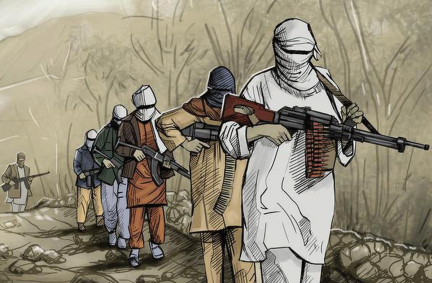
The TTP remains a coalition of Pakistani militant factions many of which continue to enjoy sanctuary in Afghanistan under the protection of the ruling Afghan Taliban (hereafter referred to as the Taliban). From these safe havens, the TTP has carried out repeated attacks on Pakistan which has responded with retaliatory airstrikes on TTP positions across the border.
The TTP and the Taliban are ideological kin, both grounded in the same rigid religious ideology, and bound by longstanding personal and strategic ties. Their divergence lies primarily in political objectives: the Taliban seeks to entrench its Islamic regime within Afghanistan whereas the TTP is intent on imposing its version of Islamic rule inside Pakistan.
China played a key mediating role in reviving diplomatic engagement. A trilateral meeting in Beijing this May—attended by Pakistani Deputy Prime Minister and Foreign Minister Ishaq Dar. Afghan Foreign Minister Amir Khan Muttaqi and Chinese Foreign Minister Wang Yi—led to the restoration of full diplomatic relations. As part of the broader alignment, China is reportedly encouraging Afghanistan’s integration into regional initiatives such as the China-Pakistan Economic Corridor (CPEC). In return, the Taliban is said to have pledged to prevent the TTP from launching cross-border attacks—a commitment made to both Beijing and Islamabad.
Trilateral understanding
The Taliban has, on multiple occasions in the past, offered verbal assurances to Pakistan that it would rein in the TTP and prevent the group from using Afghan territory to launch attacks. However, these promises have largely remained unfulfilled with no tangible action taken against the TTP. This pattern of inaction has deepened scepticism in Islamabad. Against this backdrop, it is highly unlikely that the Taliban would readily accept any unilateral attempts by China to pressure or control the TTP especially if such moves are perceived as infringing on Afghan sovereignty. Given the Taliban’s cautious and often non-committal stance on the issue, the successful implementation of the trilateral understanding brokered in Beijing—remains uncertain and will depend heavily on whether all parties can move beyond rhetoric to coordinated, enforceable measures.
As an immediate follow-up to the meeting, Pakistan appointed Obaid ur Rehman Nizamani as its ambassador to Kabul on May 30. Nizamani had earlier served as Pakistan’s Chargé d’Affaires in Afghanistan and narrowly survived a December 2022 assassination attempt in the Pakistani embassy in Kabul in which a security guard was critically injured. On the other side, Sardar Ahmad Shakeeb currently serves as the Taliban’s top diplomat in Islamabad.
While the upgrade in diplomatic representation signals a desire for constructive engagement, it does not amount to formal recognition of the Taliban government by Pakistan. Rather, it reflects a pragmatic move by both countries to maintain peace and manage bilateral relations—pending the Taliban’s broader acceptance by the international community which continues to hinge on its willingness to address issues such as gender equality.
For China, this alignment is likely seen through a strategic lens—as an opportunity to expand its influence into Afghanistan where it already maintains ambassador-level ties.
Diplomatic thaw
The first concrete indication of this diplomatic thaw came in April when Ishaq Dar visited Kabul. During the visit, the Taliban reportedly reaffirmed its commitment to prevent Afghan territory from being used against Pakistan. In return, Pakistan assured Kabul that the repatriation of Afghan nationals from its territory would be carried out with dignity and respect.
Dar revealed the details of his discussions at a press conference in Kabul on April 19: “We have requested our hosts that we have to work together for the progress, betterment and peace and security of the region. For that, neither will we allow anyone to use our soil to conduct illicit activities in Afghanistan and graciously nor will you allow anyone to use [Afghan soil]… We both countries will strictly deal with and no one will be permitted to — there is no permission either way — to use our land against the other for any security [risk] or terrorism. If someone does, then we both will be responsible to take action against such elements in our countries and stop them.”
Rekindling a sense of shared history and warmth, Dar said: “As l consider here [Afghanistan] my second home, Pakistan is also their second home.”
On the issue of Afghan refugees, Dar outlined four key decisions made in principle. First, the repatriation process would be carried out in a dignified and respectful manner. Second, a formal mechanism would be established to address and investigate complaints of mistreatment. Third, Pakistan clarified that it had issued no directive prohibiting the sale of property to Afghan nationals. And fourth, refugees would be allowed to return to Afghanistan with all their personal belongings, without restriction.
An official Afghan statement noted, among other things, after a meeting between Dar and Muttaqi: “The discussions encompassed a comprehensive range of topics pertaining to bilateral relations, underscoring the need to devise strategies for enhancing cooperation across diverse areas of mutual interest, including security, trade, transit, connectivity, and people to people contacts… Both parties reaffirmed their commitment to fostering mutually beneficial relations and agreed on the importance of maintaining high-level engagement.”
Dar’s visit to Afghanistan came at the invitation of the Taliban government and followed the revival of the Joint Coordination Committee (JCC) between the two countries which held its seventh meeting on April I6—the first since January 2024.
Tensions between Pakistan and Afghanistan had escalated after Islamabad linked Afghan refugees to cross-border attacks carried out by the TTP from Afghan territory. Pakistan, increasingly frustrated by the frequency and intensity of these incursions in its border regions, initiated a crackdown that led to the deportation of Afghan nationals.
The move, however, sparked concern in Kabul. The Taliban feared that the sudden influx of returnees could strain Afghanistan’s fragile economy and raise security risks. Muttaqi publicly voiced his government’s displeasure, expressing “concern and disappointment over the forced deportation of Afghan refugees and their mistreatment by certain Pakistani authorities,” calling the actions “provocative and damaging to bilateral relations.”
Pakistan has adopted a phased approach to repatriation. The first phase, launched in 2023, targeted undocumented Afghan nationals residing illegally in the country.The second phase began on March 7, 2025, during which even registered refugees—those holding Afghan Citizen Cards—were asked to return by April I.
According to data released by the International Organisation for Migration (10M), between September 15. 2023, and April 5, 2025, a total of 861763 Afghans have returned home from Pakistan.
With the return of Afghan refugees from Pakistan, Afghanistan finds itself grappling with yet another formidable challenge—adding to an already overwhelming list that includes extreme poverty, the erosion of women’s rights and the growing impact of climate change.
Humanitarian disaster
The sudden influx of returnees places enormous strain on a country where millions already face chronic food insecurity and lack access to even the most basic healthcare. Kabul is in the grip of fast depleting groundwater. Feeding and sheltering tens of thousands of additional people is a monumental task for a government that struggles to support its existing population. The humanitarian crisis has only deepened in the wake of sharply reduced international assistance—most notably from the United States.
Under the administration of President Donald Trump, Washington, once the largest donor to Afghanistan, significantly cut back its aid. Since the Taliban’s return to power in 2021, the US has spent approximately $3.71 billion on humanitarian and development support—a figure that, while substantial, marks a sharp decline from previous years and fails to meet the country’s expanding needs.
United Nations Under-Secretary-General for Humanitarian Affairs, Tom Fletcher, warned of the delayed but devastating consequences of these aid cuts. “The reality with the cuts was that we didn’t see the impact straight away. it’s now that we’re really coming to understand how brutal these cuts are going to be.” He said: “We’re in the midst of a massive humanitarian reset… We’ve identified 17 crises globally where our presence is most vital. Afghanistan is high on that list.”
Fletcher described the current phase as one where humanitarian organisations are being forced to make “brutal choices—literally life and death decisions—about where to operate and whose lives to save.” Drawing comparisons, he added: “You can look at Sudan for the scale of the crisis, or at Gaza for the ferocity of violence. Afghanistan is a different kind of challenge—but no less severe.”
Taking a broader view, Fletcher called for a renewed global commitment to compassion and responsibility: “We need to rediscover that sense of coexistence and care for the most vulnerable people on the planet. I don’t think that’s gone away just because of a few election results.” In a pointed remark directed at isolationist policies, he quipped, “You can’t put tariffs on humanitarian action”.
For now, the world must choose: to act with urgency and compassion or to risk letting another crisis slip into silence…( Courtesy: Border Affairs)
(The Author is a veteran journalist at New Delhi and a son of soil)