New Delhi, Aug 4: In a bold move to boost combat efficiency and modernise its battlefield strategies, the Indian Army is set to undergo a sweeping organisational overhaul, with a strong focus on integrating advanced drone warfare capabilities and forming elite new combat units.
The restructuring plan, in discussion for several months, has gained momentum following Operation Sindoor—the Army’s decisive military response to the April Pahalgam terror attack. Key lessons from that operation are now shaping the framework of these reforms, according to officials familiar with the matter.
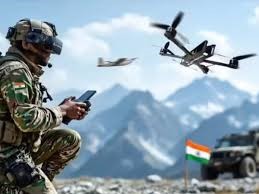
At the heart of the transformation is the integration of Unmanned Aerial Vehicles (UAVs) and counter-drone systems directly into infantry, artillery, and armoured units at the battalion level. While UAVs have already been part of the military’s toolkit, they are currently treated as supplementary assets operated by personnel juggling multiple responsibilities.
Under the new structure, each battalion will have a dedicated drone unit, with roughly 70 soldiers reassigned and trained specifically for drone operations. In infantry units, surveillance UAVs will be deployed at both the platoon and company levels, significantly enhancing real-time battlefield awareness and precision targeting.
Each standard infantry battalion comprises four companies and multiple support platoons, making the scale of this reorganisation significant. “Every arm has been directed to develop a new structure allowing selected personnel to focus solely on UAVs and counter-drone systems,” said a senior official.
In a parallel initiative, the Army will raise 30 new light commando battalions, called ‘Bhairav’, each consisting of around 250 highly trained personnel. These elite units will be tasked with precision missions in defined operational zones, specialising in rapid, high-impact operations.
These battalions will be attached to various operational commands and trained with customised mission profiles based on geographical and strategic needs. Infantry regimental centres have already received instructions to begin forming the Bhairav units, with the first battalions expected to be operational within a month.
Another key element of the overhaul is the creation of ‘Rudra Brigades’—autonomous, integrated combat formations combining infantry, armour, artillery, UAVs, and logistics into a single agile force. These brigades are designed to function independently across both conventional and hybrid warfare environments.
Each Rudra Brigade will be equipped with tailored communication networks and support systems, allowing them to respond flexibly to diverse combat situations.
In artillery regiments, which traditionally consist of three batteries of six guns each, the plan includes reinforcing two batteries with additional guns while converting the third into a drone-focused battery for observation and precision strike roles.
Army Chief General Upendra Dwivedi hinted at many of these changes during his speech on Kargil Vijay Diwas on July 26, outlining a vision for a more agile, tech-enabled and mission-adapted fighting force.
The overhaul marks a significant shift in India’s military posture, reflecting the evolving nature of warfare and the Army’s commitment to staying ahead of emerging threats, especially along sensitive border regions.