By Dr. Ashaq Hussain
A few days ago, while casually scrolling through social media, something most of us do almost unconsciously every day I came across a series of videos and photographs that immediately caught my attention. They at the first sight looked perfectly real, natural expressions, the movements were smooth, and the scenes appeared authentic enough to believe without hesitation. For a moment, I reacted just like any ordinary viewer: surprise, curiosity, and admiration for the creativity behind them. But within seconds, I noticed a small caption “AI generated.” What I had just watched was not reality, but a carefully created illusion powered by artificial intelligence.
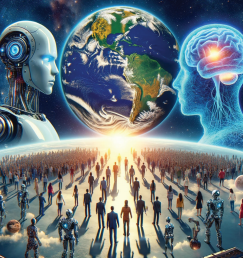
That moment stayed with me longer than I realized, it was not merely about technology; it was about perception. If I, a careful observer, could initially mistake artificial visuals for real ones, what about millions of others who consume digital content every minute without questioning its source? The experience triggered a quiet realization: we are entering an era where seeing is no longer believing.
Out of curiosity and perhaps a little excitement, I too decided to experiment with artificial intelligence myself. I explored AI tools that could generate images and videos within seconds. What earlier required professional software skills, cameras, editing expertise, or creative studios was now possible through simple instructions typed on a screen. I created a few humorous photographs and short videos, purely for fun, and posted them on my Facebook profile. The response was overwhelming. Friends and followers appreciated the creativity, shared the posts, and reacted with laughter and amazement. Many even asked how such realistic content was created.
While enjoying the positive reactions, another thought slowly emerged in my mind. People admired the content without always realizing that it was not real. Some viewers assumed the scenes actually happened. Others were surprised when I explained that artificial intelligence had created them. At that moment, a powerful question struck me: Can AI fool humanity, or is humanity willingly fooling itself?
The question today is no longer whether artificial intelligence can write articles, speak like humans, paint pictures, compose music, or imitate human thinking. That stage has already passed. The real and more uncomfortable question facing modern society is this: is artificial intelligence actually deceiving humanity, or are we, fascinated by our own invention, willingly deceiving ourselves? In an era where algorithms prepare news reports, create photographs of events that never happened, and generate voices almost impossible to distinguish from real ones, the line between truth and illusion is no longer just a technological issue. It has become an ethical, psychological, and even civilizational challenge.
No doubt, human history has always progressed through tools that expanded human capability. The printing press spread knowledge beyond elites, photography preserved memories beyond imagination, and the internet connected the world at unimaginable speed. Every new invention initially created fear and resistance, yet society gradually absorbed it into daily life. Artificial intelligence, however, is different in one important way. For the first time, humanity is dealing with machines that appear to produce meaning, not merely mechanical results. This is why discussions about AI generate both excitement and deep anxiety at the same time.
The rapid rise of AI-generated content shows how quickly our perception of reality can change. A growing portion of online material today is created or assisted by AI systems, raising serious concerns about authenticity and reliability. The internet, once celebrated as humanity’s shared knowledge library, risks turning into a space where machines learn from content produced by other machines. Gradually, originality and lived human experience may get diluted. Perhaps the most concerning development is the rise of deepfake technology. Highly realistic videos can now portray individuals saying or doing things they never actually did. What began as entertainment experimentation has evolved into a potential tool for misinformation, political manipulation, and financial fraud. When visual evidence itself becomes questionable, society faces a serious crisis of credibility.
However, blaming technology alone would be an oversimplification. Human history shows that every major invention, initially created fear before becoming integrated into society and same is expected with Artificial intelligence, although the ethical challenges emerging from AI are complex. Another growing concern relates to identity and privacy. Modern AI tools can replicate faces, voices, and personalities with astonishing accuracy. The possibility of someone’s digital likeness being reproduced without consent raises serious ethical and legal questions. Identity, once grounded in physical presence, is now vulnerable to digital imitation. Protecting personal dignity in the age of artificial replication will become one of the defining challenges of the coming decade.
Yet it would be unfair to focus only on risks. Artificial intelligence also offers enormous benefits. In education, AI assists learning through translation, summarisation, and personalised support. In healthcare and research, it accelerates data analysis and scientific discovery. For ordinary individuals, AI opens new avenues of creativity and expression, enabling people without technical expertise to produce innovative work. The issue, therefore, is not whether AI should exist but how it should be used responsibly.
Regulation alone cannot provide a complete solution. Technology evolves faster than legislation, making reactive governance insufficient. What society urgently needs is digital literacy, citizens who can question information, verify sources, and understand the basic functioning of AI systems. Just as people gradually learned to critically evaluate television and internet content, AI literacy must now become an essential social skill.
A deeper concern lies in human behaviour itself. AI systems generate responses based on patterns in data; they do not possess understanding, empathy, or moral judgment. When people begin to treat machine generated outputs as unquestionable authority, then the risk shifts from technological failure to human overdependence. Convenience may slowly replace critical thinking, and automation may weaken independent judgment.
This presents the central paradox of the AI age. Machines can imitate intelligence, but humans often mistake imitation for authenticity. The real danger is not that artificial intelligence will dominate humanity but that humanity may gradually surrender its habit of questioning. If society becomes comfortable accepting ready-made answers without reflection, intellectual passivity may become the unintended consequence of technological progress.
Despite these concerns, the future depends on whether AI remains a tool guided by human judgment or becomes an authority accepted without scrutiny. Ultimately, artificial intelligence acts as a mirror reflecting human tendencies. It amplifies creativity and carelessness, wisdom and bias. The machine does not intentionally deceive; it generates possibilities. Humans decide which possibilities to accept as truth. The question, therefore, may not be whether AI can fool humanity. The more important question is whether humanity is prepared to confront its own attraction to speed, convenience, and technological fascination. The real test of the AI era will not be technological intelligence but human wisdom.
In short, if society cultivates critical thinking, ethical awareness, and responsible engagement, artificial intelligence can become one of humanity’s greatest partners in progress. If not, the illusion of intelligence may overshadow genuine understanding. As artificial intelligence continues to evolve, the responsibility to protect truth ultimately rests not with machines, but with human conscience.
Dr. Ashaq Hussain is Associate Professor Chemistry at Govt Gandhi Memorial (GGM) Science College, Jammu and can be reached at [email protected]