19 children, 7 pregnant women among scores of civilians killed
Rs 10 million reward announced on four leaders; 21 Pakistani Army-men killed in Helicopter crash
Sarabjit Singh
Jammu Tawi, June 10:
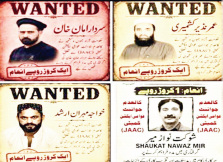
In a move that has intensified concerns over civil liberties and freedom of expression in Pakistan-occupied Jammu and Kashmir (PoJK), the local administration has issued arrest warrants against four prominent leaders of the banned Joint Awami Action Committee (JAAC) and announced a reward of Rs 10 million for information leading to their arrest.
The action comes amid an on-going crackdown on anti-government protests in the region, drawing criticism from rights activists and political observers who view the measures as an attempt to silence dissenting voices.
According to an official notification, the President of Pakistan-occupied Jammu and Kashmir has approved a reward of Rs 10 million (approximately Rs 1 crore) for anyone providing information leading to the arrest of leaders associated with the recently banned JAAC. Authorities have assured confidentiality for informants.
The four leaders named in the arrest warrants are Shaukat Nawaz Mir, Umar Nazir Kashmiri, Khawaja Mehran Arshad, and Sardar Aman Khan, all of whom have been associated with public protests and campaigns against rising prices, lack of basic human needs, governance issues, and what protesters describe as administrative neglect of the region.
The Joint Awami Action Committee, a civil society alliance that emerged as a prominent platform for public grievances, was banned by authorities last week. The organisation has played a leading role in mobilising demonstrations across several parts of PoJK.
As per reports emerging from the illegally occupied region, dozens have been killed after Pakistani forces launched a violent crackdown against protesters belonging to the Joint Awami Action Committee (JAAC) movement, which has been protesting against alleged human rights violations, inflation, unemployment and economic distress.
The dossier alleges that the security crackdown has resulted in scores of civilian deaths. It further claims that 19 children and seven pregnant women were killed during the violence and urges the international community to investigate the incidents.
The latest reports stated that a Pakistani military MI-17 helicopter reportedly crashed in Pakistan-occupied Jammu and Kashmir, killing all 21 security personnel on board. According to reports, the aircraft encountered difficulties during an emergency landing as the region witnessed growing protests and unrest. The incident comes amid heightened tensions in PoJK over governance, economic concerns and allegations surrounding Pakistan’s handling of public dissent. The crash has raised fresh questions about operational pressures on the military as demonstrations continue across the region. Officials have yet to issue a detailed statement, and further confirmation on the circumstances surrounding the crash is awaited.
The latest action follows months of unrest and public agitation. Reports from the region indicate that security forces launched an extensive operation against protesters, resulting in significant casualties and injuries. Local groups and independent observers have alleged excessive use of force and arbitrary detentions during the crackdown, raising serious questions about the protection of fundamental rights in the territory.
Human rights advocates argue that the issuance of arrest warrants and the announcement of a monetary bounty against political and protest leaders represent a disturbing escalation in efforts to curb dissent. Critics say the move sends a chilling message to citizens that speaking against government policies could invite criminal prosecution, arrest, or public targeting or even death.
Observers note that democratic societies are expected to protect the right to peaceful assembly, freedom of expression, and political participation. The punitive measures against protest leaders have therefore renewed scrutiny of Pakistan’s human rights record in PoJK and its handling of popular movements demanding accountability and reforms.
India strongly condemned the crackdown and urged the international community to take note of developments in the region. New Delhi called upon global institutions and human rights bodies to hold Pakistan accountable for what it described as continuing excesses against the people of Pakistan-occupied Jammu and Kashmir.
Political analysts believe that the developments have further exposed the widening gap between public aspirations and administrative responses in the region. As tensions continue to simmer, the arrest warrants and bounty announcement are likely to deepen concerns over shrinking democratic space and the suppression of dissent in PoJK.
For many residents, the message emerging from the latest crackdown appears stark: raise your voice against the government, and you risk being declared a wanted person with a price on your head.