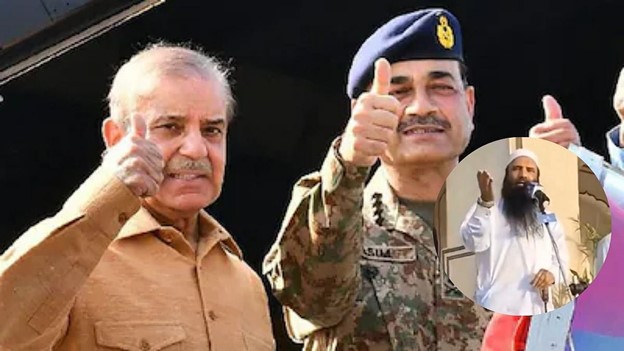
ISLAMABAD, May 28: Pakistani terrorist and Lashkar-e-Tabia’s deputy chief Saifullah Kasuri has issued an open threat to country’s army chief Asim Munir and Prime Minister Shehbaz Sharif. He publicly warned that frontline leadership and top military officials in Pakistan attempting to Israel on US order will be “assassinated, destroyed and ruined.” He issued direct public threats of elimination while addressing a rally.
Addressing a rally after Eid al-Adha prayers, Kasuri warned that Pakistan’s frontline political and military leadership, including Army Chief Asim Munir and Prime Minister Shehbaz Sharif, would face severe consequences if the country attempted to alter its long-standing policy on Israel under alleged pressure from the United States.
Kasuri claimed that any effort to establish diplomatic ties with Israel would be resisted forcefully and declared that leaders supporting such a move would be “assassinated, destroyed and ruined.” During the speech, he invoked references to jihad, martyrdom and the Palestine issue to mobilise supporters against any possible policy shift.
The remarks came amid renewed international discussion surrounding the Abraham Accords following statements by US President Donald Trump urging several Muslim-majority countries, including Pakistan, Saudi Arabia and Qatar, to establish ties with Israel as part of broader regional peace efforts.
Kasuri also referred to growing defence cooperation between Pakistan and Saudi Arabia, asserting that Pakistan possessed the military capability to counter Israeli influence in the region. He maintained that no external power could compel Islamic nations to recognise Israel.
Security analysts and sources, however, described the rhetoric as potentially “staged” and suggested it could be aimed at helping Pakistan’s establishment counter any perceived US pressure regarding relations with Israel.
Pakistan currently does not recognise Israel and maintains no diplomatic relations with the country. Analysts say any move towards normalisation would trigger significant domestic backlash from religious groups, Islamist organisations and sections of the political establishment.
Political analyst Raza Rumi told international media that recognising Israel without meaningful progress on Palestinian statehood would likely be viewed domestically as a surrender to foreign pressure. He warned that such a step could provoke street protests, political criticism and clerical mobilisation across Pakistan.
The ongoing conflict involving Iran has also increased pressure on Islamabad, particularly due to rising oil prices and economic concerns. While Pakistan has reportedly played a mediatory role in regional diplomacy, experts believe formally joining the Abraham Accords remains a highly sensitive and difficult proposition for the country. (Agencies)