

By Ashraf Hussain Katoch
Kindergarten, often considered the foundation of a child’s educational journey, plays a pivotal role in shaping the education system of a country.
This early stage of education lays the groundwork for future learning, socialization, and cognitive development.
Kindergarten is a vital early education stage, typically for children aged 3–6, acting as a bridge between home and formal schooling to foster social, emotional, and academic development.
It focuses on play-based learning to build foundational skills, confidence, and independence. Common types include public, private, and Montessori, often emphasizing socialization and routine.
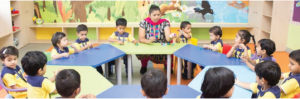
Key Aspects of Kindergarten
Developmental Focus: Beyond academics, kindergarten promotes social interaction, self-confidence, emotional regulation, and creativity.
- Skill Building: Children learn essential skills like sharing, listening to instructions, following routines, and building independence.
- Readiness: It helps ease the transition to elementary school, ensuring children are prepared for academic learning and can keep up in later grades.
- Curriculum: Programs often include language arts, maths, science, arts, music, and physical education, combining teacher-led instruction with play-based activities.
- Readiness Activities: Parents can prepare children by playing games that involve taking turns, practicing basic independence like fastening clothing, and doing activities.
- Social & Emotional Skills:
A crucial part of readiness is ensuring children can manage self-care, such as using the restroom independently. - Long-Term Impact: High-quality early education can impact a child’s future success, including their attitude towards learning and future educational attainment.
Building Blocks of Learning
Kindergarten provides a solid foundation for future learning by introducing children to basic concepts of numeracy, literacy, and social skills. This stage is critical for developing:
Cognitive Skills: Problem-solving, critical thinking, and creativity are encouraged through play-based learning.
Social Skills: Children learn to interact, share, and cooperate with peers, laying the groundwork for future relationships.
Emotional Intelligence: Kindergarten helps children recognize and manage emotions, developing emotional resilience.
Kindergarten sets the tone for a child’s attitude towards learning.
Love for Learning: Engaging activities and play-based learning foster a curiosity-driven approach to education.
Resilience and Adaptability: Children learn to navigate challenges and relate to new environments.
Social Responsibility: Kindergarten encourages sharing, empathy, and community involvement.
Impact on National Development
A strong kindergarten education system contributes to a country’s:
Economic Growth: Educated and skilled workforce drives innovation and economic progress.
Social Progress: Kindergarten lays the foundation for social cohesion, tolerance, and civic engagement.
Global Competitiveness: A well-educated population enhances a country’s global standing and competitiveness.
Effective kindergarten programs incorporate:
Play-Based Learning: Encourages creativity, exploration, and socialization.
Qualified Educators: Trained teachers provide nurturing and stimulating environments.
Parental Involvement: Collaboration with parents enhances a child’s learning experience.
Accessibility and Equity: Ensuring equal access to quality kindergarten programs remains a concern.
Teacher Training: Providing ongoing professional development for kindergarten educators is essential.
By prioritizing kindergarten education, countries can reap long-term benefits, shaping a brighter future for generations to come.
India’s school education system is vast, with approximately 14.71 lakh schools, 1.01 crore teachers, and 24.69 crore enrolled students.
The breakdown of schools by level:
- Primary Schools: 23.6 lakh
- Upper Primary/Middle Schools: 28.9 lakh
- Secondary/High Schools: 16.0 lakh
- Higher Secondary Schools: 32.6 lakh
The National Education Policy (NEP) 2020 aims to transform India’s education system, focusing on holistic development, critical thinking, and universal access.
The policy introduces a new structure: 5+3+3+4, covering ages 3 to 18 years.
Key Highlights
- Foundational Stage (5 years): Ages 3–8, focusing on play-based learning and early childhood development.
- Preparatory Stage (3 years): Ages 8–11, introducing structured subjects and interactive methods.
- Middle Stage (3 years): Ages 11–14, building critical thinking and multidisciplinary exposure.
- Secondary Stage (4 years): Ages 14–18, offering flexibility, subject specialization, and vocational integration.
Challenges
To increase enrolment, especially at primary levels.
Decrease high dropout rates, particularly at secondary levels (14.1%).
Infrastructure gaps, with only 63.5% internet access in schools.
Teacher shortages, with over 1 lakh single-teacher schools.
(The writer is a Teacher at Govt Primary School, Mohalnal Zone, Ukhral, Distt Ramban;<[email protected]>)


