Pioneer of Journalism, Social Reformer and the Enduring Voice of Duggar Land
By Ravi Rohmetra
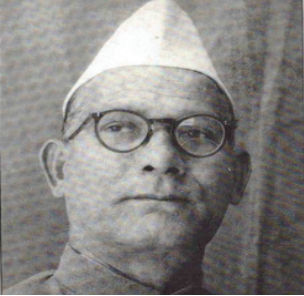
Lala Mulk Raj Saraf was a pioneer in journalism, especially in the J&K State. He was born on 8th April 1894 at Samba to father Dayanand Saraf and mother Smt. Jamuna Devi. After matriculation, he joined Prince of Wales College (now Government Gandhi Memorial Science College, Jammu) and graduated from Punjab University, Lahore. Congress leaders had started working for “Daily Bande Matram”, a leading newspaper of the time, which gained popularity among the leading papers of the country. Consequently, it was here that Saraf joined the nationalist daily “Bande Matram” as a sub-editor, being brought out by the great nationalist leader Lala Lajpat Rai, popularly known as the Sher-e-Punjab.
Saraf was appointed as sub-editor by the management, but he resigned and returned to Jammu. In Jammu, he started his own daily Urdu paper “Ranvir” and an Urdu journal “Rattan” in 1924. “Ranvir” became one of the leading Urdu daily newspapers of the country, due to which Lala Mulk Raj Saraf was given the title of “Baba-e-Sahafat” (Father of Journalism).
He was awarded the Padma Shri in 1976. Working Journalists, on the occasion of the National Conference at Cuttack in Orissa in 1986, through its president K. Vikram Rao, wrote to him: “We wish to honour ourselves by honouring you.” In another function, then Chief Minister Sheikh Abdullah rightly remarked that Shri Saraf earned the distinction of Padma Shri because of his superb qualities both as a journalist and a freedom fighter, and that the best service the country could do was to emulate his example.
Widely travelled, Saraf took extensive tours to the Soviet Union, Britain, Germany, China, America and Pakistan. His visits to Pakistan and America at the ages of 86 and 92 respectively spoke of his good health and his commitment to journalism and social causes. He used to say, “I am still young and hope to be young even at the age of 100.” When he visited Pakistan in 1979, several newspapers of that country wrote articles praising him for his contribution in the field of journalism. On his return, he wrote a book – “Meri Pakistan Yatra”, which was selected as “Book of the Year” and was also awarded by the J&K Cultural Academy.
He also wrote “Insaniyat Abhi Zinda Hai” and “Nagooh-e-Ranvir”. Besides, he wrote more than two hundred articles on socio-economic, political and cultural topics, which were published in his own paper “Ranvir” and in “Chand” weekly edited by Dewan Narsingh Dass Nargis, and in many other leading journals of the country.
Today, hundreds of journals, both dailies and periodicals, are being published from Jammu and Kashmir. One cannot even imagine the heroic task of obtaining permission to bring out the first newspaper, which ultimately appeared in 1924 from the State. Nevertheless, Mulk Raj Saraf, displaying a steely will, overcame all hurdles with the meagre resources at his disposal. All necessary arrangements were made. Interestingly, Maharaja Partap Singh donated Rs 100, while Raja Hari Singh contributed Rs 50 annually for the “Pioneer Enterprise”. A dummy edition of the first newspaper, “The Ranvir”, was issued on May 20, 1924, which was received very warmly by the public. Thus, “Ranvir” made press history when its first regular issue appeared on May 24, 1924.
It was only the dedication to journalism and determination of the late Mulk Raj Saraf that overcame the obduracy of the bureaucracy, which was reluctant to allow any outlet for voicing the grievances of the people. As Saraf wrote in “Fifty Years as a Journalist” in the early 1970s, the encouraging attitude and keen interest of Maharaja Partap Singh helped him realise his pioneering venture in Jammu and Kashmir. Even then, it took Saraf over three years to persuade the bureaucrats of the State to grant permission to bring out the first newspaper. He is deservedly known as the “Father of Journalism” in Jammu & Kashmir, and his 120th birth anniversary fell on 8th April.
He wrote a book on Sher-e-Duggar Lala Hans Raj Mahajan, “Jeevan Katha”, in which he penned the life history of the founder of Mahajan Sabha, Sher-e-Duggar Lala Hans Raj Mahajan. In 1931, he became the President of Akhil Bhartiya Mahajan Shiromani Sabha. It was on June 24, 1924, that this social activist of Jammu started a weekly called “Ranvir” with social regeneration as its motto. The publication of “Ranvir” in Jammu prompted others to join the bandwagon of the social reform movement.
The following citation was read out when Mr. Mulk Raj Saraf was awarded the Padma Shri by the President at the Durbar Hall of Rashtrapati Bhavan on April 3, 1976:
“Shri Mulk Raj Saraf (81) is a veteran journalist of Jammu and Kashmir, with a career of half a century of distinguished journalism as well as social service to his credit.
Shri Saraf graduated in 1919 and thereafter abandoned a law course at Lahore to start his journalistic career as a sub-editor of the famed nationalist newspaper ‘Bande Matram’ under Lala Lajpat Rai. In 1924, Shri Saraf founded, as Editor, the very first newspaper in Jammu and Kashmir under the name ‘Ranbir’. Later, as an advocate of the freedom struggle, the paper had its share of troubles when its publication was banned in 1930 because of its allegedly ‘subversive propaganda’ in connection with the arrest of Mahatma Gandhi. ‘Ranbir’ reappeared in September that year and, in the critical times that followed, played an important role in mobilising popular resistance against Pakistan aggression. Between 1934 and 1947, Shri Saraf also brought out ‘Rattan’, which was the foremost Urdu journal for children.
Now in his eighties, Shri Mulk Raj Saraf continues to be active and interested in original and diverse forms of journalism. He has published nearly half a dozen books throwing light on various facets of the life of the State. Recently, Shri Saraf has gifted to Jammu University, for research, all the files of ‘Ranbir’ and ‘Rattan’.
Shri Saraf has always associated himself with larger social causes of a constructive character.
With his long and distinguished services in the cause of journalism, Shri Saraf is rightly regarded as the Father of Journalism in Jammu and Kashmir.”
This great journalist breathed his last on 21st February 1989 at the residence of his son Ved Rahi (a well-known figure of the film industry) in Bombay. He will be remembered for all times to come.
(Ravi Rohmetra is a Social Worker and Writer and can be reached at Mob: 9419652999
Email: [email protected])
Bottom of Form