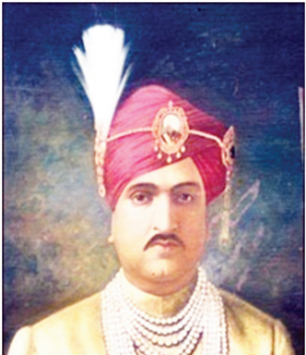
A tribute on his 65th death anniversary, recalling a legacy of justice, reform, and decisive leadership
“As a ruler, I have no religion. All religions are mine, and my religion is justice.”
(1895–1961)
By Ravi Rohmetra
Maharaja Hari Singh once remarked, “As a ruler, I have no religion; all religions are mine, and my religion is justice.” This statement reflects the core of his governance and philosophy. He was a visionary, a progressive thinker, a true patriot, and a social and economic reformer who introduced numerous measures for the welfare of his people.
He worked to eradicate social evils such as child marriage, female infanticide, sati, and untouchability, and took steps against smoking in public places. He actively promoted widow remarriage and focused on women’s health and education to uplift their status in society. Treating all citizens equally, irrespective of religion, caste, or colour, he fostered a spirit of brotherhood among Hindus, Muslims, Sikhs, Christians, and others.
It is pertinent to note that Maharaja Hari Singh’s reign ushered in a wave of progressive and people-centric reforms. His policies endeared him to his subjects and continue to hold relevance even today. He was ahead of many princely states in introducing social, economic, and educational reforms that significantly improved the living conditions of the people of the erstwhile state.
He opened schools, temples, and public utilities to the underprivileged, including those from historically disadvantaged communities. Education received special emphasis, with thousands of primary schools established. Immoral trafficking of women was curbed, peasants were granted proprietary rights over land, and regressive practices like sati and child marriage were abolished. Institutions such as the Jammu and Kashmir Bank, the High Court of Jammu and Kashmir, and the Maharaja Hari Singh Hospital in Srinagar stand as enduring symbols of his contributions.
A dynamic and dignified personality, Maharaja Hari Singh ascended the throne of Jammu and Kashmir in 1925. Born on 23 September 1895 at Amar Mahal, Jammu, he was the son of Raja Amar Singh and the nephew of Maharaja Pratap Singh. Recognizing his merit and capability, Maharaja Pratap Singh declared him his successor.
Educated at the Mayo College for Princes and later trained at the Imperial Cadet Corps in Dehradun, he developed both administrative acumen and military discipline. At the young age of 20, he was appointed Commander-in-Chief of the Jammu and Kashmir State Forces, where he introduced several reforms in training and welfare.
As a ruler, he took significant steps to address the grievances of various communities. Following the agitation of 1931, he appointed the Glancy Commission to look into public grievances and implemented measures to ensure fair representation and restore religious rights. He also handled sensitive agitations in Jammu with care and prudence.
Maharaja Hari Singh’s governance was marked by bold reforms—making primary education compulsory, opening places of worship to all, banning exploitative practices, and curbing corruption through strict administrative measures. His rule was known for discipline and accountability, where fairness in governance was paramount.
On the national stage, he demonstrated courage by advocating India’s independence during the Round Table Conferences in London, openly challenging British authority. During World War II, as a member of the Imperial War Council (1944–1946), he visited troops in the Middle East, sharing their hardships and boosting their morale.
A defining moment in his life came in 1947, when faced with external aggression and internal turmoil, he signed the Instrument of Accession on 26 October 1947, acceding Jammu and Kashmir to the Dominion of India. In his letter to Lord Mountbatten, he wrote that the grave situation left him with no option but to seek India’s assistance to save his state and people.
Later developments led to differences between Maharaja Hari Singh and Sheikh Mohammad Abdullah, culminating in his abdication in favour of his son, Dr. Karan Singh, in 1952. He spent his final years in Bombay, away from his homeland, and passed away on 26 April 1961. As per his wishes, his ashes were immersed in the River Tawi.
Maharaja Hari Singh was also a patron of sports such as polo and horse racing and had a deep interest in reading. Before his death, he donated much of his property to the Arya Samaj on the advice of his Prime Minister, Mehar Chand Mahajan.
Key Reforms and Contributions:
- Member of the Imperial War Council (1944–1946)
- Opened temples and public places to all sections of society
- Established major hospitals in Jammu, Kashmir, and Mirpur
- Banned child marriage and discouraged harmful social practices
- Promoted freedom of speech and encouraged the press
- Strengthened education through widespread establishment of schools
Memorials and Institutions in His Honour:
Several landmarks in Jammu and Kashmir commemorate his legacy, including:
- Maharaja Hari Singh statue near Tawi Bridge, Jammu (unveiled in 2012)
- Maharaja Hari Singh Park
- Maharaja Hari Singh Higher Secondary School
- Hari-Tara Charitable Trust
- Maharaja Hari Singh Agricultural Collegiate School, Nagbani
- Hari Singh High Street, Srinagar
- Hari Niwas (Guest House and Hotel)
Maharaja Hari Singh’s legacy continues to resonate across generations. His reign, marked by justice, reform, and inclusivity, remains a significant chapter in the history of Jammu and Kashmir.
(Ravi Rohmetra is a social worker and a freelance writer)