

By Girdhari Lal Raina, Ex-MLC
The year 2025 will be remembered in Jammu Kashmir as one of profound contrasts—between stabilisation and shock, aspiration and anxiety, institutional progress and political drift. It was a year that reinforced the possibility of normalcy while simultaneously exposing unresolved fault lines that continue to define the Union Territory’s trajectory.
On the positive side, 2025 marked a visible retreat of street violence. Stone-pelting, separatist shutdowns, and mass mobilisation around disruptive politics—once routine—largely disappeared from public life. A quiet but significant psychological shift was evident: public discourse increasingly centred on peace, economic opportunity, and everyday normalcy rather than protest politics. More individuals from the separatist ecosystem entered the political mainstream, publicly affirming faith in the Constitution of India. Educational institutions functioned peacefully and without interruption, except where natural calamities intervened—an important indicator of social stabilisation.
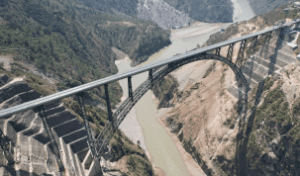
Infrastructure development reinforced this sense of transition. Projects such as the Chenab Bridge and the Sonamarg Tunnel advanced connectivity and economic integration. Most transformative was the completion of the railway link connecting Kashmir with the rest of the country. This historic achievement reduced dependence on the National Highway, eased supply-chain vulnerabilities, and challenged the long-standing monopoly of airlines. Travel and transportation of essential commodities became more reliable, directly benefiting ordinary citizens. These gains were widely attributed to sustained administrative efforts to dismantle terror-support structures and restore public confidence.
Yet, these advances were severely tested by brutal reminders of unresolved security challenges. The terrorist attack on tourists at Baisaran, Pahalgam, in April 2025—one of the most shocking in decades—shattered the sense of calm. Victims were targeted after shameful identity checks, triggering nationwide outrage and unanimous condemnation. India’s military response, Operation Sindoor, reaffirmed national resolve, but also exposed security gaps and escalated cross-border tensions. Pakistan’s retaliatory shelling of civilian areas, particularly in Poonch and Rajouri, caused extensive damage to life and property, underscoring the human cost of asymmetric warfare.
Equally disturbing was the Delhi blast involving white-collar terrorism with deep-rooted links to Kashmir. While professional participation in secessionist activities is not unprecedented, the involvement of medical professionals marked a dangerous escalation. Its implications—ideological, institutional, and security-related—are far-reaching and still unfolding.
Politically, 2025 saw the successful conduct of elections and the installation of an elected government led by the National Conference. With restoration of elected government, grievance redressal increasingly shifted to constitutional and democratic forums. However, governance soon became mired in controversy. The NC’s central political demand—the restoration of full statehood—remained unresolved, breeding visible frustration within the ruling alliance. Opposition parties dismissed the issue as a diversionary tactic to mask governance failures and unfulfilled manifesto promises.
A public power tussle between Chief Minister Omar Abdullah and the Lieutenant Governor—particularly over control of bureaucracy and police under the new Transaction of Business Rules—further complicated governance. Youth unemployment remained one of the most pressing social challenges. The government faced sustained criticism for failing to deliver on its promise of one lakh jobs and a comprehensive employment policy within the first hundred days. The persistent mismatch between education and market needs highlighted the urgent requirement for vocational training and skill alignment.
Instead of building consensus, the reservation issue was raised in a manner that risked deepening regional and caste-based divisions. This, in turn, revived demands for separate statehood for the Jammu region, reflecting growing regional discontent and a perception of political imbalance within the Union Territory.
Environmental vulnerability emerged as another defining concern. Devastating flash floods, landslides, and erratic weather patterns in August exposed the region’s fragile ecology and inadequate disaster preparedness. Allegations of discriminatory relief distribution and administrative inefficiency dominated public debate, eroding trust in governance mechanisms at a time when climate resilience should have been a shared priority.
Perhaps the most alarming social crisis was the sharp rise in substance abuse. Official revelations that drug addiction cases have more than tripled in recent years effectively categorised the problem as a public health emergency. Despite its gravity, the political response appeared fragmented and inadequate.
The Chief Minister’s statements were widely seen as diversionary and regionally selective, reinforcing perceptions that the leadership was struggling to steer Jammu & Kashmir as a cohesive unit through multiple, overlapping crises.
As 2026 begins, there is little indication that these challenges will dissipate on their own. Issues such as reservation, unemployment, demands for Jammu’s separate statehood, and unfulfilled National Conference promises are likely to dominate the public narrative. Inner-party dissent within the NC may intensify, while protests and agitations by aggrieved sections of society could become more frequent and organised.
Jammu & Kashmir today stands at an important constitutional juncture. The gains achieved in peace, connectivity, and democratic participation over recent years are significant, but they require careful stewardship to endure. Security, governance, and social cohesion in the region are deeply interlinked. While infrastructure development, counter-terror measures, and the return of electoral politics have created the conditions for stability, their long-term success depends on consistent, inclusive, and institutionally grounded governance.
India’s constitutional framework offers Jammu & Kashmir both stability and opportunity—through political representation, civil rights, and economic integration. Public demands, whether for statehood, administrative clarity, or social equity, are legitimate within this framework and must be addressed through dialogue and cooperative federalism. At the same time, it is essential that political processes do not become mired in uncertainty or adversarial posturing, particularly in a region facing persistent external pressures. Institutional clarity and constructive engagement remain vital not only for governance, but also for sustaining public confidence.
As 2026 unfolds, the central challenge will be to consolidate recent gains while addressing outstanding concerns with transparency and balance. The measure of success will lie less in political rhetoric and more in the strengthening of institutions, delivery of governance, and reinforcement of constitutional norms. A steady, consensus-oriented approach can ensure that Jammu & Kashmir continues its movement toward durable stability—anchored in democratic practice, national unity, and shared responsibility.
Jammu & Kashmir today stands at a decisive crossroads. The gains of peace, connectivity, and constitutional participation are real—but they remain fragile. Infrastructure and security successes cannot substitute for inclusive governance, political clarity, and social cohesion. Without a leadership that rises above regionalism, electoral rhetoric, and reactive politics, these hard-won gains risk being squandered.
The year ahead will test whether Jammu & Kashmir consolidates its movement toward national integration and stability—or slips back into fragmented politics and managed disorder. The choice is no longer between conflict and peace alone; it is between responsible governance and chronic drift. History will judge 2026 not by slogans, but by whether leadership demonstrates the will to govern Jammu & Kashmir as an indivisible political, social, and constitutional whole.
(GL Raina is a former Member of the legislative council of erstwhile Jammu Kashmir and BJP JK-UT)



